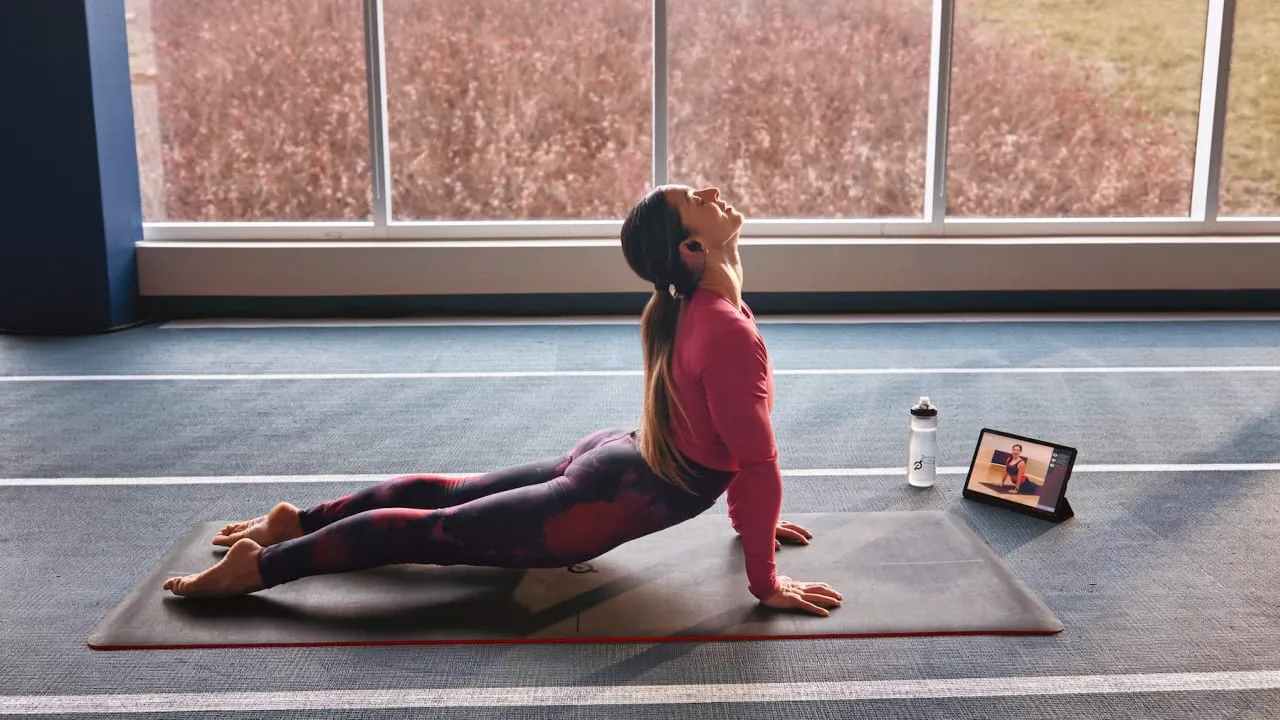
Introduction to Yoga Fitness
Yoga Fitness blends centuries-old asana practice with contemporary exercise science to produce measurable physical outcomes: improved strength, increased flexibility, better balance, and posture refinement — all while preserving the breathwork and mental clarity that define yoga. This guide translates the evidence into practical steps, outlines safe ways to begin, and supplies a progressive 30-day plan that’s printable and easy to follow. You’ll also find routines suitable for beginners, intermediates, and advanced students, a concise pose guide with alignment cues, plus practical injury-avoidance strategies. If you have a medical condition, check with your clinician before beginning. If not, choose the goal that fits you — weight loss, back pain relief, better balance, or building a daily habit — and get ready to measure progress.
What is Yoga Fitness?
Concise definition: Yoga fitness is a pragmatic, performance-oriented approach to traditional yoga that emphasizes quantifiable physical results — strength, mobility, endurance, and balance — while retaining breath awareness and calming practices. It mixes classical asanas (poses) with modern training concepts such as progressive overload (longer holds, increased repetitions), structured conditioning flows (vinyasa/power sequences), and deliberate recovery sessions (yin/restorative).
Why this framing matters: Many people want exercise that develops physical capability without sacrificing the mental and physiological benefits of pranayama and mindful attention. Yoga fitness secures both: it sets measurable targets (e.g., hold a 60-second plank, complete 10 rounds of Sun Salutation A, or perform stable single-leg balances) and gives a blueprint for gradual progress.
How progress is tracked: Use simple metrics that are easy to measure and repeat — plank duration, number of sun salutations completed without rest, single-leg balance hold time, or the depth of a forward fold measured periodically. These markers become objective feedback loops for adjustment.
Top research-backed benefits
Below are concise, evidence-friendly points you can share quickly, followed by one-line evidence notes.
Quick share bullets:
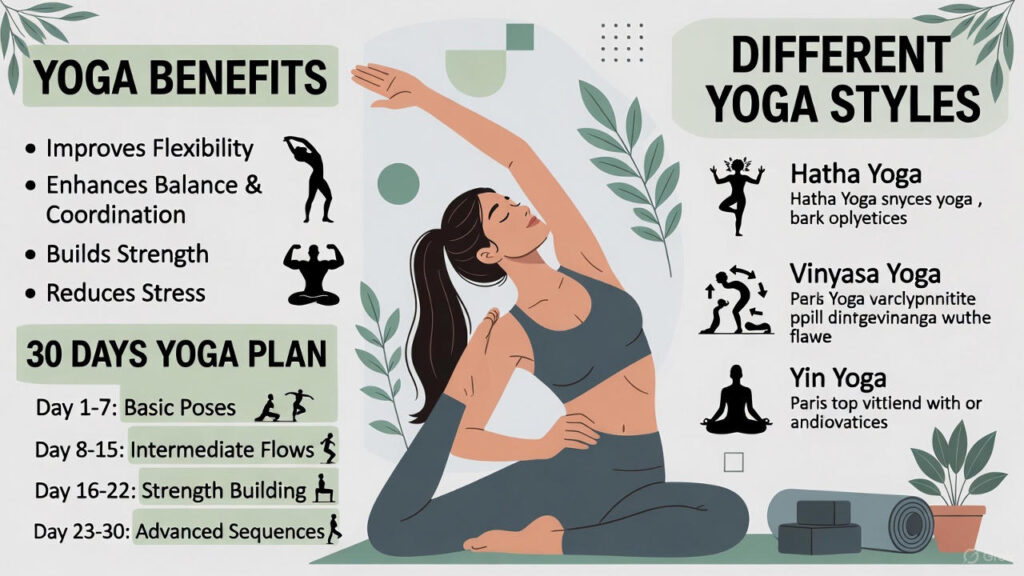
- Improves flexibility, balance, and muscular endurance.
- Reduces chronic low back pain for many people.
- Lowers stress and supports better sleep and mood.
- Enhances posture and core stability.
- Supports mindful eating and sustainable habit change.
Short evidence notes:
- Flexibility & balance: Regular, consistent practice increases range of motion and postural steadiness.
- Chronic pain: Multiple randomized and controlled trials indicate that targeted yoga programs reduce low back pain and improve daily function.
- Mental health: Breath-focused movement lowers anxiety and contributes to better sleep for many practitioners.
- Functional strength: Dynamic vinyasa flows and isometric holds develop muscular endurance and real-world functional strength.
Types of yoga — which style fits your fitness goal?
| Style | Intensity | Best for | Quick notes |
| Hatha | Low–Moderate | Beginners, alignment | Deliberate, teaches foundations |
| Vinyasa / Power | Moderate–High | Cardio, strength | Flow-based, builds endurance |
| Ashtanga | High | Strength & structure | Fixed sequences with progressive load |
| Yin / Restorative | Low | Flexibility, recovery | Long passive holds, targets connective tissue |
| Bikram / Hot | Moderate–High | Flexibility (with caution) | Heat increases ROM, but adds risk |
| Chair Yoga | Low | Seniors, limited mobility | Accessible, improves seated stability |
How to choose by goal:
- Weight loss & conditioning: Prioritize Vinyasa or Power yoga to elevate heart rate; combine with supplemental cardio and dietary adjustments.
- Strength & toning: Ashtanga, Power, and sequences with long isometric holds produce strength gains.
- Flexibility & mobility: Include Yin or long mobility flows and use props to protect joints.
- Rehab/back pain: Gentle Hatha with emphasis on core stability and hip mobility is best.
- Seniors / limited mobility: Chair yoga and slow Hatha sequences work well to restore function without excessive load.
How to start — gear, class types, and safety
Gear (keep it minimal):
- Non-slip yoga mat — essential for stability.
- Two yoga blocks and one strap — versatile aids for alignment.
- Bolster or firm cushion — optional for restorative practices.
- Comfortable, breathable clothing that allows a full range of motion.
Class formats — pros and cons:
- In-person class: Best for individualized alignment cues and hands-on adjustments.
- Live online class: Good for community, accountability, and immediate feedback from instructors.
- On-demand videos: Excellent for consistency and scheduling; supplement with occasional live feedback when possible.
Safety basics (easy rules):
- Warm up joints and muscles before deep holds or dynamic sequences.
- Use blocks, straps, and regressions as needed — depth isn’t progress; alignment is.
- Breathe continuously; avoid breath-holding during exertion.
- Stop or regress if you feel sharp pain, tingling, or numbness.
- If pregnant or have serious heart, eye, or blood pressure issues, consult a clinician first.
30-Day Yoga Fitness Plan
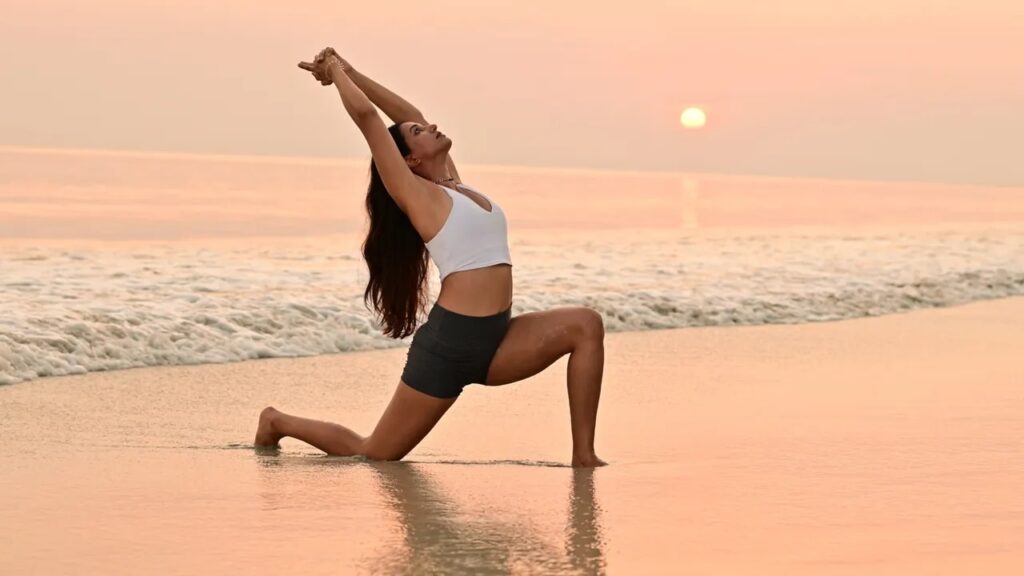
Overview & goal: Build a consistent practice that increases mobility, baseline strength, and balance. The plan schedules four sessions per week: two strength/flow sessions, one mobility session, and one restorative session. It’s progressive, intentionally building load and complexity week by week.
How to track: Maintain a simple log: date | session type | duration | plank time | sun salutations | notes. Record subjective energy, pain, or wins.
Weekly structure
| Week | Strength/Flow | Mobility | Restorative | Weekly goals |
| Week 1 | 2× 25 min beginner flows | 1× 20 min | 1× 20 min | Learn alignment; plank 3×30s |
| Week 2 | 2× 30–35 min flows | 1× 20 min | 1× 20–25 min | Plank 3×45s; add boat pulses |
| Week 3 | 2× 35–45 min power/vinyasa | 1× mobility+balance | 1× restorative | Add chaturanga, crow prep |
| Week 4 | 2× 40–50 min power flows | 1× mobility | 1× long restorative | Benchmark plank/sun salutations |
Printable day template (use for every practice type):
- Warm-up | Main sequence | Strength finish | Cooldown | Notes & metrics
Strength/Flow session (25–50 min template)
- Warm-up (5–8 min): Cat-cow, shoulder circles, gentle lunges.
- Main flow (15–30 min): 2–8 rounds of Sun Salutation variations; standing sequence; transitional flows.
- Strength finish (3–6 min): Plank holds, side planks, or boat pulses.
- Cooldown (3–5 min): Forward fold, supine twist, Savasana.
Mobility session (15–25 min)
- Hip openers, hamstring work using a strap, and thoracic rotations.
- Balance drills: single-leg stands or supported Warrior III holds.
- Short breathwork and 2–4 minutes Savasana.
Restorative session (20–35 min)
- Supported poses: legs-up the wall, supported bridge, reclined twist.
- Focused breathing (5–10 min) and extended Savasana (5–10 min).
30-Day compact layout
1 — Foundation
Mon: Strength/Flow — 25 min (Beginner flow)
Tue: Rest or light walk
Wed: Mobility — 20 min
Thu: Rest
Fri: Strength/Flow — 25 min (repeat, add 1 plank set)
Sat: Rest or gentle walk
Sun: Restorative — 20 min
2 — Build
Mon: Strength/Flow — 30 min
Tue: Rest or walk
Wed: Mobility — 20 min + balance holds
Thu: Rest
Fri: Strength/Flow — 30–35 min (add boat pulses)
Sat: Rest or easy bike
Sun: Restorative — 20–25 min
3 — Power & balance
Mon: Strength/Flow — 35–45 min (chaturanga, crow prep)
Tue: Rest or light cardio
Wed: Mobility + balance — 25 min
Thu: Rest
Fri: Strength/Flow — 40 min (single-leg balance work)
Sat: Rest or gentle hike
Sun: Long Restorative — 25–30 min
4 — Test & progress
Mon: Strength/Flow — 40–50 min (challenge holds)
Tue: Rest
Wed: Mobility — 25 min
Thu: Rest or light activity
Fri: Strength/Flow — 45–50 min (benchmark plank)
Sat: Rest
Sun: Restorative — 30 min
Day 29: Optional active recovery — gentle flow 20 min
Day 30: Test day — measure plank and Sun Salutation rounds; note progress
Sample Routines — Beginner / Intermediate / Advanced
Below are three sample sessions you can copy, print, and use.
Beginner — 20-minute flow (3× per week)
- Cat-Cow: 1 minute (move with breath).
- Downward Dog: 1 minute (bend knees if hamstrings are tight).
- Low Lunge: 45s each side; focus on hip orientation.
- Warrior II → Reverse Warrior: 2 rounds each side.
- Plank: 3×30s with 30s rest.
- Child’s Pose: 1 minute → Savasana: 3 minutes.
Focus: steady breathing, alignment, and conservatively short hold times.
Intermediate — 35-minute flow (2× per week)
- Sun Salutation A: 5–8 rounds paced to breath.
- Balance sequence: Tree → Warrior III holds; 3×30s per side.
- Core set: Boat pulses 3×30s; Forearm plank 2×45s.
- Arm balance prep: Crow prep + tuck jumps, 3–5 reps.
- Cooldown: Supine twist + Savasana (5 min).
Focus: build endurance and single-leg control.
Advanced — 45+ minute training (2× per week)
- Longer holds and strength circuits combining plank/pike/handstand prep.
- Add controlled plyometric transitions and advanced arm balances/inversions (use the wall if needed).
- Include targeted skill work (e.g., headstand/hollow body sets) and longer Savasana to integrate.
Focus: strength, stability, and skill acquisition.
Pose Guide — alignment, breathing, muscles targeted, and variations
Below are clear cues for eight common poses used throughout the plan.
Downward-Facing Dog (Adho Mukha Svanasana)
What it is: An inverted V-shape.
Benefits: Stretches hamstrings and shoulders; builds scapular stability.
Step-by-step: From hands-and-knees, lift the hips up and back, press the heels toward the floor, and lengthen the spine.
Breathing: Inhale to lengthen; exhale to settle. Slow, even breaths are best.
Muscles targeted: Deltoids, lats, hamstrings, calves, core.
Variations: Knee-bent Down Dog, Three-Legged Dog.
Common mistakes: Rounded upper back, collapsed shoulders.
Contraindications: Recent wrist injury — try the forearm dog.
Plank (High Plank)
What it is: A straight, strong neutral-spine hold.
Benefits: Core and shoulder stability.
Alignment: Hands under shoulders; body in one straight line; engage glutes and core.
Breathing: Breathe steadily; do not hold breath.
Variations: Forearm plank, knee plank.
Mistakes: Hips too high or sagging; shoulder collapse.
Warrior II (Virabhadrasana II)
What it is: A standing strength and endurance pose.
Benefits: Leg strength, hip opening, and ocus.
Alignment: Front knee over ankle; back foot slightly turned in; arms parallel to the floor.
Breathing: Steady inhales and exhales.
Muscles targeted: Quadriceps, glutes, and hip abductors.
Variations: Shorter stance for beginners.
Boat Pose (Navasana)
What it is: A core balance seated posture.
Benefits: Core endurance and hip flexor strength.
Alignment: Long spine, chest lifted; legs extended or bent.
Breathing: Smooth breathing throughout the hold.
Variations: Hands on the floor or behind the knees.
Child’s Pose (Balasana)
What it is: A resting forward fold on the knees.
Benefits: Calming; gentle hip stretch.
Use: For cooldown and reset during practice.
Bridge Pose (Setu Bandha Sarvangasana)
What it is: Supine hip lift.
Benefits: Strengthens glutes and lower back; opens chest.
Variations: Supported bridge with a block under the sacrum.
Crow Prep (Bakasana prep)
What it is: A prep for the crow arm balance.
Steps: Place knees on triceps, shift weight forward, and find the balance point.
Focus: Core strength and scapular stability.
Savasana (Corpse Pose)
What it is: Final relaxation on the back.
Why: Integrates the practice, lowers stress, and resets the nervous system.
Tip: Use a blanket under the knees if lower back sensitivity exists.
Yoga for Specific Goals
Yoga for Weight Loss
Mechanisms: Higher-intensity yoga, like Vinyasa, burns more calories than gentler styles but also supports mindful eating and better sleep habits, which are crucial for sustainable weight loss.
Program tip: Combine 2–3 Vinyasa sessions weekly with 1–2 cardio or strength workouts and nutrition attention. Use the 30-day plan as a baseline.
Yoga for Back Pain
Evidence-based approach: Gentle Hatha with a focus on core activation, pelvic control, and hip mobility reduces pain for many people with chronic low back pain. Gradual strengthening and mobility minimize recurrence.
Sample quick routine (10–15 min): Pelvic tilts 10×; Bird-dog 6× per side; Bridge 3×10 holds; Child’s Pose for stretch.
Chair Yoga for Seniors
Benefits: Improves balance, reduces fall risk, and is gentle on arthritic joints.
Moves: Seated twists, ankle circles, seated knee lifts, and seated cat-cow. Keep sessions brief (15–25 minutes) and emphasize breath.
Common Mistakes & Injury Prevention
Top mistakes:
- Forcing range of motion to “look” deeper rather than maintain safe alignment.
- Skipping warm-up and mobility work.
- Overstretching without complementary strength (which can create laxity).
- Rushing into advanced sequencing or arm balances before the foundations are solid.
Injury prevention checklist:
- Use props liberally.
- Increase load gradually (a practical rule: increase holds/reps by ~10–20% maximum each week).
- Train both strength and mobility — flexibility without strength can be risky.
- Balance the left and right sides equally.
- Schedule restoration days and long Savasana sessions.
- Consult a clinician for persistent or radiating pain, numbness, or neurological symptoms.
Pros & Cons of Yoga Fitness
Pros
- Low-impact and scalable across fitness levels.
- Improves flexibility, balance, and mental well-being.
- Minimal equipment needed; works at home or studio.
Cons
- Some yoga styles burn fewer calories compared to HIIT or running.
- Poor instruction may cause alignment issues over time.
- Heated practices introduce dehydration and cardiovascular stress risks for vulnerable individuals.
FAQs
A: Yes, yoga can support weight loss. Higher-intensity styles like vinyasa burn more calories than gentle yoga. For best results, combine yoga with cardio, strength training, and healthy eating.
A: You may notice improved flexibility and reduced stiffness within 2–4 weeks of consistent practice. Strength and posture changes commonly become evident between 6–12 weeks, depending on practice frequency and intensity.
A: Hot yoga can increase flexibility because of the heat, but it also raises risks such as dehydration and dizziness. If you have heart disease, high blood pressure, or heat sensitivity, consult a clinician first and hydrate thoroughly.
A: Power yoga, Ashtanga, and vinyasa classes that emphasize longer holds and arm-balance work are most effective for strength gains.
A: Yes. The plan is progressive and contains regressions. Beginners should use props, shorten hold times, and prioritize alignment rather than depth.
Conclusion
Conclusion (short & actionable): Yoga fitness offers a practical, low-impact pathway to build strength, increase flexibility, and cultivate calm. Success is a function of consistency, thoughtful progression, and quality instruction. Use the 30-day plan to establish a reliable habit: practice about four times per week, track a few key metrics (plank time, Sun Salutation rounds, and subjective notes), and rest when the body requires it. For weight-loss objectives, pair higher-intensity yoga with cardio and Nutrition Strategies; for rehabilitation or senior work, focus on gentle Hatha or chair adaptations.
