
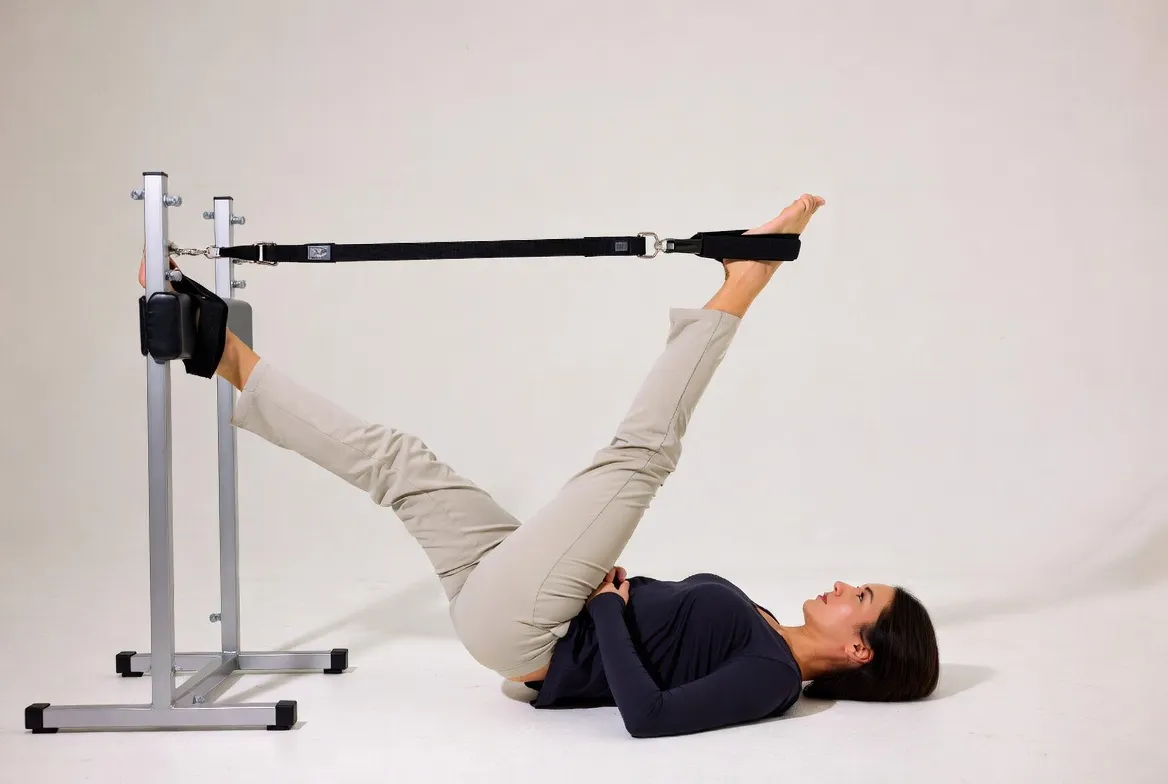
Introduction
Yoga, as Practiced Today, has gone through a strong transformation. What used to be focused on contorting the body and creating impressions on the eye has now become a more intelligent, respectful of anatomy and injury-free approach. Currently, yoga is focused on functional mobility, longevity of joints, muscular balance, and awareness of movement quality – and this shift has made yoga props more important than ever before.
The yoga strap is the most undervalued but essential yoga accessory among all yoga accessories.
There are familiar challenges that most yoga students, beginner and advanced, are likely to face:
• Persistent muscle tightness
• Restricted joint range
• Postural imbalances
• Poor neuromuscular control
• Fear of aggravating old injuries
These challenges lead thousands of yogis to abandon their routines entirely — not because yoga doesn’t work, but because their bodies were not being supported correctly.
A yoga strap solves these challenges intelligently.
Whether you’re learning your first forward fold, rehabilitating from stiffness, or mastering deep binds, a yoga strap:
Safely extends reach
Supports joint integrity
Enhances alignment feedback
Reduces muscular compensation
Builds long-term flexibility
Improves kinesthetic awareness
A yoga strap is not a shortcut. It is an intelligent mechanical extension that respects biomechanics while accelerating progress.
This advanced 2026 guide will teach you:
• What a yoga strap truly does physiologically
• How to choose the correct strap for your anatomy
• How to perform all essential strap-assisted poses
• Proper breathing mechanics and spinal positioning
• Safety protocols, contraindications, and progression models
• Novice regimes, routine processes, and injury prevention mechanisms.
At the conclusion, you will be well-versed in how a yoga strap can be used to reestablish posture, regain mobility, and develop fearless flexibility.
What Is a Yoga Strap?
A yoga strap is a long, adjustable band conventionally made of cotton weave or high-density nylon, used to enhance the leverage, stability, and proprioceptive feedback of yoga poses.
A yoga strap can help you:
• Lengthen reach
• Maintain skeletal alignment
• Reduce muscular guarding
• Prevent ligament strain
• Improve joint centration
• Deepen safe ranges of motion
You can think of a yoga strap as an anatomical assistive device that acts as an external limb, allowing muscles to relax while joints align correctly.
Rather than forcing flexibility, a strap invites tissue adaptation through gradual mechanical loading — which is far safer and far more effective for long-term results.
Yoga Strap Features
| Feature | Description |
| Standard Lengths | 6 ft, 8 ft, 10 ft |
| Material Types | Cotton (soft, high grip), Nylon (firm, ultra-durable) |
| Buckle Mechanisms | Metal D-Ring, Cinch Lock |
| Primary Uses | Flexibility training, rehabilitation, posture correction |
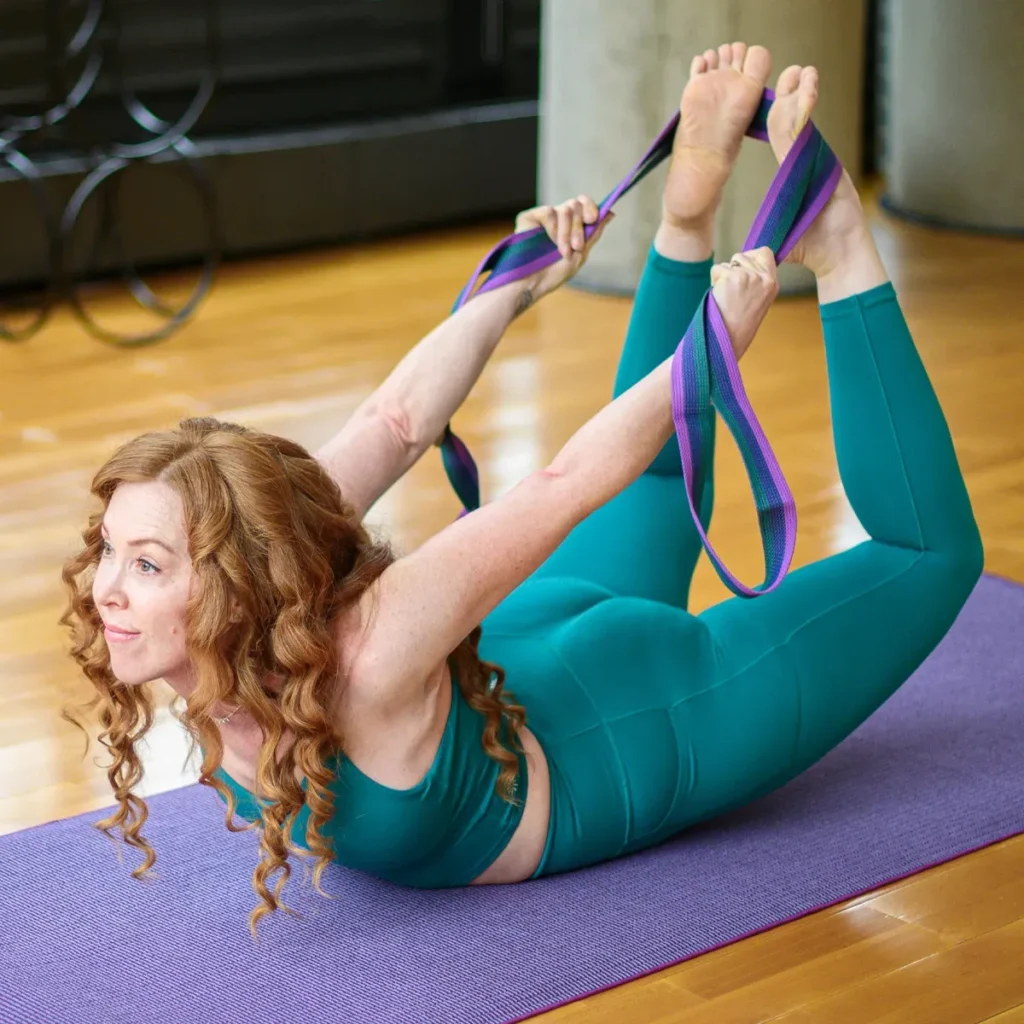
Benefits of Using a Yoga Strap
Physical Benefits
Consistent yoga strap use dramatically improves structural and muscular health:
• Increases hamstring, hip flexor, calf, and shoulder flexibility
• Reduces lower-back compression
• Improves pelvic alignment
• Enhances spinal decompression
• Improves balance mechanics
• Builds symmetrical posture
• Assists injury rehabilitation
• Reduces chronic stiffness
Yoga straps also improve fascial glide — allowing connective tissues to adapt gradually, preventing micro-tears and chronic pain.
Mental & Emotional Benefits
Yoga straps also reshape your nervous system:
• Builds Movement confidence
• Reduces fear of falling
• Improves parasympathetic activation
• Encourages mindful breathing
• Enhances focus and body awareness
• Increases consistency in practice
Confidence leads to consistency. Consistency leads to transformation.
How to Choose the Best Yoga Strap
| Your Height | Best Strap Length |
| Under 5’6″ | 6 ft |
| 5’6″ – 6 ft | 8 ft |
| Over 6 ft | 10 ft |
Cotton straps provide better tactile feedback and are ideal for sweaty practices.
Nylon straps are ultra-durable and better for rehabilitation clinics.
Always select metal D-ring buckles for maximum holding security.
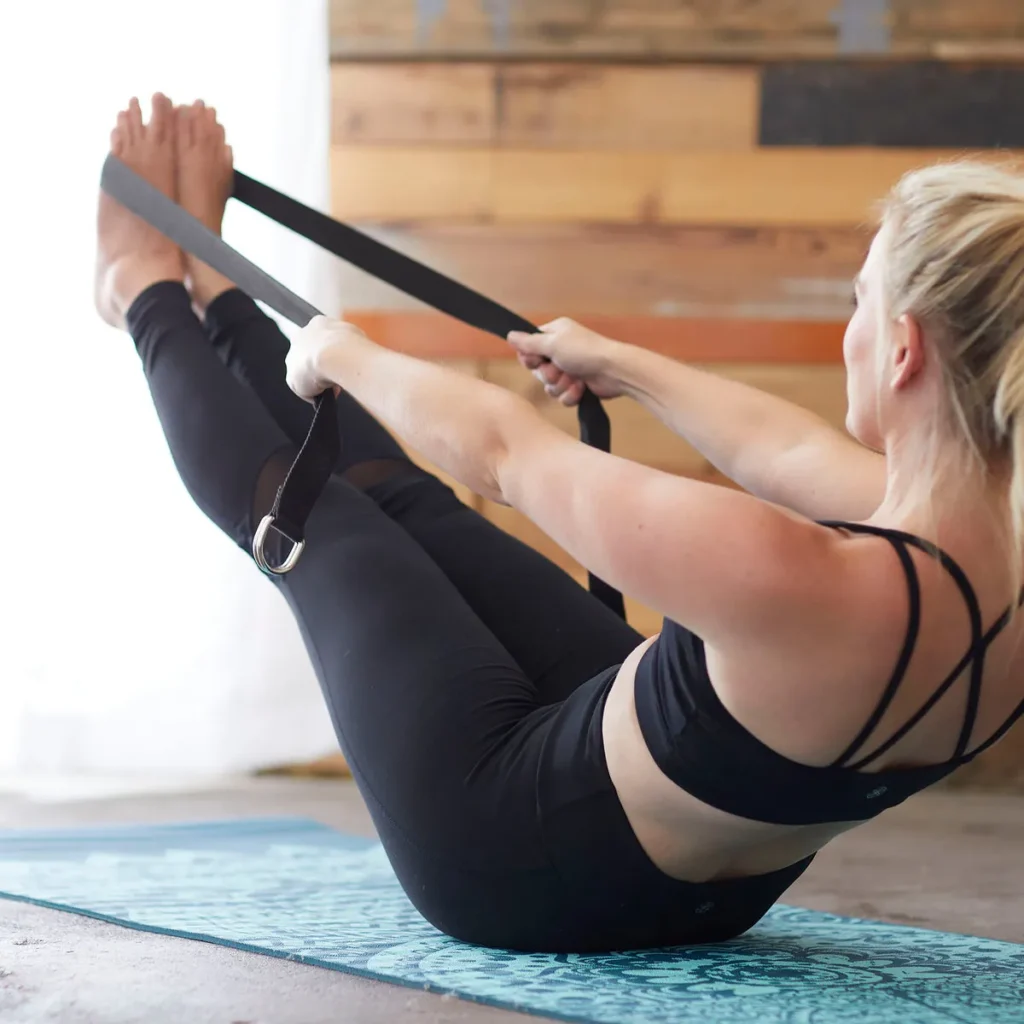
Step-by-Step: How to Use a Yoga Strap Properly
| Step | Action |
| 1 | Choose a proper length |
| 2 | Create an adjustable loop |
| 3 | Maintain neutral spine |
| 4 | Move with slow breath |
| 5 | Hold 5–10 calm cycles |
Never yank the strap. Let your breath guide your tissue release.
10 Powerful Yoga Strap Stretches & Poses
1. Seated Forward Fold
Targets hamstrings, calves, and lumbar fascia.
Releases spinal Compression
Improves hip hinge pattern
Lengthens the posterior chain
2. Reclined Leg Raise
Safely mobilizes the hips
Reduces sciatic irritation
Ideal for beginners
3. Shoulder Opener
Corrects rounded shoulders
Expands lung capacity
Improves thoracic extension
4. Cow Face Arms (Gomukhasana)
Restores shoulder rotation
Reduces neck tension
5. Standing Quad Stretch
Opens hip flexors
Improves single-leg balance
6. Extended Hand-to-Toe
Builds ankle stability
Strengthens quadriceps
7. Bound Angle
Releases inner thighs
Improves pelvic circulation
8. Supported Pigeon
Reduces knee compression
Opens deep hip rotators
9. Backbend Chest Opener
Stimulates the heart chakra
Improves diaphragmatic breathing
10. Tree Pose Balance Assist
Builds neuromuscular coordination
Improves vestibular stability
Proper Alignment & Breathing
| Rule | Why |
| Keep spine elongated | Prevents disc strain |
| Breathe slowly | Activates relaxation |
| Never jerk strap | Prevents tendon injury |
Muscles Targeted
Hamstrings • Hip flexors • Shoulders • Calves • Lumbar spine • Chest • Arms • Glutes
Yoga Strap Variations
| Level | Strap Use |
| Beginner | Short loops |
| Intermediate | Medium loops |
| Advanced | Long binds |
Common Mistakes
• Forcing flexibility
• Breath holding
• Rounding the spine
• Using an incorrect strap length
Safety Tips
• Always warm up
• Stop at sharp pain
• Pair with yoga blocks
• Choose soft cotton straps
Contraindications
Avoid if you have:
• Disc herniation
• Severe sciatica
• Acute tears
• Recent surgeries
Beginner Tips
• Practice 10 minutes daily
• Use mirrors
• Begin lying down
• Progress gradually
Duration & Frequency
| Level | Time |
| Beginner | 10–15 min/day |
| Intermediate | 20–30 min/day |
| Advanced | 30–45 min/day |
Science & Yoga Philosophy
Yoga straps reinforce the process of myofascial lengthening which enhances the hydration of connective tissue and the remodeling of collagen in line with Ahimsa, the yogic principle of non-harm.
FAQs
It is so– it makes poses safe and available.
Yoga straps are better gripped and more adjustable, at least temporarily.
2–4 weeks with consistent practice.
Final Thoughts
A Yoga Strap is not a supporting system, as opposed to being an accessory.
It protects the joints, enhances posture, enhances flexibility, and develops confidence throughout the practice.
Begin today — and feel a measurable transformation within weeks.
Explore more expert yoga guides at theyogafitness.com
