
Introduction
Aerial yoga, also widely typed online as Aerial yoga, is no longer a temporary wellness fashion. It is a scientifically aligned, body-supportive, neuromuscular re-education discipline that blends gravity-defying movement with therapeutic strengthening and conscious relaxation.
Unlike floor-based routines that compress joints, aerial yoga suspends the body in a supportive fabric sling, allowing deeper elongation, spinal traction, safe inversions, functional strength activation, and improved metabolic conditioning — all with dramatically reduced orthopedic stress.
From boutique studios in Amsterdam and Milan to retreat sanctuaries in Greece, Spain, and Croatia, aerial yoga has emerged as one of Europe’s fastest-growing holistic fitness therapies.
This complete 2026 master guide explores everything — from science-based physiology and safe practice standards to fat loss mechanisms, training systems, and therapeutic recovery methods.
Whether you are curious, cautious, or committed — this resource is designed to guide your entire aerial wellness journey.
What Is Aerial Yoga?
Aerial yoga is an anti-gravity conditioning modality combining:
- Classical yoga philosophy
- Pilates-based neuromuscular control
- Suspension training biomechanics
- Dynamic mobility flows
- Rehabilitative spinal traction techniques
The practice utilizes a high-tensile silk or nylon hammock anchored overhead to support partial or full body weight during postures.
This creates a unique hybrid movement environment where:
- Gravity becomes therapeutic instead of compressive
- Muscles stabilize more deeply
- Ligaments are unloaded
- Nervous system stress responses decrease
Also Known As:
- Anti-gravity yoga
- Flying yoga
- Suspension yoga
- Hammock yoga
- Aerial yoga (alternate spelling)
Aerial yoga and aerial describe the identical suspension-based practice.
How Aerial Yoga Works
Aerial yoga employs neuromechanical suspension loading, which:
- Reduces joint compression
- Enhances proprioception
- Improves spinal disc hydration
- Stimulates lymphatic circulation
Your hammock functions as:
| Biomechanical Mechanism | Physiological Result |
| Partial body suspension | Reduced knee, hip & spine load |
| Gravity-assisted traction | Deeper fascial release |
| Dynamic instability | Greater core activation |
| Controlled inversions | Improved vertebral spacing |
| Unstable resistance | Neuromuscular coordination |
Suspension allows the central nervous system to activate stabilizers more efficiently — leading to stronger posture, better balance, and pain-free mobility.
Key Benefits of Aerial Yoga
Physical Benefits
| Benefit | Functional Effect |
| Spinal decompression | Relieves disc pressure |
| Core toning | Deep abdominal engagement |
| Low-impact conditioning | Joint-safe strengthening |
| Flexibility expansion | Supported myofascial release |
| Postural realignment | Corrects muscular imbalances |
| Fat metabolism | Increases calorie expenditure |
| Back relief | Improves circulation |
| Balance enhancement | Improves neuromotor control |
Mental & Emotional Benefits
- Reduces cortisol and stress hormones
- Improves parasympathetic activation
- Elevates mood chemistry
- Enhances sleep quality
- Builds Emotional resilience
- Cultivates mindful awareness
Aerial Yoga vs Traditional Yoga
| Feature | Aerial Yoga | Traditional Yoga |
| Equipment | Hammock sling | Mat |
| Inversions | Supported & accessible | Physically demanding |
| Impact | Very low | Moderate |
| Engagement | Highly immersive | Moderate |
| Best for | Mobility + strength | Grounded stability |
Who Should Try Aerial Yoga?
Ideal for:
- Beginners
- Sedentary professionals
- Athletes
- Rehabilitation patients
- Seniors
- Overweight newcomers
- Individuals with tight hips & hamstrings
- Anyone seeking pain-free mobility
Step-by-Step Aerial Yoga Practice
1 – Warm Up (5–10 Minutes)
- Cervical rolls
- Arm circles
- Hip mobility drills
- Gentle squats
- Standing fold
2 – Beginner Aerial Yoga Poses
| Pose | Benefit |
| Hammock Seat | Pelvic mobility |
| Supported Plank | Abdominal strength |
| Floating Child’s Pose | Nervous system relaxation |
| Standing Warrior | Lower body balance |
| Hip opener stretch | Flexibility |
3 – Intermediate Poses
- Inverted Butterfly
- Aerial Warrior
- Floating Bridge
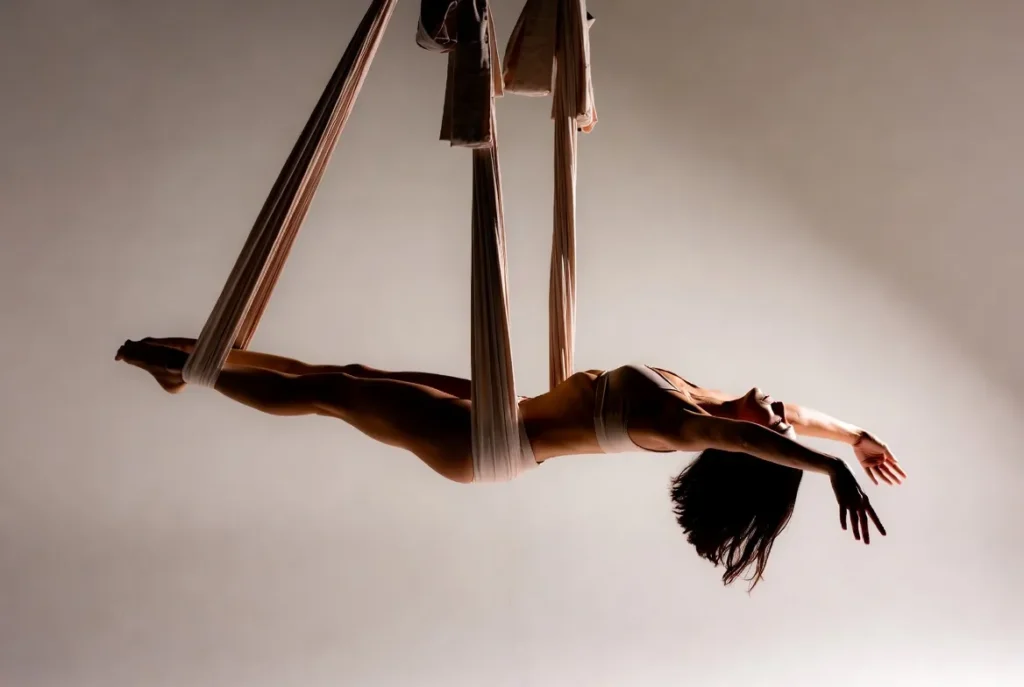
- Backbend traction stretch
4 – Advanced Poses
- Full inversions
- Aerial flips
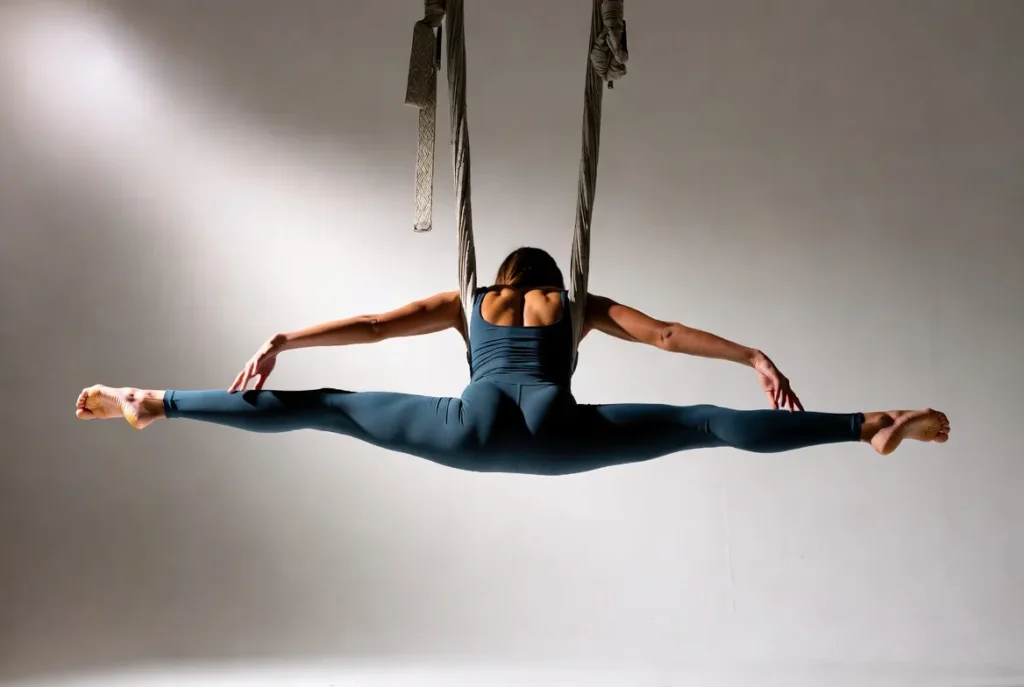
- Hanging split
- Flying plank
5 – Cool Down
- Cocoon pose
- Diaphragmatic breathing
- Gentle sway
Proper Alignment & Form
- Neutral spine
- Active core
- Relaxed shoulders
- Controlled tempo
- Smooth transitions
Breathing Technique (Pranayama)
- Nasal inhalation
- Prolonged exhalation
- Breath-movement synchronization
- Deeper breathing during inversions
Muscles Targeted
- Rectus abdominis
- Erector spinae
- Deltoids
- Latissimus dorsi
- Hip flexors
- Gluteals
- Quadriceps
Training Levels & Progression
| Level | Focus |
| Beginner | Supported stability |
| Intermediate | Partial inversions |
| Advanced | Complex aerial flows |
Common Mistakes to Avoid
- No warm-up
- Overstretching
- Breath holding
- Low-quality hammocks
- No safety mats
Safety Rules (Very Important)
- Use rated hammocks
- Certified ceiling anchors
- Crash mats mandatory
- Remove accessories
- Learn from trained instructors
Contraindications — Who Should Avoid Aerial Yoga
Avoid if you have:
- Glaucoma
- Recent surgeries
- Pregnancy
- Severe vertigo
- Disc herniation
- Hypertension
Beginner Tips
- Wear snug clothing
- Keep the hammock low
- Train 2× weekly
- Hydrate well
- Stretch post-session
Duration & Weekly Frequency
| Goal | Frequency |
| Weight loss | 3–4× weekly |
| Fitness | 2–3× weekly |
| Relaxation | 1–2× weekly |
Yoga Philosophy Behind Aerial Yoga
- Ahimsa – Non-harmful movement
- Svadhyaya – Self awareness
- Pranayama – Breath mastery
- Mindfulness – Present focus
Optional Diet Tips
- Hydrate
- Eat light before sessions
- Magnesium-rich foods
- Post-practice protein
Home Aerial Yoga Setup
| Item | Purpose |
| Yoga hammock | Suspension |
| Ceiling anchors | Safety |
| Crash mat | Protection |
FAQs
Yes — it provides support and reduces joint load.
No — same practice.
Yes — improves calorie burn and lean muscle.
€40–€150 based on quality.
Final Thoughts
Aerial Yoga represents the modern evolution of therapeutic fitness by combining movement freedom, spinal decompression, metabolic conditioning, and nervous system restoration into one complete practice. Unlike traditional workouts that often compress joints and overwork muscles, aerial yoga uses gravity and suspension to create space within the body, allowing deeper stretches, safer strengthening, and improved posture.
The Hammock supports your weight, making challenging poses more accessible while reducing stress on the spine, hips, and knees. This encourages longer, more comfortable holds that promote flexibility, joint lubrication, and myofascial release. Over time, consistent practice enhances circulation, core strength, balance, and metabolic efficiency, supporting healthy weight management and energy levels.
Beyond physical benefits, aerial yoga calms the nervous system, reduces stress, and improves breathing patterns, leading to better sleep and emotional balance. Whether you are a beginner or an advanced practitioner, aerial yoga offers a safe, joyful, and sustainable way to build strength, mobility, and long-term wellness.
