
Introduction
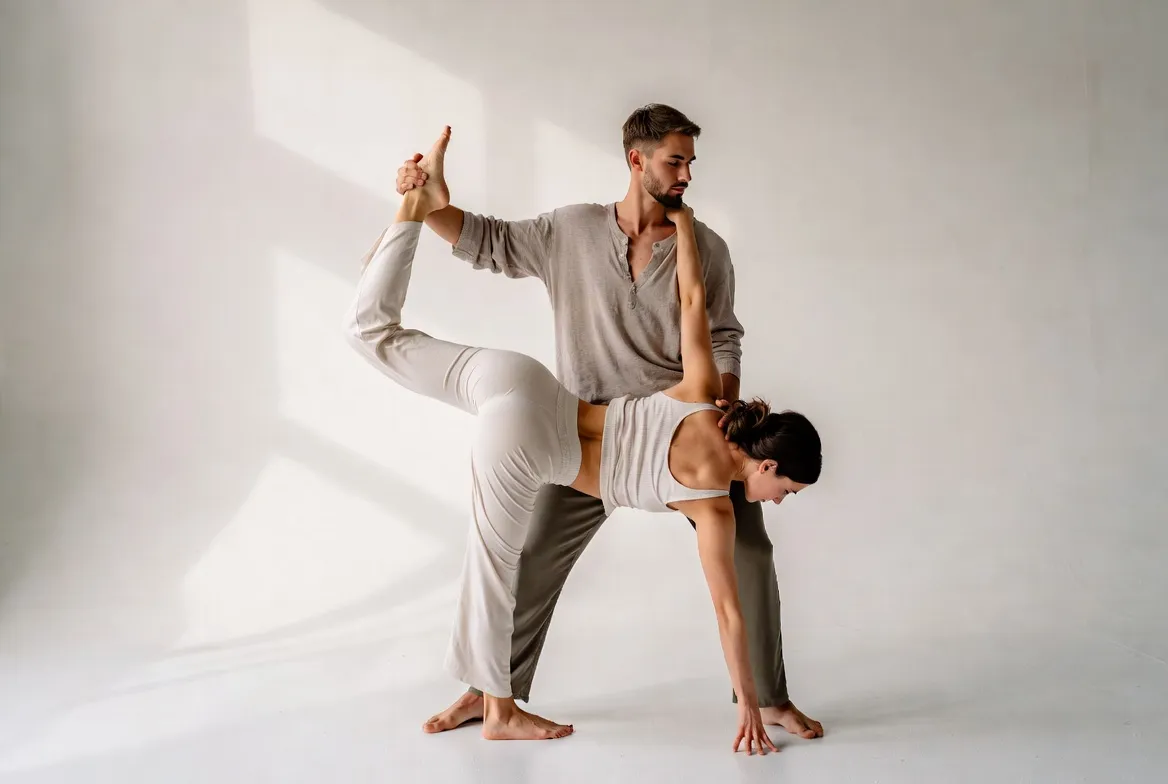
Partner yoga does not necessarily involve working side by side or even sharing a mat. It is meditative, interactive, and combines physical activity with emotional sensitivity and support, as well as conscious breathing. When two individuals practice yoga together, the experience is more enriched and interesting, and it may be more transformative than when done alone.
Partner Yoga Poses can be done with your romantic partner, spouse, close friend, family member, or even a trusted yoga companion, nd this ensures that you move together. You get to know how to listen, react, be flexible, and trust yourself and the person you are training with.
In partner yoga, there is shared balance, mutual resistance, and alignment, which is a group activity. Rather than trying to lean on your own strength or ability to be flexible, you get support, foundation, and feedback from your partner. This renders the practice easy as a novice, profoundly personal to a couple, and amusingly demanding to a high-level yogi.
You will find out in this all-inclusive and detailed guide:
The true meaning of partner yoga and its divergencefromo personal and acro yoga.
The physical, mental, emotional, and relational advantages of partner yoga.
Who ought to practice partner yoga, and who ought not to alter or not alter partner yoga?
How to make your space and body safe.
25 partner yoga poses, well structured between easy and challenging.
A 20-minute partner yoga session on time.
Rules of alignment, breathing exercises, and errors.
Care, contra-indications, and prevention.
Responses to the most common questions about partner yoga.
It is an article that is meant to empower beginners, give couples a sense of connection, and also stimulate experienced practitioners to feel challe,,nged all in one resourceful pillar article.
What Is Partner Yoga?
- Partner yoga is a yoga style where two individuals practice together and use one another to provide balance, support, resistandell as feedback. Instead of working independently in individual mats, partners move in terms of touch and energy during the session.
Partner yoga may include:
- The classical yoga poses were modified to suit two individuals.
- Supported stretches that can achieve a greater extension.
- Shared balance poses that build coordination.
- Resistance-based movements that develop strength
- Advanced acro-inspired elements for experienced practitioners
At its core, partner yoga emphasizes connection over perfection. The goal is not to achieve the most impressive shape, but to move safely, breathe consciously, and communicate clearly.
Key Characteristics of Partner Yoga
Several essential qualities define partner yoga:
- Two participants move together as a unified system
- Continuous communication and feedback are required
- Trust and cooperation are more important than flexibility
- Poses can be calming, playful, restorative, or physically demanding
- Practices may be seated, standing, reclining, or inverted
Many partner yoga poses are creative adaptations of classic yoga asanas, while others are unique to partner or acro yoga traditions. Regardless of style, the shared experience is what defines the practice.
Why Practice Partner Yoga? (Benefits)
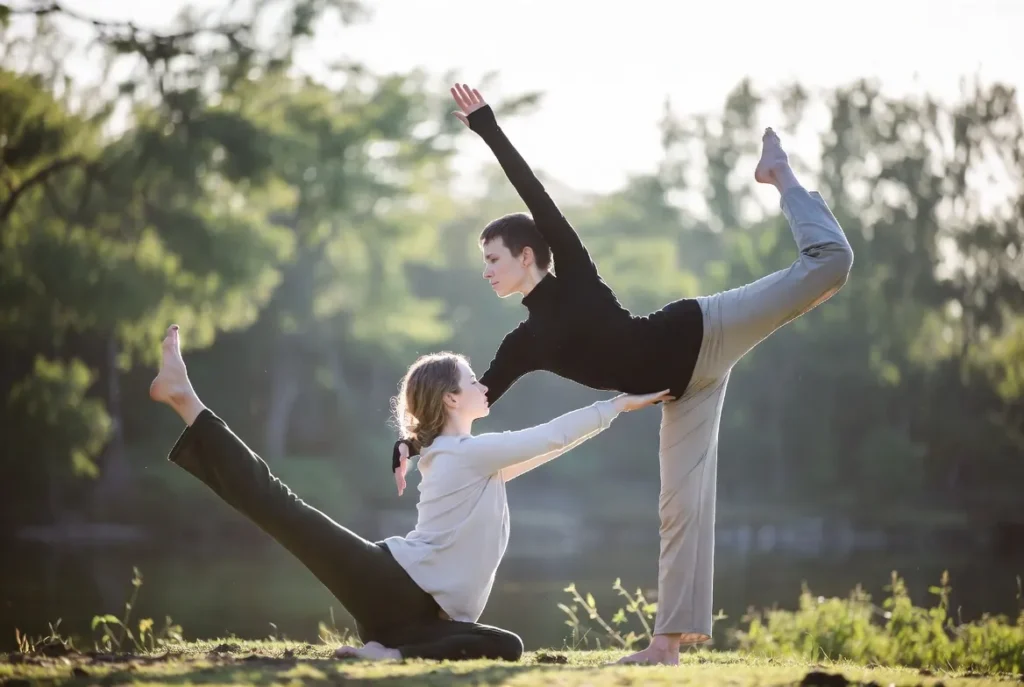
- Partner yoga has a comprehensive set of advantages that are much more than those of practice. The inclusion of an extra body in your movementstriggers the body, mind, and the nervous system into unique and strong forms.
Physical Partner Yoga Advantages.
- A regular practice of partner yoga can assist in:
- Enhance the flexibility by means of assisted and supported stretching.
- Develop functional core, leg, arm, and shoulder strength.
- Enhance stability, proprioception, and balance.
- Improve body position and positioning.
- Lessen muscular tension by mutual support.
- Due to the ability of a partner to stabilize or counterbalance the body, a lot of poses become more comfortable and accessible to use, specifically for beginners or people with limited mobility. With the help of stretching, the body can be even more relaxed, and as a result, the gains in flexibility will be safer and more sustainable.
Mental and Emotional Advantages.
- It is not simply a physical discipline, but a very grounding and regulating practice of partner yoga. Mentally and emotionally, it assists in:
- Get rid of stress and anxiety by breathing together.
- Promote consciousness of the present.
- Enhance emotional stability and balance of the nervous system.
- Learn to be patient, empathetic, and attentive.
- Develop a feeling of security and trust.
- To breathe and move together with another individual is itself a way of facilitating mindfulness. When you are divided between your own body and the experience of your partner, instead of chatting, the mind becomes silent and alert.
Relationship and Social Benefits.
- The relationship influence is one of the most unique benefits of partner yoga. With couples, friends,s or intimate friends, partner yoga:
- Enhances trust and dependence.
- Promotes teamwork as opposed to rivalry.
- Improves non-verbal and verbal communication.
- Builds positive shared memories
- Deepens emotional intimacy and bonding
This is why couples yoga poses are often Recommended as a tool for improving connection, understanding, and emotional closeness.
Who Should Try Partner Yoga — and Who Shouldn’t
Partner yoga is adaptable and inclusive, but it is not appropriate for every situation without modification or guidance.
Good Candidates for Partner Yoga
Partner yoga is appropriate in:
Novices seeking more stability and support.
Lovers are trying to find a conscious approach to relationships.
Friends or classmates who want to have a fun, interactive practice.
Middle-level yogis who are interested in assisted stretching or strength.
Seasoned practitioners who are interested in acro yoga basics.
Due to the ease with which poses may be altered, there is no need to have identical skill levels among partners. Effective communication, as well as respect, is much more important than physical prowess.
Who Should Avoid or Modify Partner Yoga
Some people are advised to take partner yoga with a grain of salt or not to perform some poses:
Patients of recent operations or with acute injuries.
Patients with chronic pain or instability of the joints.
Individuals who are recuperating after a severe disease.
Expectant women are not approved by doctors.
Any personwho is not comfortable with close body contact.
Medical Disclaimer: It is always advisable to seek the attention of a qualified healthcare provider before any new exercise or movement program, particularly when you have particular health conditions.
How to Prepare for Partner Yoga
Preparation is essential for a safe, enjoyable, and effective partner yoga practice.
Space and Props
Before starting, ensure your practice area is suitable:
- Clear floor space (approximately 6 × 6 feet per person)
- Non-slip yoga mats for stability
- Optional yoga blocks, straps, bolsters, or folded blankets
A clutter-free environment allows partners to move freely without distraction or risk.
Safety Guidelines for Partner Yoga
Follow these foundational safety principles:
- Warm up individually before attempting partner poses
- Communicate openly and continuously
- Establish a clear stop word or signal
- Begin with grounded, low-risk poses
- Never force a stretch or movement
Partner yoga should feel supportive, not stressful. If something feels wrong, stop immediately and reassess.
Partner Yoga Poses (Beginner to Advanced)
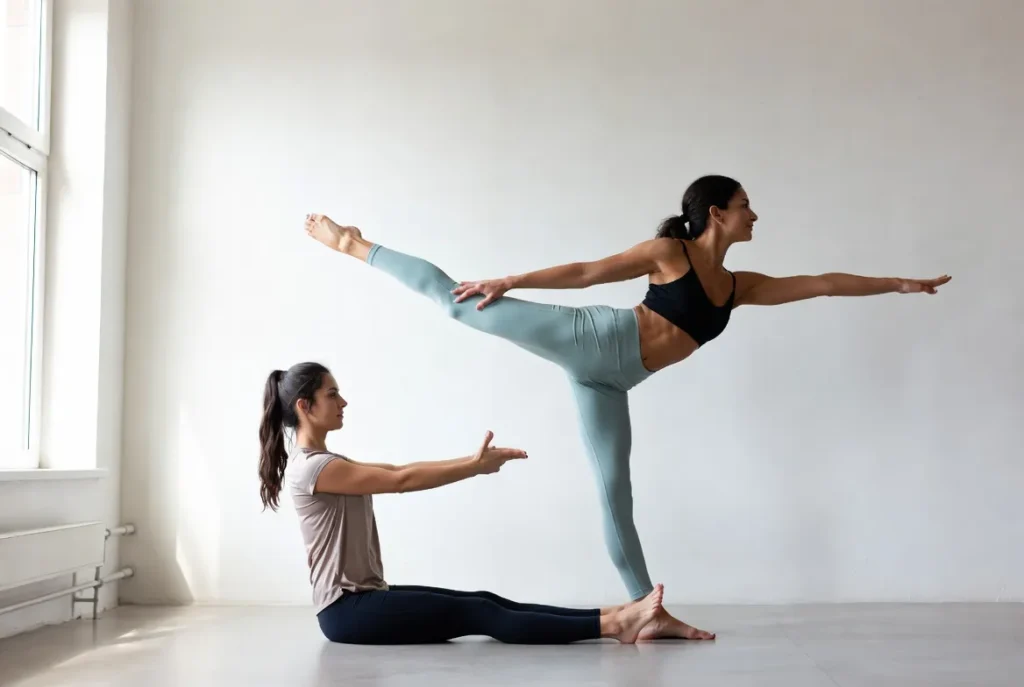
Below are 25 partner yoga poses, thoughtfully organized from beginner to advanced. Each pose includes instructions, benefits, and helpful modifications.
Beginner Partner Yoga Poses (6)
These beginner partner yoga poses are gentle, grounding, and ideal for first-time practitioners.
1. Seated Back-to-Back Breathing
How to Do It:
Sit cross-legged back-to-back, allowing your spines to gently touch. Rest your hands on your knees or thighs. Close your eyes and breathe slowly, noticing the rise and fall of your partner’s breath.
Benefits:
- Calms the nervous system
- Builds awareness and connection
- Encourages synchronized breathing
Modification:
Sit on a folded blanket or cushion to elevate the hips and reduce strain.
2. Double Child’s Pose
One partner rests in Child’s Pose while the second partner kneels behind them, gently leaning forward to offer light pressure along the back.
Benefits:
- Releases tension in the hips and lower back
- Encourages relaxation and surrender
Tip:
Keep weight minimal and check in frequently.
3. Seated Forward Fold (Facing Each Other)
Sit facing each other with legs extended. Hold hands or wrists. One partner gently folds forward while the other leans back slightly, then switch roles.
Benefits:
- Stretches hamstrings and spine
- Improves flexibility safely
Modification:
Bend knees slightly to reduce hamstring strain.
4. Double Boat Pose
Sit facing each other with knees bent and soles of the feet touching. Hold wrists and lift legs together, engaging the core.
Benefits:
- Strengthens abdominal muscles
- Enhances balance and Coordination
Beginner Option:
Keep toes on the floor for added stability.
5. Partner Tree Pose
Stand side by side, linking inner arms. Place the outer foot on the ankle or calf of the standing leg.
Benefits:
- Improves balance and concentration
- Builds mutual support
Support:
Practice near a wall if necessary.
6. Supported Child’s Pose Massage
One partner relaxes in Child’s Pose while the other offers a gentle shoulder and back massage.
Benefits:
- Relieves muscular tension
- Promotes relaxation and trust
Intermediate Partner Yoga Poses (10)
These poses build strength, coordination, and confidence.
7. Partner Chair Pose
Face each other, holding forearms. Sit back into Chair Pose simultaneously.
Muscles Targeted:
Quadriceps, glutes, core
8. Double Downward Dog
One partner forms a Downward Dog while the second partner carefully rests their hips on the first partner’s lower back.
Benefit:
Deep shoulder and spinal stretch
9. Partner Seated Twist
Sit back-to-back. Inhale to lengthen the spine, exhale to twist away, using your partner’s back for gentle resistance.
10. Twin Tree Pose
Stand side by side with inner arms interlaced overhead. Balance on the outer legs.
11. Partner Camel Pose
Kneel facing each other. One partner gently supports the other’s lower back during the backbend.
12. Partner Boat With Leg Drops
From Double Boat Pose, lower and lift legs together.
Benefit:
Dynamic core strengthening
13. Supported Warrior III
One partner balances in Warrior III while the other provides hand or shoulder support.
14. Double Plank
One partner holds a plank while the second carefully places feet or hips on the first partner’s lower back.
15. Folded Leaf Pose
One partner sits upright while the second reclines backward over their legs.
Benefit:
Passive chest opening and backbend
16. Buddy Side Bends
Stand side by side, hold hands overhead, and lean away together.
Advanced Partner & Acro Yoga Poses (9)
These poses require experience, proper warm-up, and spotting.
17. Front Plank Fly
The base holds a strong plank while the flyer balances horizontally.
18. Shoulder Stand Mount
A carefully assisted entry into the shoulder stand using partner support.
19. Hand-to-Hand Balance
An advanced acro yoga posture requiring strong arms and focus.
20. Supported Backbend Lift
One partner lifts the other into a controlled supported backbend.
21. High Flying Straddle
The flyer balances on the base’s hands.
22. Star Pose
The base lies on its back while the flyer balances above.
23. Two-Person Headstand Prep
Preparation drills only — no full inversion without instruction.
24. Double Wheel Pose
Two partners assist each other into Wheel Pose.
25. Acro Flow Transitions
Link multiple acro poses into a smooth, continuous sequence.
20-Minute Partner Yoga Routine (Timed)
| Time | Pose |
| 0–2 min | Seated Back-to-Back Breathing |
| 2–5 min | Seated Forward Fold (Dynamic) |
| 5–9 min | Double Down Dog → Supported Plank |
| 9–12 min | Partner Chair Pose |
| 12–15 min | Partner Boat Variations |
| 15–18 min | Folded Leaf (Switch Sides) |
| 18–20 min | Supported Savasana |
Proper Alignment and Breathing Technique
- Inhale to lengthen and prepare
- Exhale during effort or deeper stretch
- Maintain neutral spinal alignment when possible
- Move slowly and deliberately
Common Mistakes to Avoid
- Pulling or forcing your partner
- Skipping warm-up poses
- Holding the breath
- Ignoring discomfort or fatigue
Safety Tips
- Communicate constantly
- Use props generously
- Avoid sharp pain
- Stop immediately if dizziness occurs
Contraindications
Avoid advanced partner yoga poses if you have:
- Recent injuries
- Joint instability
- Uncontrolled blood pressure
- Pregnancy without guidance
Tips for Beginners
- Start with seated or grounded poses
- Practice with someone you trust
- Focus on shared breathing
- Progress gradually
How Often Should You Practice Partner Yoga?
- Beginners: 1–2 times per week
- Intermediate: 2–3 times per week
- Advanced/Acro: With instructor supervision
Yoga Philosophy Behind Partner Yoga
Partner yoga reflects timeless yogic principles:
- Ahimsa (non-harm): Respecting physical and emotional limits
- Satya (truth): Honest communication
- Santosha (contentment): Accepting where you are
Yoga is not only an individual journey — it is a relational one.
FAQs
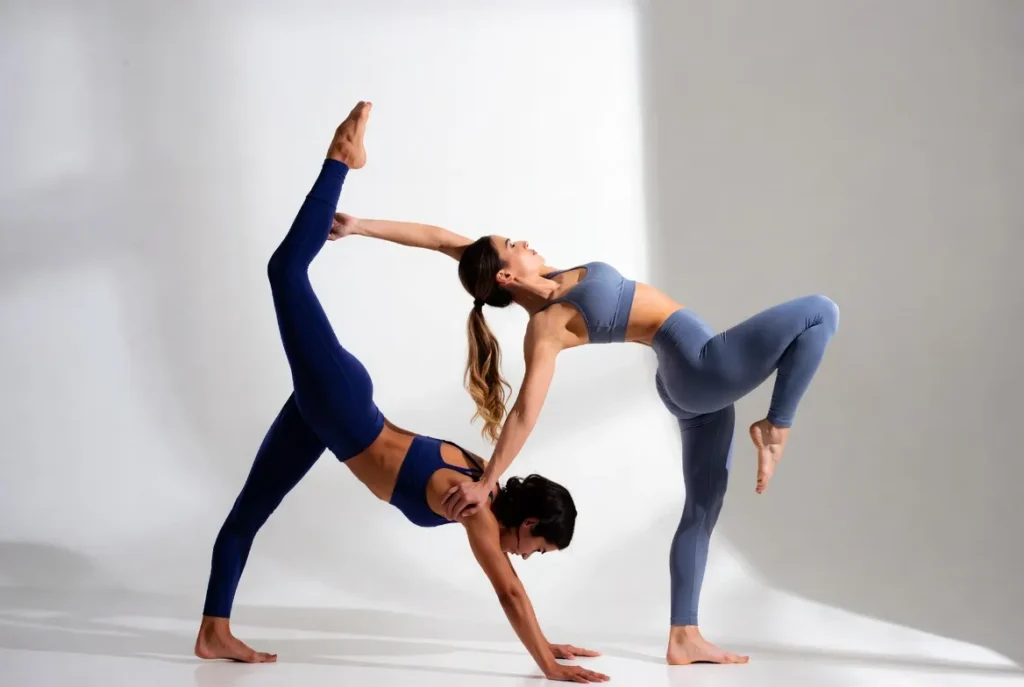
Partner yoga is a collective type of yoga whereby two individuals assist one another in the poses.
Yes. Numerous beginner partner poses of yoga enhance safety, confidence, and balance.
Absolutely. Beginner poses and make sure there is plenty of space.
No, it is more about communication and thoughtful changes.
Conclusion
Partner yoga is an experience that binds movement, breathing, faith, and relationship together. Gentle breathing and acrobatic poses Partner yoga pose has something to offer to those who are new to yoga practice, couples yoga, friends, and experienced yogis.
Through Mindfulness, open communication, and slowing down, you can have a better level of flexibility, gain more strength, and build stronger emotional interdependence.
Find more masterful yoga teachers, yoga classes, and wellness articles at theyogafitness.com and transform your practice now.
