Introduction of Tantric Yoga
Tantric Yoga is an ancient, in-depth, and metamorphic spiritual system that originated in India thousands of years ago. Although it is an old tradition, it is usually negatively portrayed in mass culture. Tantra has been confused by many individuals to be nothing more than romantic or sexual. Although there is some sexual symbolism in some of the branches, it forms a very minor part of the holistic philosophy. Expanding consciousness, establishing harmony in life power, and various potential possibilities of an individual are the nature of Tantric Yoga.
Key techniques include:
- Pranayama (breathwork) — to regulate and elevate energy
- Mantras — sacred syllables to focus attention and vibration
- Mudras (gestures) — to channel and direct energy flow
- Visualisation — mobilisation of inner potential with the help of mental images.
- Meditation — developing calmness, wisdom, and knowledge of self.
- Gentle movement — opening energy pathways (nadis) safely
What is Tantric Yoga?
Tantric Yoga is an ancient Indian based consciousness oriented practice that utilises subtle and internal energy to alter body, mind and spirit. In contrast to the contemporary yoga traditions of focusing on physical flexibility or muscular power, Tantric Yoga is largely interested in the energetic body, which includes:
- Chakras — energy centres throughout the body
- Nadis — subtle channels that circulate pranic energy
- Kundalini — dormant spiritual energy coiled at the base of the spine
The Main Objectives of Tantric Yoga
Practising Tantric Yoga fosters:
Self-awareness — understanding thought patterns, emotions, and behaviours
Balanced energy — harmonising the nervous system and pranic flow
Inner peace — calming the mind and reducing stress
Spiritual connection — linking with your higher self and universal energy
Joyful presence — learning to fully inhabit each moment of life
Through its techniques, Tantra guides practitioners to observe, accept, and transform every aspect of experience — from the physical body to subtle mental states.
Core Elements of Tantric Yoga
| Element | Meaning | Purpose |
| Pranayama | Breath regulation | Stimulates, directs, and balances subtle energy |
| Mantra | Sacred sound vibrations | Focus your mind, induce positive mental states |
| Mudra | Hand and body gestures | Channel and direct energetic currents |
| Asanas | Gentle postures | Open nadis and allow energy circulation |
| Yantra / Visualisation | Sacred imagery | Enhance concentration and embodiment of energy |
| Meditation | Awareness techniques | Cultivate inner stillness, clarity, and insight |
In Tantric Yoga, the power is subtle — movement is soft, and energy is cultivated through awareness, intention, and breath, rather than muscular force.
History & Lineages
Classical Tantra
- Origin: Approximately 6th–10th century CE
- Lineages: Shaiva, Shakta, Tantric Buddhism
- Learning: Guru-disciple initiation
- Main Aim: Spiritual liberation (moksha)
Practices included:
- Mantra chanting and meditation
- Rituals and symbolic worship
- Internal energy exercises (bandhas, mudras, pranayama)
- Study of Tantras (scriptures containing spiritual guidance)
Note: Sexual symbolism existed but was only a tiny, sacred, symbolic part of the practice.
Neo-Tantra
- Emerged in the West during the 20th century
- Focuses on emotions, energetic awareness, and interpersonal connection
- Often presented through workshops or partner exercises
- More accessible to the general population
While Neo-Tantra can help with emotional awareness and energy presence, it is often less aligned with traditional techniques and spiritual rigour.
Classical vs. Modern Tantra Quick Comparison
| Topic | Classical Tantra | Neo-Tantra |
| Main Goal | Spiritual liberation | Emotional + energetic connection |
| Sexuality | Minor, symbolic | Frequently emphasized |
| Learning Style | Initiation and lineage | Workshops, retreats |
| Accessibility | Selective, private | Public, open |
| Tools | Mantra, rituals, meditation | Partner exercises, energy games |
Common Misconceptions About Tantra
| Myth | Reality |
| Tantra is only about sex | Tantra is a holistic spiritual system |
| Only for couples | Many practices are solo-friendly |
| Quick path to pleasure | Requires discipline, patience, and dedication |
| Same as the Kama Sutra | Kama Sutra is a small, cultural text; Tantra is broader |
| Tantra is a religion | Appears across various spiritual traditions |
Benefits of Tantric Yoga
Physical Health
- Balances nervous system function
- Improves respiratory efficiency
- Boosts vitality and energy
- Alleviates stress-related discomfort
Mental & Emotional Health
- Reduces anxiety and mental chatter
- Enhances calmness and focus
- Strengthens emotional intelligence and self-regulation
Relational Benefits
- Heightened presence and empathy with others
- Improved listening and communication skills
- Establishes healthy emotional boundaries
Spiritual Growth
- Heightened awareness of internal energy
- Deepened connection to self and universe
- Cultivates a sense of life purpose and meaning

30-Day Beginner Tantric Yoga Plan
Duration: 15–30 minutes daily — gentle, safe, and effective
Focus: Solo-friendly, foundational energy work for complete beginners
1 Week — Grounding & Awareness (15 min/day)
Objective: Calm the mind and establish a connection with the body
1–3 Days
- 5 min: 4-6 Breathing (inhale 4 sec, exhale 6 sec)
- 5 min: Body Scan — notice sensations
- 5 min: Stillness Meditation
4–7 Days
- Add mantra: So Hum (“I am That”)
- 5–10 min: Chant softly or mentally repeat
2 Week — Breath + Gentle Movement (20 min/day)
Objective: Open and circulate energy in subtle channels
| Pose | Duration |
| Cat-Cow | 2 min |
| Seated Twist | 2 min each side |
| Supported Bridge | 3 min |
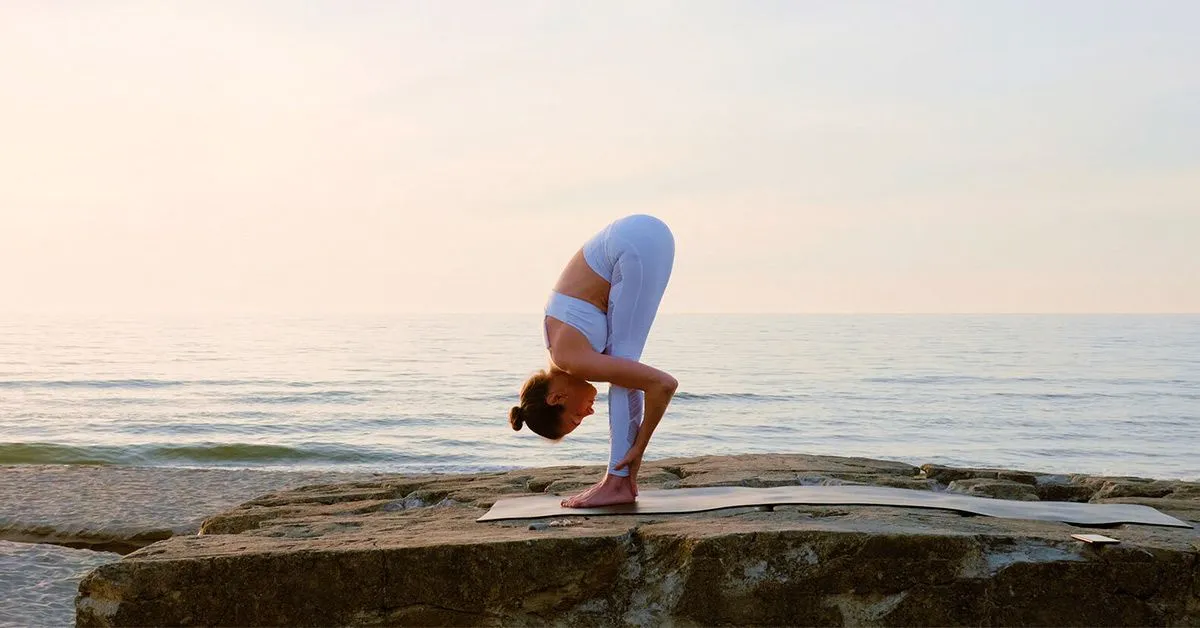
| Forward Fold | 3 min |
Breathing: Nadi Shodhana — 5 min
Mantra: 5 min
3 Week — Subtle Energy Activation (25 min/day)
Objective: Light Kundalini activation (safe and gentle)
- Spinal Wave Movement: 5 min
- Mula Bandha (Root Lock): 1–2 min only
- Mantra: 10 min
- Visualisation: 5–8 min, visualise energy rising through the spine
Caution: Avoid forceful breathing or aggressive energy locks
4 Week — Integration & Inner Awareness (30 min/day)
- Grounding Breath — 5 min
- Mantra + Visualisation — 10 min
- Chakra Sweep Meditation — 15 min
- Optional journaling
Focus: Sensation and experience rather than achievement
Weekly Self-Check
Ask:
- Is my breath smoother?
- Am I calmer or more compassionate?
- Is my sleep deeper?
- Do I feel more present?
Tip: Pause and seek guidance if overwhelming emotions arise
How to Practice Tantric Breath, Mantra & Meditation
4–6 Grounding Breath
- Sit upright, spine tall
- Inhale 4 seconds
- Exhale 6 seconds
- Repeat 20 cycles
- Observe breath as gentle waves
Benefit: Immediate nervous system relaxation
Nadi Shodhana
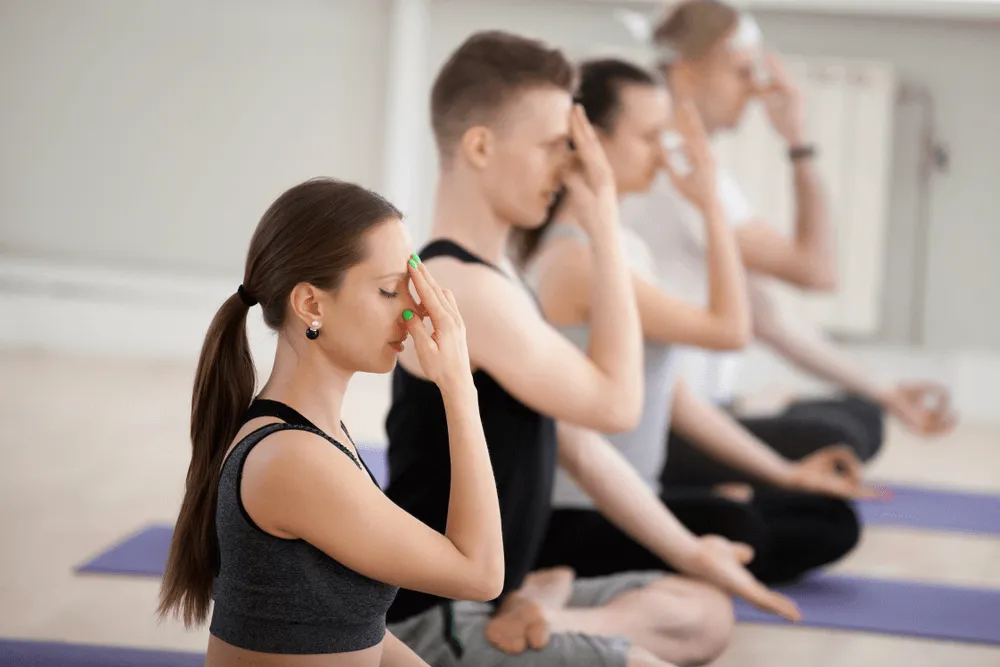
- Close the right nostril, inhale the left
- Close left, exhale right
- Inhale right, close, exhale left
- Repeat 10–20 rounds
Benefit: Mental clarity, energy balance
Chakra Sweep Meditation
Visualise warm, glowing light ascending through:
- Root — safety and stability
- Sacral — creativity and flow
- Solar Plexus — confidence and willpower
- Heart — love and compassion
- Throat — truth and expression
- Third Eye — insight and intuition
- Crown — connection with higher consciousness
Duration: 6–10 breaths at each chakra
Mantra Practice
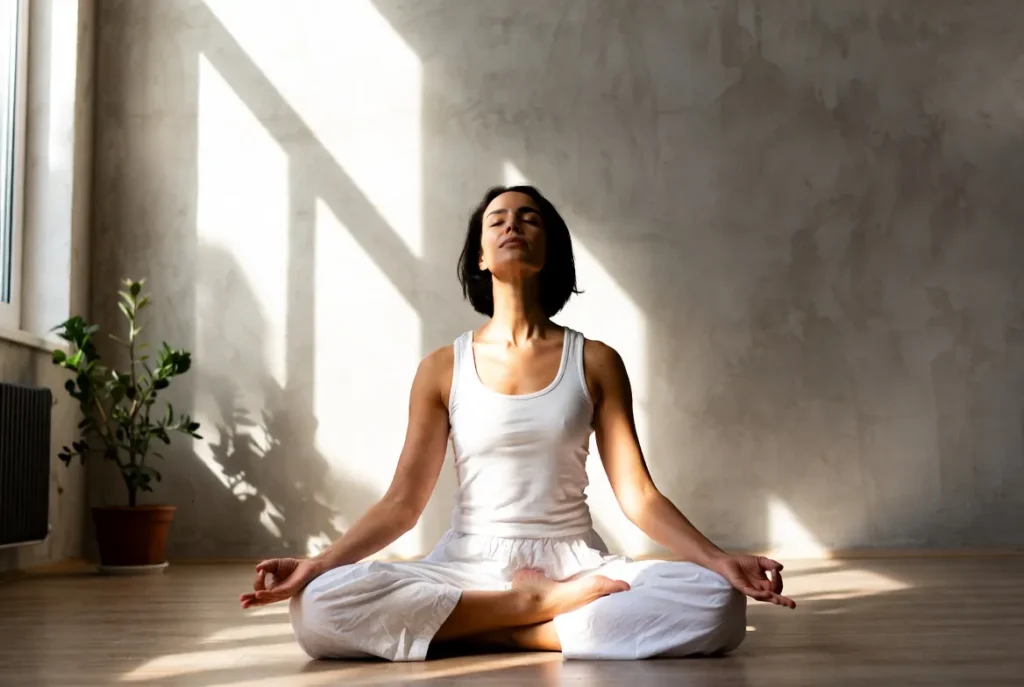
Suggested mantra: “Om Aim Hrim” (clarity and creativity)
- Sit comfortably, eyes closed or relaxed
- Repeat softly, feel the vibration in the chest and head
- Focus on internal resonance
Benefit: Strengthens concentration, emotional balance, and Inner Tranquillity
Partner Practices
Purpose: Build presence, trust, and energetic connection
| Practice | Purpose | Duration |
| Breath Synchronization | Nervous system harmony | 3–5 min |
| Eye Gazing | Trust and connection | 2–3 min |
| Back-to-Back Breathing | Grounding and support | 5 min |
| Heart-Hand Connection | Compassion cultivation | 3 min |
Golden Rules:
- Always ask for consent
- Stop if uncomfortable
- Respect personal boundaries
- Share reflections afterwards
Advanced Tracks
| Type | Focus | Teacher Required |
| White Tantra | Group meditation + kriyas | ✔ |
| Kundalini Tantra | Awakening dormant energy | ✔✔✔ |
| Ritual Tantra | Mantra + deity worship | ✔✔✔ |
Recommended Resources
Books:
- The Tantra Illuminated — Christopher Wallis
- Kundalini Tantra — Swami Satyananda Saraswati
Online Learning:
- Certified yoga schools with published ethical policies
- Reputable research platforms
FAQs
No. Sexuality is optional; Tantric Yoga is a complete spiritual system.
Yes. Most practices — mantra, breathing, meditation — are solo-friendly.
Daily practice often yields improvements in 2–4 weeks.
Yes, if done gently and mindfully.
Light activation is possible; strong awakening requires experienced guidance.
Conclusion
Tantric Yoga is not just a style, it is a way of change, sensibility and conscious experience. It educates about how each breath, each thought, each feeling, and each movement can be utilised as a means of self-development. With the help of these tricks, it is possible to develop a sense of balance, clarity, happiness, and energy balance by applying them to everyday life. Beginning with a soft, 15-30 minutes practice every day, even beginners can observe some positive results in the state of mind, emotional stability, and physical health. A 30-day plan contained in this guide is a safe-paced progressive method of unlocking subtle energy, relating with inner wisdom, and developing mindfulness.
