
Introduction
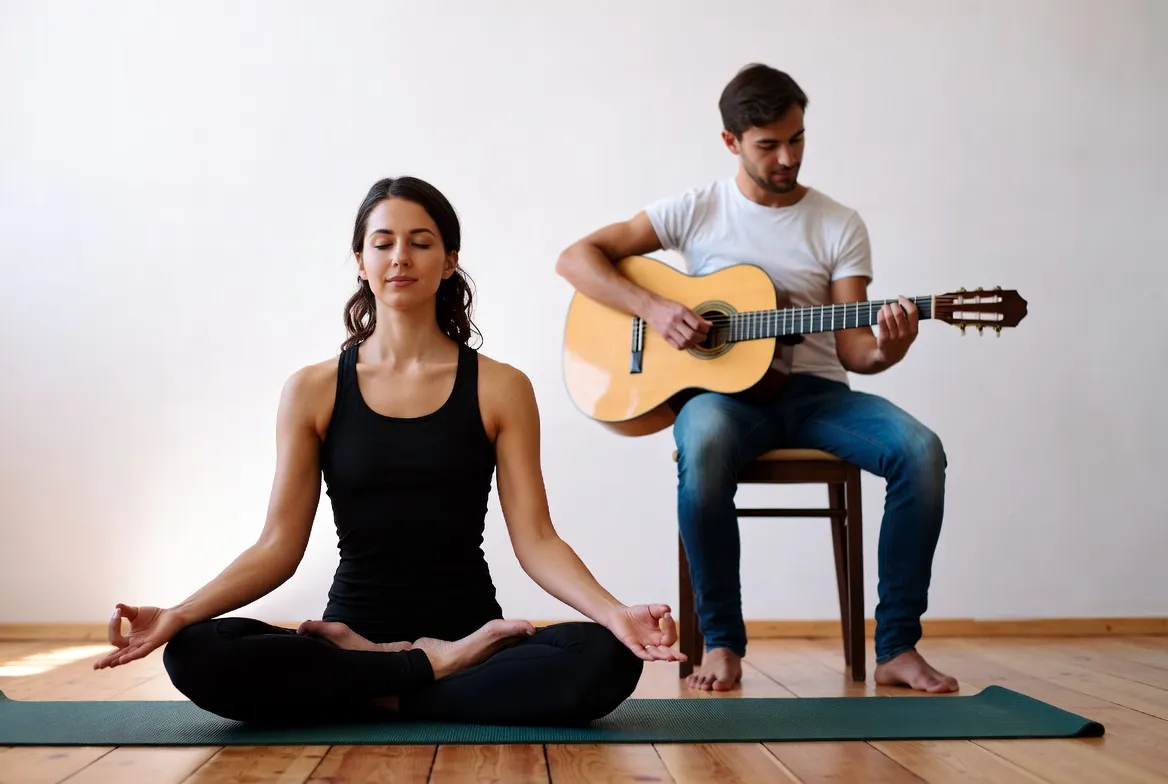
Yoga music is not just a nice Backtrack or Soothing filler music when you are doing yoga. It acts as an energetic guide, invisible, and it determines your breathing, your posture changes, your nervous system, and your stillness.
It is common knowledge among many practitioners that there is nothing like yoga music other than to generate ambiance or calmness. The fact is that sound is directly related to the brain, nerves, emotional centers, and muscular tension formulas. In right way it can motivate free movement, breathing rhythmically, clarity of mind, and emotional contact. Unwisely selected music may do just the contrary, overstimulation of the senses, disturbing consciousness or drawing the attention outside.
What Is Yoga Music? (Clear Definition)
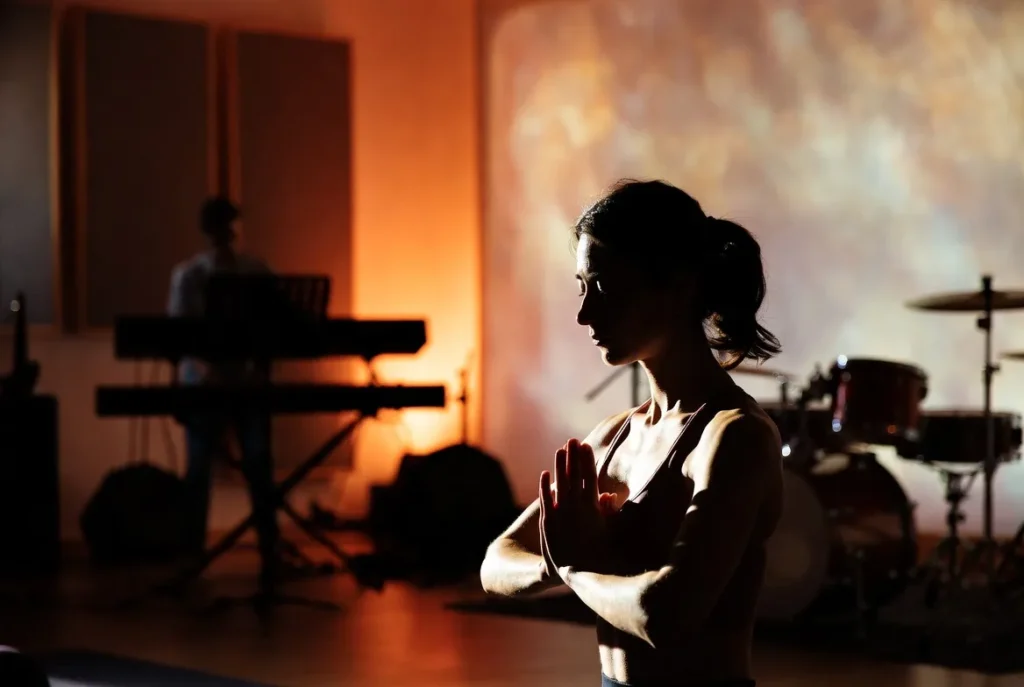
It is consciously chosen soundscapes, tones, rhythms, or deliberate silence applied to facilitate yoga, meditation, breathwork, and inner awareness.
This music is not composed in a way that captures excitement, emotional drama, or distraction, as is the case with entertainment music or commercial music. Its purpose is to:
Cultivate mindful presence
Calm and counter-autonomic nervous system.
Promote breathing consciousness and rhythm.
Create a stable, secure, and alert practice setting.
It may take a wide variety of sounds, with or without intent.
Common Types of Yoga Music
- Instrumental yoga compositions
- Ambient and atmospheric soundscapes
- Natural environmental sounds
Sanskrit mantra chanting
Sound balancing (432 Hz, 528 Hz, and so on) music.
Binaural beat recordings
Silence (a tool of sound that has been used as one of the most powerful)
Essentially,it assists in aligning body, breath, and consciousness and enables the practice to be undertaken by taking it deeper, sensitively, and consciously.
The importance of music in Yoga Practice.
Sound is directly linked neurologically to the autonomic nervous system which controls the stress response, relaxation, heart rate, digestion and breathing pattern.
Slow, normal, regular, melodious sound is an invitation to the organism to pass into the predominance of the parasympathetic, that is, the rest and restore mode. Fast sound, loud sound or irregular sound excites the mind and muscles.
Key Benefits
Mental Benefits
Improves attention and concentration.
Eliminates mind talk and mental duties.
Stresses living in the moment.
Facilitates concentration and inner concentration.
Physical Benefits
- Regulates breath pacing and depth
- Encourages fluid transitions between postures
- Supports consistent tempo during flow sequences
- Helps release muscular holding patterns
Emotional Benefits
- Lowers stress and anxiety responses
- Helps regulate cortisol levels
- Creates emotional containment and safety
Favor mood stability and emotional fortitude.
Carefully chosen will bring the mind to the alpha state and theta state brainwave, which are most suitable for yoga, mindfulness, relaxation, and meditation.
The Ancient History : Nada Yoga.
Yogic traditions had long before digital playlists and recorded sound, understood that sound itself is a direct route to self-consciousness.
What Is Nada Yoga?
Nada Yoga is the primeval science of yogic sound, vibration, and listening to the inner. Nada is the Sanskrit word that means the flow of sound, resonance,, or a current of vibrations.
Based on the classical yoga philosophy:
All existence is vibration.
Nada Yoga is the doctrine of a profound state of clarity and liberation, which is attained by the means of good listening, starting with the outer sound and then gradually moving inwards to the fine inner sound.
Types of Sound in Nada Yoga
| Type | Description |
| Ahata Nada | External sound (music, chanting, instruments) |
| Anahata Nada | Inner sound perceived during deep meditation |
Modern themes remains deeply rooted in Nada Yoga principles, even when practitioners are unaware of the lineage behind the sound.
Modern Science Behind
Contemporary neuroscience increasingly validates what yogic sages understood intuitively thousands of years ago.
How Music Affects the Brain
Different sound patterns influence distinct brainwave states, which correspond to mental and emotional conditions.
Brainwave Influence Table
| Brainwave | Mental State | Music Effect |
| Alpha | Calm alertness | Instrumental yoga music |
| Theta | Meditation, creativity | Ambient & frequency music |
| Delta | Deep rest, sleep | Yoga music for sleep |
Frequency-Based Yoga Music Explained
432 Hz
- Often described as harmonically balanced
- Perceived as grounding and soothing
- Popular for relaxation, meditation, and stress relief
528 Hz
- Commonly called the “love frequency.”
- Associated with emotional recalibration
- Used in meditation and chakra-focused practices
Binaural Beats
- Deliver two slightly different tones to each ear
- Encourage brainwave synchronization
- Used for deep meditation and focused awareness
Types of Yoga Music (Complete Breakdown)
Best for:
- Hatha Yoga
- Vinyasa Flow
- Yin Yoga
Features:
- No lyrical content
- Uses flute, sitar, piano, singing bowls, and strings
- Minimizes cognitive distraction
- Supports breath-movement synchronization
Yoga Music with Mantras
Best for:
- Kundalini Yoga
- Meditation
- Devotional or spiritual practices
Common Sanskrit Mantras:
- Om
- Gayatri Mantra
- So Hum
Mantra-based yoga music works through resonance, repetition, and vibrational entrainment, calming the nervous system naturally.
Nature Sound Yoga Music
Best for:
- Beginners
- Stress reduction
- Restorative yoga
Common sounds:
- Ocean tides
- Rainfall
- Forest ambience
- Wind and birdsong
Natural soundscapes evoke safety signals in the brain, promoting relaxation and ease.
Healing Frequency Yoga Music (432 Hz / 528 Hz)
Best for:
- Meditation
- Chakra balancing
- Yoga for sleep
- Emotional regulation
These compositions are crafted to support deep relaxation and subtle energetic balance.
Yoga Music for Different Yoga Styles
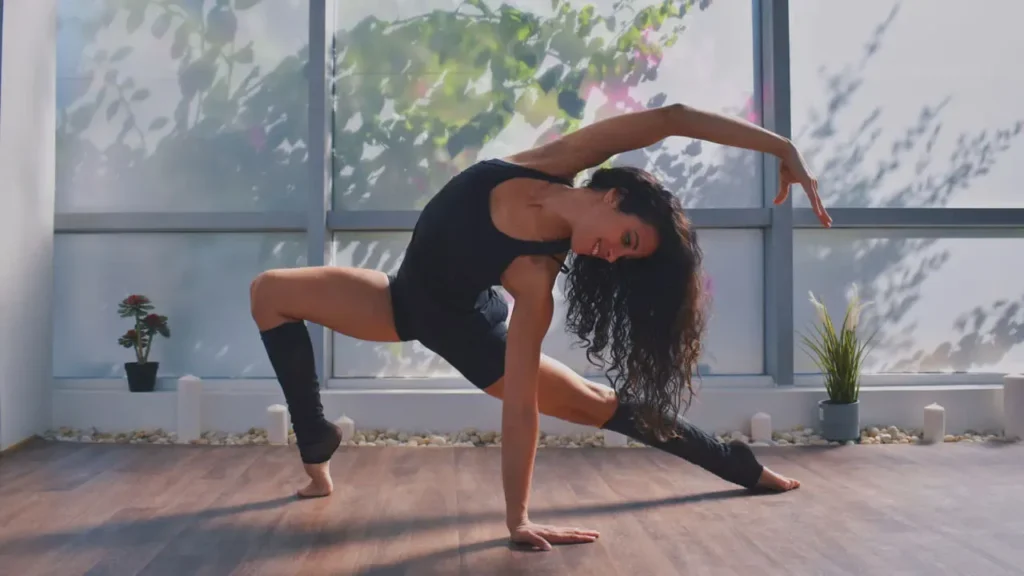
Hatha Yoga Music
- Slow instrumental tracks
- Gentle pacing
- Minimal rhythmic complexity
Vinyasa Yoga Music
- Consistent ambient rhythms
- Soft electronic or Instrumental layers
- Supports breath-led movement flow
Yin Yoga Music
- Spacious ambient soundscapes
- Nature tones
- Long, uninterrupted tracks
Kundalini Yoga Music
- Traditional mantras
- Harmonium accompaniment
- Rhythmic chanting and percussion
Meditation & Pranayama Music
- Silence
- Singing bowls
- Frequency-based tones
Yoga Music for Specific Intentions
Music for Beginners
- Instrumental only
- Predictable and steady
- No lyrics or abrupt changes
Yoga Music Without Lyrics
- Reduces mental association
- Enhances concentration
- Supports mindful awareness
Music for Sleep
- Delta-wave or ambient tracks
- Extremely slow tempo
- No sudden dynamic shifts
Morning Yoga Music
- Light, uplifting melodies
- Gentle rhythmic pulse
- Avoids heavy bass
Yoga Music for Stress Relief
- Nature soundscapes
- 432 Hz yoga music
- Soft, grounding tones
How to Choose the Right Yoga Music
- Clarify your intention (Relaxation, energy, meditation)
- Align music with yoga style (Flow, Yin, breathwork)
- Choose an instrumental or a mantra intentionally
- Avoid abrupt tempo or volume changes
- Test music before practice begins
Common Yoga Music Mistakes to Avoid
- Playing pop or commercial tracks
- Using lyrical music that triggers memories
- Volume louder than the breath
- Fast rhythms during restorative practices
Pros & Cons of Using Yoga Music
Pros
- Enhances focus and immersion
- Reduces stress response
- Supports breath rhythm
- Creates cohesive practice space
Cons
- Can be distracted if poorly chosen
- Not ideal for all meditation traditions
- Overuse may reduce inner listening skills
Safety Tips & Contraindications
- Maintain low volume levels
- Avoid binaural beats if prone to headaches
- Advanced meditators may benefit more from silence
Tips for Yoga Teachers & Yoga Classes
- Always preview playlists fully
- Maintain consistent volume
- Offer silent classes occasionally
- Match music complexity to student experience
Duration & Frequency Recommendations
| Practice Type | Music Duration |
| Morning Yoga | 20–45 minutes |
| Vinyasa Class | 60 minutes |
| Meditation | 10–30 minutes |
| Sleep Yoga | 30–90 minutes |
Yoga Philosophy Behind Sound & Silence
In yogic philosophy, sound ultimately dissolves into silence.
Music is a supportive instrument, not the destination. As awareness matures, many practitioners naturally gravitate toward simpler soundscapes or complete quiet.
FAQs
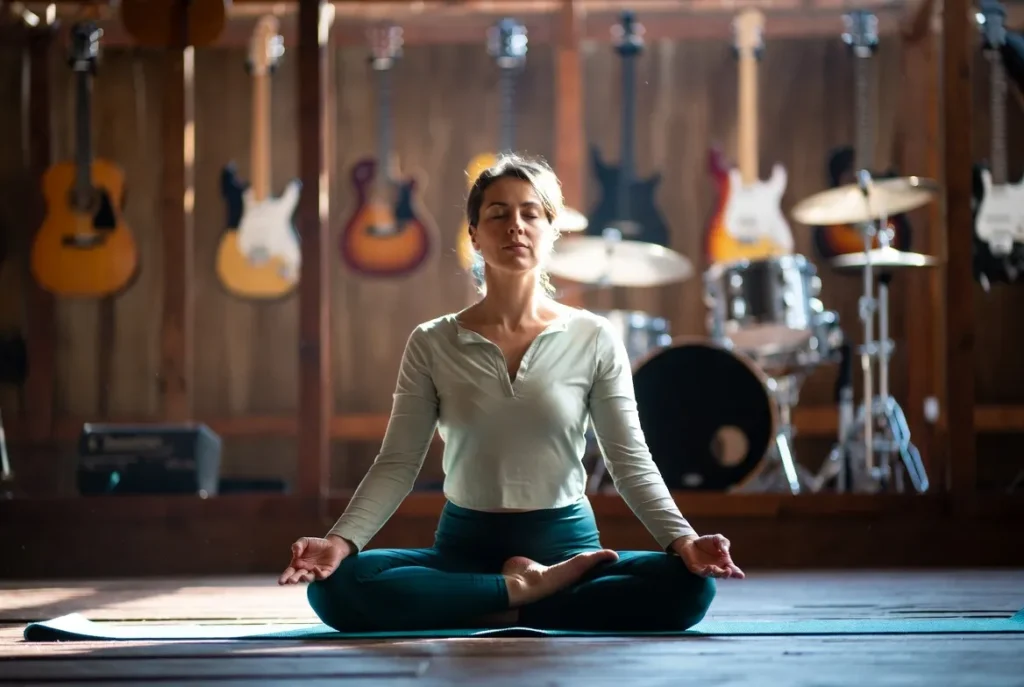
No. Yoga can be practiced in silence. Music is optional.
Slow non-lyric instrumental yoga music.
Most have some calming effects, although studies are underway.
Yes, especially ambient, mantra, or frequency-based music.
Always soft enough to hear your breath.
Conclusion
Yoga music is not about filling silence — it is about supporting awareness.
When chosen consciously, Sound Becomes a bridge between:
Movement and stillness
The wisdom of antiquity and the wisdom of modernity.
Body, breath, and mind
It boils down to mindful listening, whether you are listening to the instrumental yoga music, Sanskrit mantra chanting, 432 Hz frequencies, or simply pure silence.
Let sound be your guide- but never set it to the place of inner perception.
