
Introduction
Sedentary lifestyles control our lives in the digital era. Hours spent sitting at laptops, scrolling on smartphones, driving, and sitting at office desks Gradually Change our bodies. The human spine, which was meant to be movable, straight, and able to maintain an upright posture, is being constantly squashed, flattened, and left motionless.
This long-lasting immobility usually results in:
• Chronic lumbar pain
• Tight hip flexors
• Cervical stiffness
• Postural distortion
• Low metabolic vitality
• Reduced joint elasticity
These musculoskeletal dysfunctions are no longer isolated issues — they are now global wellness epidemics.
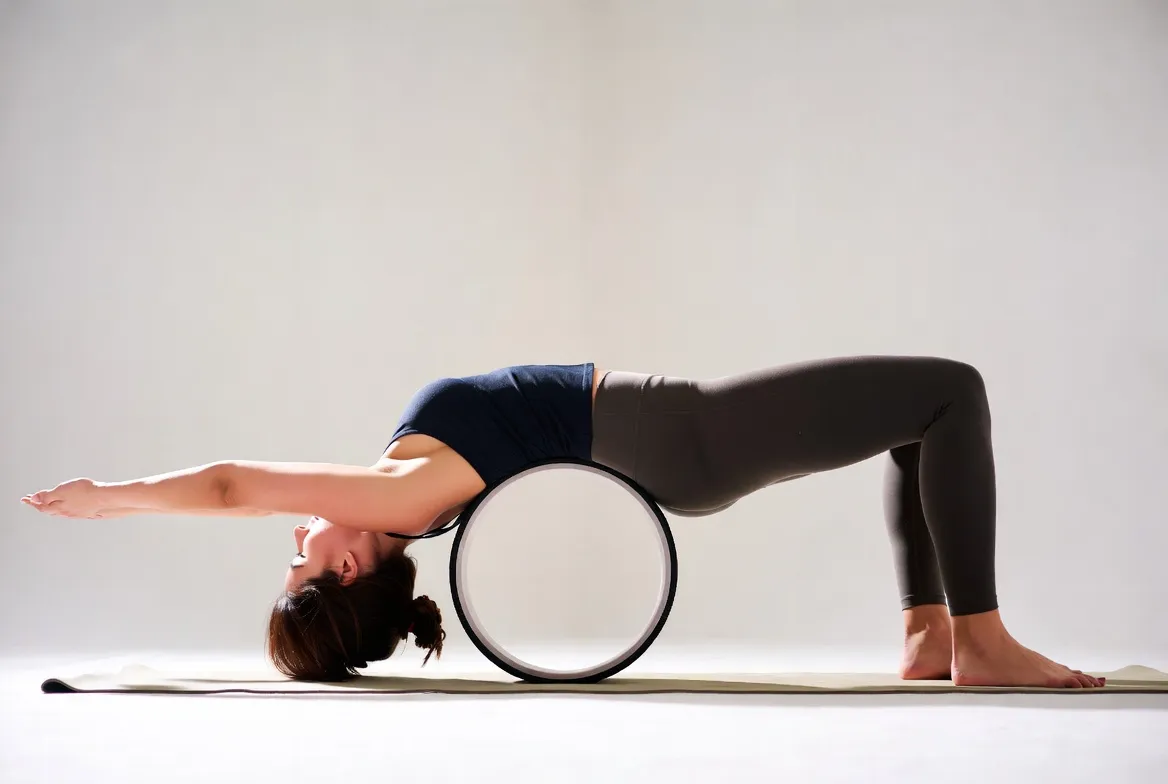
As a response, millions of yoga practitioners, rehabilitation specialists, physical therapists, fitness trainers, athletes, and desk workers are adopting one minimal yet transformative wellness instrument — the yoga wheel.
Originally engineered to assist yogis in achieving safer backbends, the yoga wheel has evolved into a holistic spinal therapy, posture correction, and mobility enhancement tool.
It is now widely utilized to:
Correct forward-rounded shoulders
Restore spinal curvature
Increase thoracic flexibility
Improve muscular engagement
Reduce nervous system tension
Cultivate proprioceptive awareness
Unlike yoga blocks or resistance straps, the circular architecture of the yoga wheel mirrors the natural curvature of the spine. This design permits progressive spinal opening without collapsing vertebrae, making it exceptionally safe for both beginners and seasoned yogis.
In this complete Yoga Wheel Guide 2025, you will learn:
• What a yoga wheel really does
• All physical & mental benefits
• Step-by-step exercises & poses
• Safety rules & contraindications
• Buying guide for the best yoga wheel
• Beginner to advanced training plans
What Is a Yoga Wheel?
A yoga wheel is a circular, hollow yoga accessory, generally measuring between 10 and 12 inches in diameter. It is coated with a textured, slip-resistant layer of TPE foam, cork, or rubber padding to provide stability, grip, and comfort.
This versatile prop supports:
• The spinal column
• The shoulder girdle
• The thoracic cavity
• The pelvic region
• Lumbar musculature
• The abdominal wall
By acting as a mobile spine support, the wheel enables:
• Controlled spinal extension
• Progressive back bending
• Joint lubrication
• Myofascial release
• Neuromuscular re-education
Main Functions & Benefits
| Function | Benefit |
| Spine support | Relieves vertebral compression |
| Balance aid | Improves neuromuscular coordination |
| Flexibility tool | Deepens passive & active stretches |
| Strength builder | Activates intrinsic core muscles |
| Mobility enhancer | Restores joint range of motion |
Benefits of Using a Yoga Wheel
Physical Benefits
Routine yoga wheel integration can:
Increase thoracic and lumbar flexibility
Ease chronic lower back discomfort
Rehabilitate rounded shoulders
Expand the chest cavity
Activate abdominal stabilizers
Strengthen gluteal muscles
Improve kinesthetic balance
Promote muscular recovery
Yoga wheel for back pain relief functions by decompressing spinal discs, encouraging synovial fluid circulation, and reducing muscular adhesions.
Mental & Emotional Benefits
Decreases cortisol levels
Enhances diaphragmatic breathing
Supports parasympathetic activation
Improves mental clarity
Facilitates emotional release
Promotes restorative sleep cycles
A supple spine contributes to nervous system stability and psychological resilience.
Step-by-Step Yoga Wheel Exercises
| Step | Action |
| 1 | Perform spinal warm-ups |
| 2 | Position the wheel beneath the mid-spine |
| 3 | Gradually recline backward |
| 4 | Inhale through the nose |
| 5 | Maintain for 10–30 seconds |
| 6 | Return to neutral posture |
Proper Form & Alignment
Maintain abdominal engagement
Keep the pelvis symmetrical
Support the cervical spine
Avoid spinal collapse
Utilize wall assistance if needed
Breathing Technique
| Phase | Breath |
| Entering stretch | Deep diaphragmatic inhale |
| Holding | Slow nasal respiration |
| Releasing | Extended controlled exhale |
Muscles Targeted by Yoga Wheel
• Erector spinae
• Rectus abdominis
• Iliopsoas
• Hamstrings
• Pectoralis major
• Deltoid complex
Yoga Wheel Variations by Level
| Level | Examples |
| Beginner | Supported chest opener |
| Intermediate | Rolling plank, elevated bridge |
| Advanced | Handstand prep, unilateral wheel poses |
Common Mistakes to Avoid
Skipping mobility preparation
Forcing spinal depth
Locking joints
Breath holding
Overloading lumbar segments
Yoga Wheel Safety Tips
Practice on a yoga mat
Progress gradually
Maintain steady breathing
Discontinue upon sharp discomfort
Never force flexibility
Contraindications – Who Should Avoid the Yoga Wheel?
Avoid the yoga wheel if you have:
• Recent spinal operations
• Severe bone density loss
• Untreated disc herniation
• Vestibular disorders
Tips for Beginners
Train near a wall
Select padded wheels
Practice 3–4 sessions weekly
Pair with gentle flows
Duration & Frequency
| Goal | Time |
| Flexibility | 10 minutes daily |
| Posture | 15 minutes daily |
| Rehabilitation | 3 times weekly |
Yoga Philosophy Behind the Wheel
Yogic scriptures describe the spine as the primary pranic channel. When spinal pathways are open, life force energy flows freely, enhancing emotional equilibrium, heart expansion, throat chakra expression, and cognitive lucidity.
How to Choose the Best Yoga Wheel
| Feature | Best Option |
| Beginners | 12” foam-padded |
| Eco-friendly | Cork wheel |
| Rehab | Soft density wheel |
| Advanced | Hard-core wheel |
Pros & Cons
Pros
Enhances posture
Cost-effective
Portable
Safe stretching support
Cons
Requires correct technique
Not suitable for all medical conditions
FAQs
Yes, it provides stable spinal support and controlled mobility for new practitioners.
Yes, it gently decompresses the spine and relaxes contracted musculature.
3–5 sessions per week is optimal.
Conclusion
Among the most valuable contemporary yoga aids that can be used in spinal decompression, positioning, mobility enhancement, and musculoskeletal aches is the yoga wheel.
This Unique Fitness device can remarkably change not only your physical but also your mental health, if you want to feel taller, lighter, stronger, and without the constant tension.
Find additional pro yoga materials at theyogafitness.com and bring your yoga practice to a new level today.
