Introduction
Dancer Pose Yoga, also known as Natarajasana, is one of the most elegant yet physically demanding standing yoga poses. It combines balance, flexibility, strength, and deep focus into a single flowing posture.
At first glance, it looks like a graceful dance — but when you attempt it, you quickly realize it challenges your entire body: ankles, knees, hips, spine, shoulders, and even your mental concentration.
Most beginners assume they fail because they are “Not Flexible Enough.” However, the real reason is usually poor alignment understanding, weak stabilizer muscles, and a lack of progression training.
In this complete guide, you will learn how to safely practice Dancer Pose Yoga, fix common mistakes, understand why you struggle, and follow a structured progression system that actually works.
By the end, you will not just “try” the pose — you will understand it.
What is Dancer Pose Yoga (Natarajasana)?
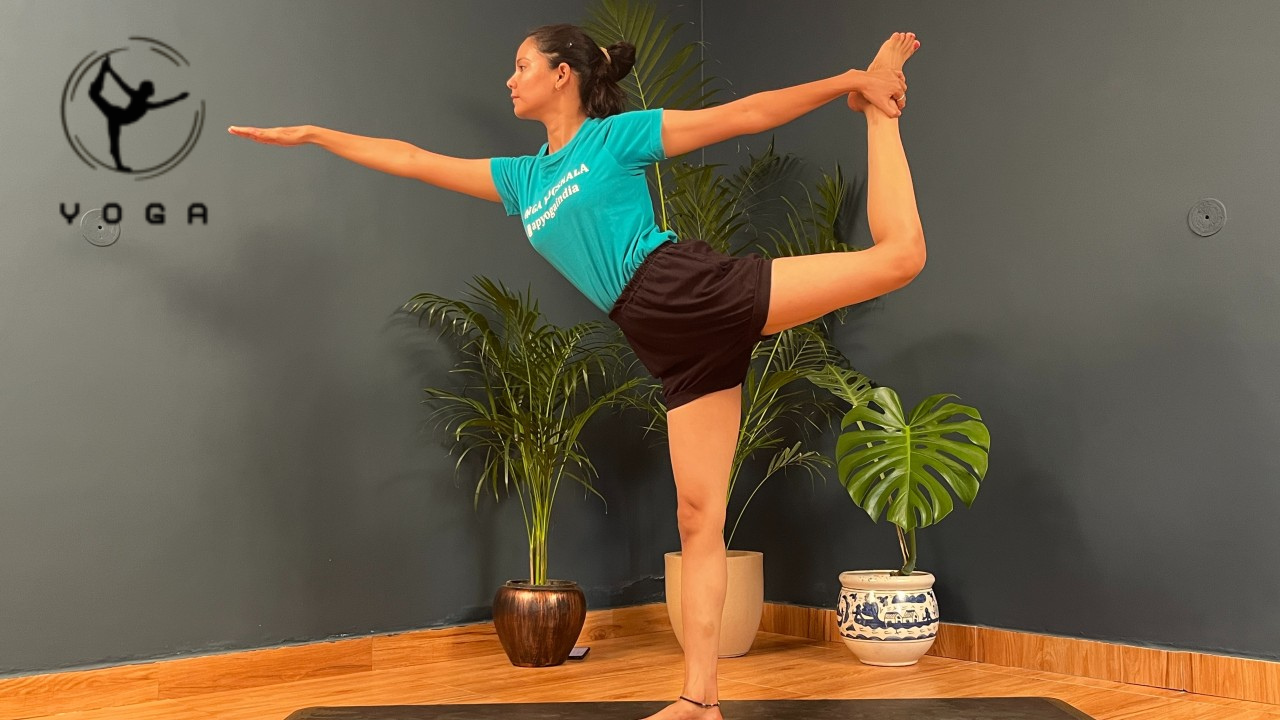
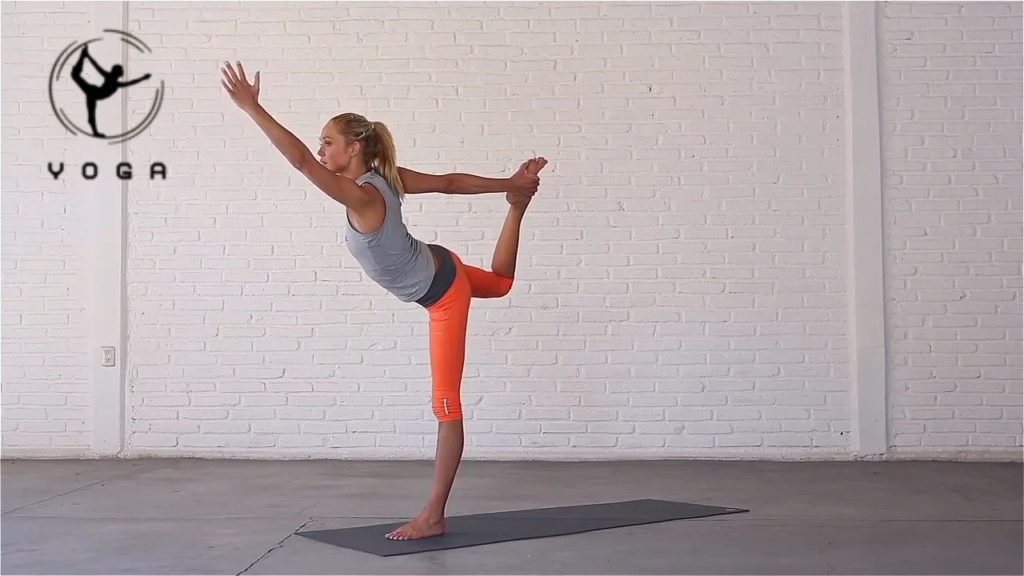
Dancer Pose Yoga (Natarajasana) is a standing backbend and balancing posture where:
- You stand on one leg
- The opposite leg is lifted backward
- One hand holds the foot or ankle
- The other arm extends forward for balance
It is named after Nataraja, the Hindu form of Lord Shiva as the cosmic dancer — symbolizing rhythm, balance, and transformation.
Key Idea:
This pose is not about flexibility alone. It is about controlled instability — learning to stay calm while the body is in motion and in imbalance.
Benefits of Dancer Pose Yoga
Physical Benefits
- Improves full-body balance and coordination
- Strengthens ankles, knees, and hip stabilizers
- Deeply stretches the quadriceps and hip flexors
- Enhances spinal flexibility and back strength
- Opens shoulders and chest
- Improves posture and alignment habits
Mental Benefits
- Improves focus and concentration
- Builds patience under pressure
- Enhances body awareness (proprioception)
- Reduces stress through mindful breathing
Emotional Benefits
- Builds confidence in physical control
- Encourages calmness during instability
- Creates a sense of flow and mindfulness
Step-by-Step: How to Do Dancer Pose Yoga
Step 1: Start in Mountain Pose (Tadasana)
Stand tall with feet grounded, spine straight, and gaze forward.
Step 2: Shift Weight to One Leg
Engage the standing leg. Do not lock the knee — keep a micro bend.
Step 3: Bend Opposite Knee
Bring your heel toward your glutes slowly.
Step 4: Hold the foot or Ankle
Use your same-side hand to gently hold your foot or ankle.
Step 5: Kick Back & Lift
Press your foot into your hand while lifting the leg backward.
Step 6: Extend Forward Arm
Reach the opposite arm forward like an arrow for balance.
Step 7: Hold & Breathe
Stay for 5–10 breaths with steady focus and calm breathing.
Proper Form & Alignment
Alignment is what separates stability from injury.
Key Alignment Rules
- Keep hips square (avoid opening sideways)
- Engage core muscles to support the lower back
- Lift the chest instead of collapsing forward
- Keep standing knee soft (never locked)
- Focus gaze on a fixed point (drishti)
Pro Insight:
The real stability comes from leg engagement + core control, not from pulling the foot harder.
Breathing Technique
Breathing is often ignored, but it is essential for balance.
Correct breathing pattern:
- Inhale: prepare, lengthen spine
- Exhale: lift leg and deepen balance
- Maintain slow nasal breathing Throughout
Why it matters:
Breathing stabilizes the nervous system, reducing shaking and loss of balance.
Muscles Targeted in Dancer Pose Yoga
| Muscle Group | Role in Pose |
| Quadriceps | Stretching and lengthening |
| Hamstrings | Supporting leg control |
| Glutes | Stabilizing hip extension |
| Core muscles | Balance and posture control |
| Ankles & calves | Standing stability |
| Spinal muscles | Backbend support |
| Shoulders | Arm extension control |
Variations of Dancer Pose Yoga
Beginner Variation
- Use wall support
- Hold the ankle instead of the foot
- Keep torso upright
Intermediate Variation
- Use a yoga strap around the foot
- Lift leg higher with control
- Reduce wall dependency
Advanced Variation
- Full deep backbend
- Strong leg extension
- Hands-free variation (expert level only)
Beginner Progression System
1–2: Foundation Building
- Practice Tree Pose
- Strengthen standing balance
- Train ankle stability
3–4: Assisted Dancer Pose
- Use wall support
- Practice strap variation
- Focus on hip alignment
5–6: Controlled Lift
- Increase hold time
- Reduce assistance
- Improve core engagement
7+: Full Expression
- Work toward a deeper backbend
- Improve breath control
- Stabilize for 10+ breaths
Common Mistakes in Dancer Pose Yoga
1. Overarching Lower Back
Leads to compression instead of flexibility.
2. Locking Standing Knee
Reduces balance and increases injury risk.
3. Pulling Foot Too Hard
Creates shoulder tension and instability.
4. Opening Hips Too Early
Breaks alignment and balance structure.
5. Holding Breath
Causes tension and loss of control.
Why You Struggle With Dancer Pose Yoga
If you cannot hold the pose, it is usually due to:
- Tight quadriceps
- Weak ankle stabilizers
- Poor core engagement
- Limited spinal mobility
- Weak balance system (Proprioception)
Important truth:
This is not just a flexibility pose — it is a neuromuscular coordination skill.
Safety Tips
- Warm up before practice
- Avoid forcing the backbend
- Use props when needed
- Practice near a wall initially
- Stop if sharp pain occurs
Contraindications
- Knee injuries
- Lower back pain
- Shoulder injuries
- Severe balance disorders
- Recent surgery
Always consult a healthcare professional if unsure.
Tips for Beginners
- Start with the Tree Pose daily
- Strengthen ankles with simple balance drills
- Stretch quadriceps regularly
- Practice 5–10 minutes consistently
- Do not rush progression
Consistency beats intensity in yoga.
Science Behind Dancer Pose Yoga
From a biomechanical perspective, Dancer Pose trains:
- Proprioception (body awareness in space)
- Isometric strength (holding muscles under tension)
- Neuromuscular coordination (brain-muscle communication)
It also improves vestibular system function (inner ear balance control), which is essential for stability.
Home Practice Routine (15 Minutes)
- Tree Pose – 2 minutes
- Standing leg balance drills – 3 minutes
- Quad stretches – 3 minutes
- Wall-supported Dancer Pose – 5 minutes
- Deep breathing – 2 minutes
Comparison Table: Dancer Pose vs Other Balance Poses
| Pose | Difficulty | Focus | Benefit |
| Tree Pose | Easy | Balance foundation | Stability training |
| Warrior III | Medium | Core strength | Full-body balance |
| Dancer Pose | Hard | Flexibility + balance | Advanced control |
Pros & Cons
Pros
- Builds full-body balance
- Improves posture
- Enhances flexibility
- Strengthens mental focus
Cons
- Difficult for beginners
- Requires consistent practice
- Risk of lower back strain if misaligned
Pro Tips
- Engage the glutes before lifting the leg
- Think “lift, not kick back.”
- Keep breath slow, even when unstable
- Use a micro-bend in the standing knee always
- Focus gaze slightly above eye level for stability
FAQs
Yes, but beginners should use wall support and progress slowly.
It requires balance, flexibility, and core control at the same time.
Usually, 4–8 weeks of consistent practice for beginners.
Yes, if you overarch or force the pose incorrectly.
Tree Pose, quad stretches, and hip openers.
Conclusion
Dancer Pose Yoga (Natarajasana) is not just a physical posture — it is a test of balance, patience, strength, and awareness.
Most people fail not because they lack flexibility, but because they skip progression and Alignment Understanding.
If you follow the structured steps, practice consistently, and respect your body’s limits, this pose becomes achievable — and eventually graceful.
Continue your yoga journey and explore more expert guides on theyogafitness.com to deepen your practice safely and effectively.
Disclaimer
This article is for informational purposes only. It is not medical advice. Please consult a healthcare professional before starting any new exercise or yoga practice.
