
Introduction
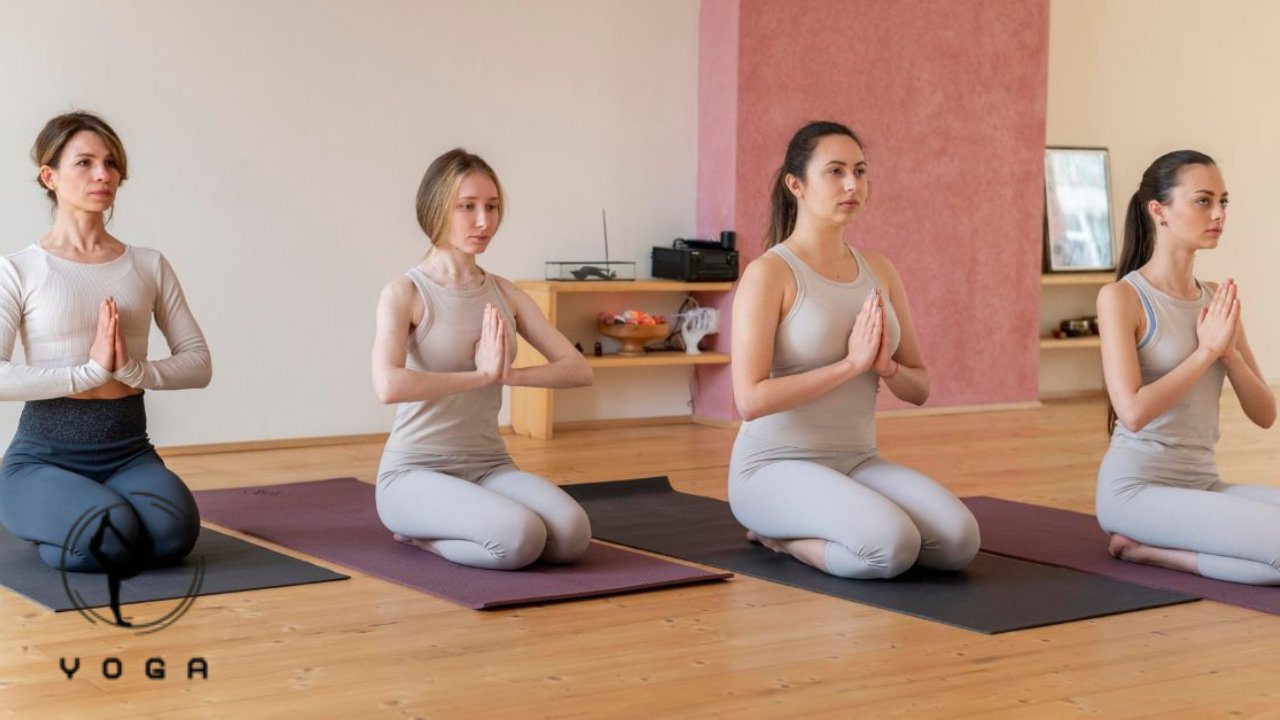
4 people yoga poses are one of the most exciting ways to turn yoga into a shared experience. Instead of practicing alone, group yoga combines balance, communication, Strength, Flexibility, Coordination, and trust into one highly engaging workout.
Over the last few years, group yoga challenges have exploded across social media platforms like Instagram, TikTok, and YouTube. From beginner-friendly circle poses to advanced acro yoga pyramids, more people are exploring yoga with friends, family members, teammates, and wellness communities.
But here’s the truth:
Most group yoga poses look much easier online than they actually are.
Without proper positioning, breathing, alignment, and communication, even simple formations can feel unstable or unsafe. That’s why this guide goes beyond basic pose lists and teaches you how to practice group yoga correctly.
In this complete pillar guide, you’ll learn:
- Easy beginner poses
- Intermediate balancing formations
- Advanced acro yoga poses
- Proper setup and alignment
- Safety rules and spotting tips
- Breathing coordination
- Common mistakes to avoid
- Best yoga props and mats
- Expert-level balance techniques
Whether you’re trying yoga with friends for fun or building advanced acro yoga skills, this guide will help you practice safely and confidently.
What Are the 4 People Yoga Poses?
4 people yoga poses are synchronized yoga formations performed by four participants working together in balance and coordination.
Unlike solo yoga, group yoga requires:
- Team communication
- Shared balance
- Weight distribution
- Timing and rhythm
- Mutual trust
- Coordinated breathing
These poses can range from simple seated formations to advanced acrobatic stacks involving multiple levels of body support.
Group Yoga Styles
| Style | Difficulty | Focus |
| Beginner Group Yoga | Easy | Coordination & fun |
| Partner Yoga Chains | Moderate | Balance & flexibility |
| Acro Yoga | Advanced | Strength & lifting |
| Yoga Challenges | Mixed | Creativity & teamwork |
| Pyramid Formations | Advanced | Stability & body control |
Many yoga instructors use group yoga for:
- Team-building activities
- Wellness retreats
- School fitness sessions
- Yoga workshops
- Corporate wellness programs
- Social yoga events
Benefits of 4 People Yoga Poses
1. Improves Communication Skills
Group yoga requires constant verbal and non-verbal communication.
Participants must coordinate:
- Movements
- Timing
- Weight shifts
- Breathing rhythm
- Entry and exit transitions
This improves teamwork and awareness.
2. Builds Trust and Connection
Many poses require physical support from teammates.
This creates stronger:
- Friendships
- Team trust
- Emotional connection
- Group confidence
That’s one reason why partner and group yoga are popular in wellness retreats.
3. Strengthens Core Stability
Most formations heavily activate the core muscles because every participant must stabilize the body continuously.
Key Muscles Targeted
- Rectus abdominis
- Obliques
- Transverse abdominis
- Glutes
- Shoulders
- Hip stabilizers
4. Improves Balance and Coordination
Balancing with multiple people challenges your nervous system differently than solo yoga.
Benefits Include
- Better body awareness
- Faster reaction time
- Improved posture
- Enhanced motor control
5. Makes Yoga More Enjoyable
Many beginners find group yoga less intimidating than traditional yoga classes.
It feels:
- Social
- Fun
- Motivating
- Interactive
- Creative
This often improves long-term consistency.
Safety Rules Before Trying Group Yoga
Essential Safety Guidelines
Always Warm Up First
Never attempt balancing poses with cold muscles.
Focus on warming:
- Wrists
- Shoulders
- Hips
- Hamstrings
- Ankles
- Core muscles
Communicate Constantly
Use simple verbal cues such as:
- “Ready”
- “Lift”
- “Hold”
- “Coming down”
- “Slowly”
Poor communication is one of the biggest causes of falls.
Start With Beginner Poses
Do not attempt advanced acro formations immediately.
Master these first:
- Stability
- Synchronization
- Controlled breathing
- Weight shifting
- Core engagement
Use Proper Flooring
Practice on:
- Yoga mats
- Grass
- Padded yoga floors
Avoid slippery or hard surfaces.
Assign a Spotter
For advanced poses, at least one person should monitor safety instead of joining the formation.
A spotter helps prevent injuries during falls.
Best Warm-Ups Before 4 Person Yoga Poses
A proper warm-up prepares joints and muscles for balance-based movements.
Recommended 10–15 Minute Warm-Up
1. Cat-Cow Stretch
Benefits
- Improves spinal mobility
- Activates core muscles
- Releases back tension
2. Downward Dog
Benefits
- Warms shoulders
- Lengthens hamstrings
- Activates calves
3. Wrist Circles
Essential for weight-bearing poses.
4. Plank Hold
Activates
- Core
- Shoulders
- Stabilizer muscles
5. Hip Openers
Improves mobility for seated and stacked formations.
Easy 4 People Yoga Poses for Beginners
1. Circle Seated Pose
Difficulty: Beginner
How to Do It
- Sit in a circle facing outward
- Cross your legs comfortably
- Hold hands or shoulders
- Sit tall with straight spines
- Synchronize breathing for 30 seconds
Benefits
- Improves posture
- Builds coordination
- Beginner-friendly
- Encourages synchronized breathing
Common Mistakes
- Rounded backs
- Uneven posture
- Holding breath
2. Four-Way Plank Pose
Difficulty: Beginner
Steps
- Form a square shape
- Everyone enters plank position
- Align shoulders over wrists
- Engage the core
- Hold for 20–30 seconds
Muscles Targeted
- Core
- Chest
- Shoulders
- Glutes
Pro Tip
Keep hips level to maintain stability.
3. Group Boat Pose
Difficulty: Beginner
Instructions
- Sit facing inward
- Hold hands
- Lean back slightly
- Lift legs simultaneously
- Balance together
Benefits
- Strengthens abs
- Improves balance
- Builds teamwork
4. Synchronized Warrior Pose
Difficulty: Beginner
Steps
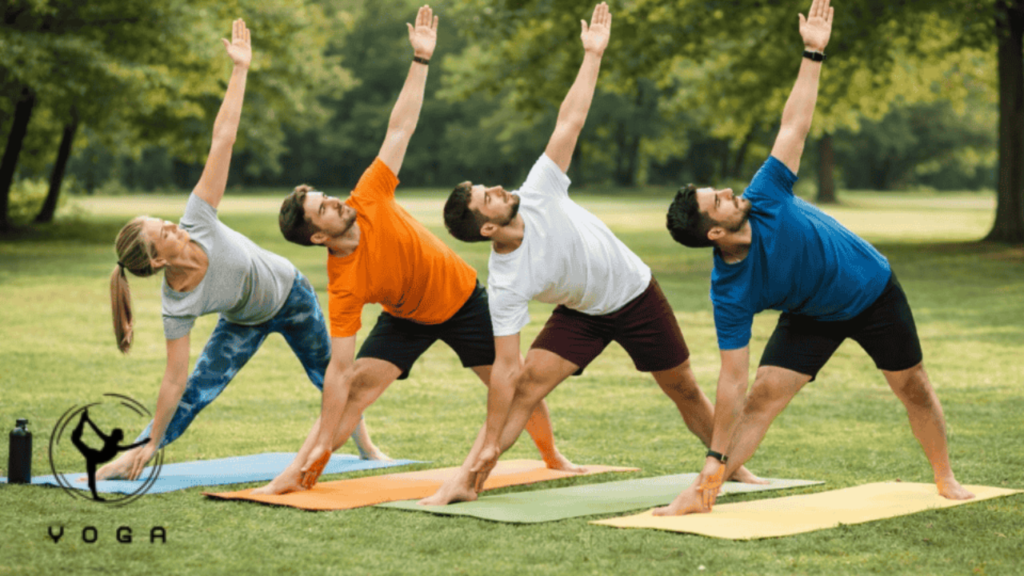
- Stand side by side
- Enter Warrior II pose together
- Match arm height and stance width
- Coordinate breathing
Benefits
- Improves posture
- Enhances concentration
- Builds lower-body strength
5. Domino Stretch Formation
Difficulty: Beginner
How It Works
Each participant performs a seated forward fold while lightly leaning against another person for support.
Why It Helps
- Improves flexibility
- Creates a relaxing group stretch
- Reduces muscle stiffness
Intermediate 4 Person Yoga Poses
6. Double Tabletop Formation
Difficulty: Intermediate
Instructions
- Two participants form tabletop positions
- Remaining participants carefully balance the above
- Keep backs flat and stable
- Move slowly into position
Safety Tip
Never jump into the pose.
7. Four Person Star Pose
Difficulty: Intermediate
Benefits
- Improves flexibility
- Enhances body awareness
- Builds coordination
Key Alignment Tip
Extend evenly through fingers and toes.
8. Group Wheel Pose
Difficulty: Intermediate
Important Preparation
Warm up shoulders and spine thoroughly before attempting.
Muscles Worked
- Back
- Glutes
- Chest
- Shoulders
Mistakes to Avoid
- Forcing the backbend
- Collapsing elbows
- Uneven weight distribution
9. Side Balance Chain
Difficulty: Intermediate
Participants connect side planks in a synchronized chain formation.
Benefits
- Builds oblique strength
- Improves shoulder stability
- Challenges coordination
Advanced 4 People Yoga Poses
10. 4 Person Pyramid Pose
Difficulty: Advanced
How It Works
- Two strong bases stabilize the bottom
- One participant balances in the middle
- Fourth participant forms the top position
Skills Required
- Core strength
- Communication
- Body awareness
- Confidence
Safety Warning
Use spotters at all times.
11. Vertical Stack Formation
Difficulty: Advanced
This is one of the most challenging group yoga formations.
Requirements
- Acro yoga experience
- Excellent balance
- Shoulder stability
- Professional supervision
12. Flying Group Formation
Difficulty: Expert
Important
Attempt only with experienced practitioners and padded flooring.
Acro Yoga Poses for 4 People
Acro yoga combines:
- Yoga
- Acrobatics
- Strength training
- Partner balancing
It is much more physically demanding than traditional yoga.
Popular Acro Yoga Formations
Bird Formation
One base supports another Participant horizontally.
Throne Pose
A seated balancing structure using multiple supporters.
Group Flying Whale
An advanced balancing pose requiring full-body synchronization.
Proper Form & Alignment Tips
Correct alignment is critical in group yoga.
Alignment Principles
Keep the Core Engaged
A strong core stabilizes every movement.
Maintain Neutral Spine
Avoid excessive arching or rounding.
Stack Joints Properly
Align:
- Wrists under shoulders
- Knees under hips
- Ankles under knees
Distribute Weight Evenly
Sudden shifts can destabilize the formation.
Breathing Technique for Group Yoga
Breathing synchronization improves stability and rhythm.
Best Breathing Method
Inhale During Preparation
Prepare the movement mentally and physically.
Exhale During Effort
Exhale while lifting or balancing.
Keep Slow Rhythmic Breaths
Avoid shallow chest breathing.
Muscles Targeted in 4 Person Yoga Poses
| Muscle Group | Function |
| Core | Stability & balance |
| Shoulders | Weight support |
| Glutes | Pelvic stability |
| Hamstrings | Flexibility |
| Hip Flexors | Leg control |
| Upper Back | Posture support |
| Forearms | Grip strength |
Beginner, Intermediate & Advanced Variations
| Level | Recommended Poses |
| Beginner | Circle pose, boat pose, synchronized warrior |
| Intermediate | Star pose, tabletop formation |
| Advanced | Pyramid pose, flying formation |
| Expert | Vertical stack acro yoga |
Duration & Frequency
How Long Should You Practice?
Beginners
- 20–30 minutes
- 2–3 times weekly
Intermediate Practitioners
- 30–45 minutes
- 3–4 sessions weekly
Advanced Groups
- 45–60 minutes
- Structured training sessions
Common Mistakes in Group Yoga
1. Rushing Into Advanced Poses
Many injuries happen because beginners attempt expert formations too early.
2. Poor Communication
Lack of verbal coordination creates instability.
3. Uneven Weight Distribution
Sudden shifts make balancing difficult.
4. Holding the Breath
Breath restriction increases tension and reduces control.
5. Skipping Warm-Ups
Cold muscles are more prone to strain.
Safety Tips for 4 People Yoga Poses
Important Expert Recommendations
- Practice on soft surfaces
- Remove distractions
- Stay hydrated
- Use spotters for advanced poses
- Stop immediately if pain occurs
- Never force flexibility
Contraindications: Who Should Avoid Advanced Group Yoga?
Avoid advanced formations if you have:
- Wrist injuries
- Shoulder instability
- Severe back pain
- Dizziness issues
- Recent surgery
- Pregnancy complications
- Uncontrolled high blood pressure
Consult a healthcare professional before starting advanced acro yoga.
Tips for Beginners
Start Slow
Master basic balance before attempting stacked formations.
Focus on Communication
Clear verbal cues improve safety.
Build Core Strength First
A strong core dramatically improves stability.
Practice Consistently
Balance improves through repetition and muscle memory.
Science Behind Group Yoga & Coordination
Research shows synchronized movement activities can improve:
- Social bonding
- Coordination
- Neuromuscular control
- Stress reduction
- Emotional connection
Group movement also activates stabilizer muscles more intensely due to unpredictable balance adjustments.
Yoga breathing techniques may help regulate the nervous system and improve focus during balancing activities.
Yoga Philosophy Behind Group Practice
Traditional yoga emphasizes unity and connection.
Group yoga reflects yogic principles such as:
- Trust
- Awareness
- Presence
- Cooperation
- Collective energy
Practicing together encourages mindfulness beyond individual performance.
Best Yoga Mats & Props for Group Yoga
| Equipment | Why It Helps |
| Extra-thick yoga mats | Better cushioning |
| Yoga blocks | Improves support |
| Grip socks | Prevents slipping |
| Resistance bands | Useful for warm-ups |
| Bolsters | Comfort during stretches |
Home Practice Suggestions
Beginner Home Session
Warm-Up (10 Minutes)
- Cat-cow
- Wrist circles
- Downward dog
- Hip openers
Group Practice (20 Minutes)
- Circle seated pose
- Group boat pose
- Warrior synchronization
- Domino stretch
Cooldown (5 Minutes)
- Child’s pose
- Supine twist
- Deep breathing
Pros & Cons of 4 People Yoga Poses
| Pros | Cons |
| Fun and social | Requires coordination |
| Builds trust | Higher injury risk if careless |
| Improves balance | Harder for beginners |
| Strengthens core | Needs communication |
| Great for teamwork | Advanced poses need supervision |
Expert Pro Tips for Better Group Yoga Performance
Use Count Timing
Count movements together:
“1…2…3…lift.”
This improves synchronization.
Train Core Stability Separately
Exercises that help include:
- Planks
- Hollow holds
- Dead bugs
- Side planks
Film Your Practice
Watching recordings helps improve posture and balance awareness.
Focus on Controlled Exits
Most falls happen during transitions out of poses.
Move slowly.
Funny & Creative Yoga Challenge Poses
Popular Social Media Yoga Ideas
- Human pyramid pose
- Circular plank challenge
- Yoga domino chain
- Friendship balance pose
- Synchronized tree pose
These poses work well for:
- Photos
- Reels
- Team-building events
- Fitness challenges
FAQs
Yes, when practiced with proper communication, warm-ups, and gradual progression.
Circle seated pose and group boat pose are excellent beginner options.
Not necessarily. Coordination, balance, and communication are often more important than extreme flexibility.
It depends on consistency, strength, and experience. Most groups need several months to safely perform advanced formations.
Final Thoughts
4 people yoga poses are much more than social media trends.
They combine:
- Strength
- Trust
- Balance
- Communication
- Mobility
- Teamwork
- Confidence
The key to success is progression.
Start with beginner-friendly formations, focus on alignment and communication, and gradually build toward more advanced poses.
Remember:
Good group yoga is not about performing the hardest pose possible. It’s about moving safely, supporting each other, and enjoying the process together.
If you want more expert yoga guides, flexibility training tips, acro yoga tutorials, and wellness advice, explore more content at The Yoga Fitness
Disclaimer
This content is for informational and educational purposes only and does not replace professional medical advice. Consult a qualified healthcare provider before starting any new exercise program, especially if you have injuries, medical conditions, or mobility limitations.
