
Introduction
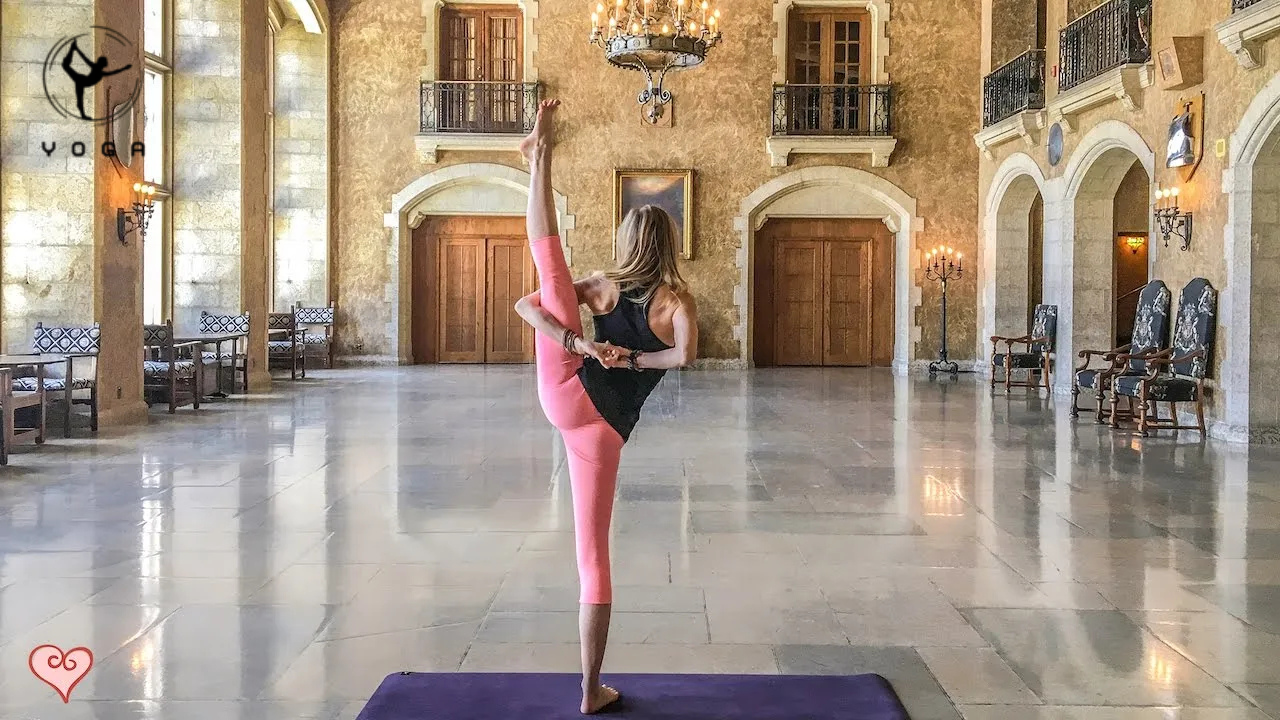
The Bird of Paradise Yoga Pose, also known as Svarga Dvijasana, is a cool and powerful pose in yoga. This pose requires strength, flexibility, coordination, balance, and concentration, but in one movement.
To be honest, many yogis learn the hard way that:
They attempt Bird of Paradise prematurely.
Rush into the bind without adequate shoulder preparation.
The patient aggressively straightened the lifted leg.
Utter wobbles uncontrollably.
Strain their hamstrings.
They overload the standing knee.
This sweeping pillar guide will teach you how to detain the pose intelligently, progressively, and safely — using anatomical understanding, biomechanical awareness, and breath-centered discipline.
Inside this advanced NLP-optimized guide, you’ll learn:
- What Bird of Paradise Yoga Pose truly represents
- Step-by-step technique with detailed alignment cues
- Muscular anatomy and joint mechanics involved
- Evidence-informed benefits (without exaggerated claims)
- Beginner, intermediate, and advanced variations
- Common alignment errors and injury prevention strategies
- Who should modify or avoid the pose
- A structured home practice sequence
- Frequently asked questions answered clearly
This is your complete roadmap to mastering Bird of Paradise Yoga (Svarga Dvijasana) with intelligence, patience, and grace.
What is the Bird Of Paradise Yoga Pose?
Bird of Paradise Yoga Pose (Svarga Dvijasana) is an advanced standing balance posture that evolves from Utthita Parsvakonasana (Extended Side Angle Pose).
The Sanskrit terminology breaks down as:
- Svarga = Heaven
- Dvija = Twice born
- Asana = Posture
It is often interpreted as “Heavenly Twice-Born Pose,” symbolizing expansion, elevation, and personal transformation.
In its complete expression:
- One leg remains firmly rooted in the ground
- The opposite leg is bound behind the torso
- The bound leg lifts upward and extends forward
- The spine elongates vertically
- The chest broadens
- The practitioner balances steadily on one foot
This asana belongs to several functional categories:
- Advanced single-leg balance postures
- Hip-opening asanas
- Shoulder-binding configurations
- Vinyasa and power yoga transitions
- Dynamic mobility-strength integrations
Bird of Paradise requires synchronized muscular engagement, flexibility with control, neuromuscular coordination, and conscious breathing patterns.
Benefits of Bird Of Paradise Yoga Pose
Rather than repeating generic yoga clichés, let’s examine the real physiological and neuromuscular advantages of this pose.
Develops Functional Lower Body Strength
The standing leg is highly active throughout the pose. It recruits:
- Quadriceps
- Gluteus medius
- Hamstrings
- Soleus and gastrocnemius
- Intrinsic foot stabilizers
- Peroneal ankle stabilizers
Balancing on a single limb improves joint integrity, dynamic stability, and proprioceptive feedback. These adaptations are critical for:
- Athletes
- Runners
- Dancers
- Aging populations
- Injury prevention programs
Single-leg strength is strongly correlated with fall prevention and lower limb resilience.
Enhances Hamstring and Hip Flexibility
When the elevated leg extends forward, the following tissues lengthen:
- Hamstrings
- Adductor magnus and longus
- Gluteus maximus
- Posterior hip capsule
- Fascial lines of the posterior chain
Modern sedentary behavior leads to shortened hip flexors and stiff posterior chains. Regularly practicing Bird of Paradise with controlled extension can gradually restore hip articulation and improve gait mechanics.
Improves Shoulder Mobility
The bind component stretches:
- Pectoralis major
- Anterior deltoid
- Biceps brachii tendon
- Subscapularis
- Anterior shoulder fascia
This counteracts rounded desk posture and improves scapular mechanics. Increased thoracic extension also supports healthier breathing patterns.
Strengthens Core Stability
Bird of Paradise cannot be performed without deep core activation. It engages:
- Transverse abdominis
- Internal and external obliques
- Multifidus
- Pelvic floor stabilizers
The pose functions as an anti-rotation stability drill, enhancing spinal support and postural control.
Develops Balance and Proprioception
Balance training improves:
- Ankle joint stability
- Vestibular coordination
- Sensorimotor integration
- Neural pathway efficiency
Consistent single-leg training enhances reaction time and reduces injury risk in both sports and daily life.
Builds Mental Discipline and Focus
Bird of Paradise demands composure.
You must remain steady while your body subtly oscillates.
You must breathe rhythmically.
Must respond calmly to instability.
This cultivates patience, mindfulness, and emotional regulation. The pose becomes a form of moving meditation.
Anatomy of Bird Of Paradise Yoga
Understanding biomechanics protects your joints.
Primary Muscles Activated
- Quadriceps femoris
- Hamstrings
- Gluteus medius
- Transverse abdominis
- Hip flexors
Secondary Muscles Engaged
- Deltoids
- Rhomboids
- Erector spinae
- Calves
- Adductors
Joints Involved
- Hip joint (flexion + external rotation)
- Knee joint (flexion + extension control)
- Ankle joint (stabilization)
- Glenohumeral joint (internal rotation bind)
- Thoracic spine (extension)
Because multiple articulations are stressed simultaneously, progressive preparation is mandatory.
Step-by-Step: How To Do Bird Of Paradise Yoga Pose
Move deliberately. Avoid haste.
Begin in Extended Side Angle
Start in Utthita Parsvakonasana with your right leg forward.
- Right knee bent at 90°
- Left leg straight and strong
- Torso rotated upward
Ground firmly through the outer edge of the back foot.
Establish the Bind
- Slide the right arm under the right thigh
- Reach the left arm behind your back
- Clasp hands
If your fingers do not connect, utilize a yoga strap to avoid excessive shoulder strain.
Shorten the Stance
Walk your back foot slightly forward.
Shift your center of gravity over the front foot.
Activate your core musculature to prevent collapsing.
Rise to Standing
Press firmly into the standing foot.
Slowly lift the torso upright while maintaining the bind.
Keep your movements smooth and controlled to prevent destabilization.
Stabilize Before Extending
Pause with the lifted knee bent.
- Stand tall
- Soften the standing knee slightly
- Fix your gaze (drishti) on a steady point
- Breathe deeply
Balance precedes flexibility.
Gradually Extend the Leg
Extend the lifted leg forward only within your active hamstring capacity.
Do not jerk or force.
Maintain spinal elongation and chest openness.
Maintain the Hold
Stay for 3–5 steady breaths.
- Spine upright
- Shoulders broad
- Core engaged
- Standing knee micro-bent
Controlled Exit
Bend the lifted knee.
Lower the foot slowly.
Return to the side angle and release the bind safely.
Exiting with awareness is as important as entering.
Technique Breakdown
| Phase | Key Focus | Common Risk |
| Bind | Shoulder mobility | Overstretching the rotator cuff |
| Standing up | Core engagement | Losing forward balance |
| Leg lift | Hamstring control | Muscle strain |
| Full extension | Joint alignment | Hyperextension |
Variations of Bird Of Paradise Yoga
Beginner: Half Bird Of Paradise
- Keep the lifted knee bent
- Prioritize equilibrium
- Avoid straightening the leg
This builds foundational stability.
Intermediate: Strap-Assisted Bind
- Use a strap
- Gradually increase shoulder range
- Maintain neutral spine
Ideal for progressive mobility.
Advanced: Full Extension + Forward Hinge
- Straighten the lifted leg
- Optionally, hinge slightly forward
- Lower with deliberate control
Attempt only with adequate hamstring strength and joint integrity.
Common Mistakes to Avoid
Locking the standing knee
Forcing the bind aggressively
Snapping the leg straight
Collapsing the chest
Holding breath
Skipping preparatory poses
Most soft tissue injuries occur when practitioners chase aesthetic depth instead of functional control.
Contraindications
Avoid or modify if experiencing:
- Knee instability
- Hip impingement syndrome
- Hamstring tear
- Shoulder dislocation history
- Severe lumbar pain
Pregnant practitioners should seek guidance from a qualified instructor.
Joint Preservation always outweighs pose achievement.
Intelligent Warm-Up Sequence
Prepare progressively.
Suggested Flow:
- Sun Salutation A ×3
- Sun Salutation B ×2
- Warrior II
- Extended Side Angle
- Bound Side Angle
- Tree Pose
- Half Bird Of Paradise
Only then approach the full posture.
Breathing Strategy
Use slow diaphragmatic nasal breathing.
If experienced, apply Ujjayi breath.
- Inhale: Lengthen the spine
- Exhale: Stabilize and ground
Breath rhythm regulates the nervous system response and reduces instability.
Yoga Philosophy Behind Bird Of Paradise
Bird of Paradise embodies expansion and equilibrium.
Two foundational yogic principles apply:
- Sthira (steadiness)
- Sukha (ease)
The pose teaches the paradox of strength and softness coexisting.
You cultivate firmness without rigidity.
You maintain openness without collapse.
Nutritional Support for Mobility
Tissue adaptation depends on nourishment.
Support connective health by:
- Maintaining hydration
- Consuming magnesium-rich foods
- Eating adequate protein
- Including anti-inflammatory vegetables
Recovery enhances flexibility progression.
Practice Frequency
- Hold: 3–5 breaths
- Repeat: 2 rounds each side
- Frequency: 2–3 sessions weekly
Avoid overloading hamstrings consecutively.
Rest optimizes adaptation.
Pros & Cons
Pros
Enhances integrated strength
Improves dynamic balance
Expands hip mobility
Mobilizes shoulders
Elevates confidence
Cons
Demands preparation
Risk of strain if rushed
Not ideal for beginners
Complete Home Practice Blueprint
Warm-Up
- Sun Salutation A ×3
- Sun Salutation B ×2
Standing Activation
- Warrior II
- Extended Side Angle
- Bound Side Angle
- Half Bird Of Paradise
Peak Posture
- Full Bird Of Paradise (2× each side)
Cool Down
- Standing Forward Fold
- Seated Hamstring Stretch
- Supine Twist
- Savasana
Integrate recovery breathing to normalize heart rate.
FAQs
No. Beginners should first master balance poses like Tree Pose and improve hip mobility.
Tight hamstrings and restricted hips are common reasons.
With consistent practice, 2–6 months for most intermediate practitioners.
Yes. It improves hip mobility and single-leg stability.
Light variations are okay daily. Full expression 2–3 times weekly is ideal.
Final Thoughts
Bird of Paradise Yoga Pose (Svarga Dvijasana) is not merely a photogenic posture.
It is an integrated expression of:
- Muscular power
- Structural Stability
- Elastic flexibility
- Neuromuscular precision
- Breath-centered awareness
The secret lies in progression.
Prepare thoroughly.
Respect anatomical limits.
Move gradually.
Breathe consistently.
When practiced with patience and discipline, Bird of Paradise develops resilient hips, steady knees, open shoulders, refined coordination, and mental clarity.
Your journey is not about flawless execution.
It is about deliberate advancement.
