Introduction: Why Bridge Pose Yoga Matters Today
Bridge Pose Yoga, also known as Setu Bandha Sarvangasana, is an excellent posefor your back. This is an easy pose, and all it requires is that you lie on your back. Then, you will have to lift your hips. This is an easy pose, but it can do great things for your body and mind.
We sit for periods of time, and we do not get to stand up and walk around much, which can do bad things for our bodies. Sitting at a desk all day, driving a car, and other activities can do bad things to our bodies. Our shoulders can get slouched over, our hip muscles can get tight, and our backs can get hurt. This can even affect our breathing. These bad things can affect our posture, our blood flow, and our nervous systems.
Bridge Pose Yoga is here to fix all these bad things that we have been letting go on in our bodies. This yoga pose will strengthen our weak muscles, loosen our stiff joints, and open our front sides. This yoga pose will even improve our digestion, our lungs, and our minds.
This guide will teach you everything that you will ever want to know about Bridge Pose Yoga. In this guide, we will cover how our bodies work, how to do the pose, how to breathe, and how to get the most out of it. We will cover what bad things we might have to watch out for, and we will cover how to modify them if we have to. By reading this guide, we will be able to do our Bridge Pose Yoga with ease and confidence.
What Is Bridge Pose Yoga (Setu Bandhasana)?
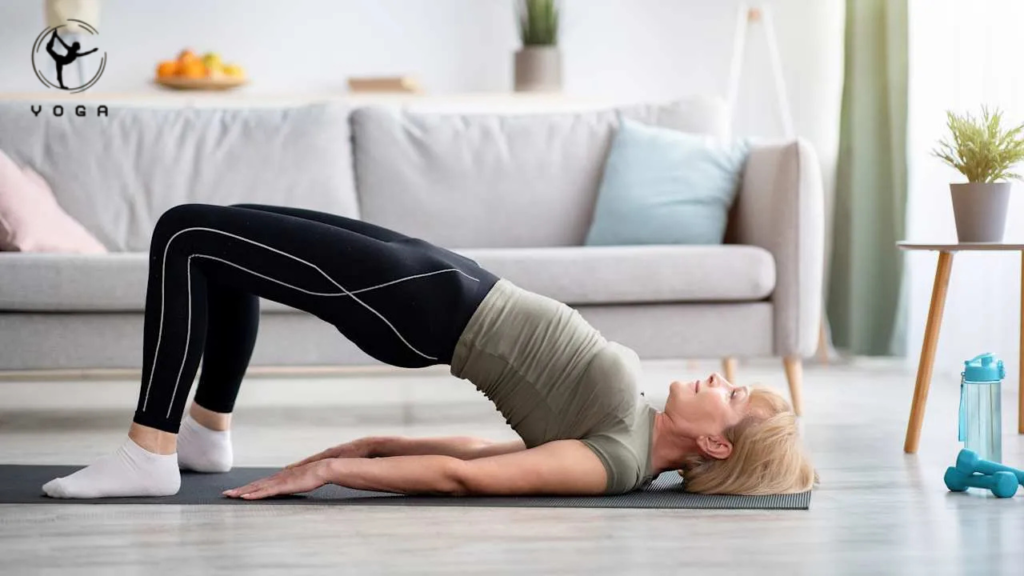
Bridge Pose Yoga will be done lying on your back. Then, you will bend your knees you will spread your feet as wide as your hips. Then you are going to raise your pelvis into the air. This is because your body shall have a shape like a bridge between your shoulders and your knees. The reason behind this is that your body will be like a bridge, and that is why it is referred to as Bridge Pose Yoga. It is an excellent form of Yoga, and it will do your back good as it will stretch your spine.
Sanskrit Meaning
- Setu = Bridge
- Bandha = Lock or bind
- Sarvanga = Whole body
Therefore, the meaning of Setu Bandha Sarvangasana is the bridge that bears the whole body. Symbolically, it is a symbol of integration–a combination of strength and suppleness, of grounding and elevation, and physical effort and conscious breathing.
Why Bridge Pose Is a Foundational Yoga Pose
Bridge Pose Yoga appears across multiple yoga systems, including:
- Hatha Yoga
- Vinyasa Yoga
- Iyengar Yoga
- Restorative Yoga
It is often categorized as:
- A mild inversion
- A beginner backbend
- A glute activation drill
- A thoracic extension movement
- A spinal rehabilitation exercise
Because of its adaptability and scalability, instructors frequently introduce it early in structured classes. Physical therapists also utilize variations to restore hip extension mechanics and lumbar stabilization patterns.
The Proven Benefits of Bridge Pose Yoga
Most articles briefly list advantages. Here we examine the underlying mechanisms in greater depth.
1. Strengthens the Posterior Chain
The posterior kinetic chain encompasses the musculature along the backside of the body. During Bridge Pose, primary engagement includes:
- Gluteus maximus
- Hamstrings
- Erector spinae
- Deep stabilizing core fibers
In sedentary individuals, gluteal inhibition is common. When these muscles fail to activate efficiently, compensatory strain shifts toward the lumbar spine and knees. Bridge Pose functions similarly to a bodyweight hip thrust, retraining proper hip extension and enhancing neuromuscular coordination. Consistent practice can reduce mechanical stress and improve functional strength during walking, climbing, and lifting.
2. Enhances Spinal Mobility
Daily routines often maintain the spine in flexion. Over time, thoracic kyphosis increases while extension capacity diminishes. Bridge Pose introduces controlled spinal extension, particularly through the thoracic region. By encouraging vertebral articulation—lifting one segment at a time—it restores curvature integrity and reduces stiffness accumulated from prolonged sitting.
3. Expands the Chest and Optimizes Breathing
As the sternum lifts and ribs broaden, the diaphragm gains space to descend efficiently. This supports deeper inhalation, improved oxygen exchange, and enhanced lung mechanics. Many individuals unconsciously adopt shallow chest breathing under stress. Bridge Pose reeducates respiratory patterns through mindful inhalation and steady nasal exhalation.
4. Stimulates Digestive Function
Gentle abdominal stretch and improved circulation to visceral organs may support motility and nutrient absorption. While not a medical treatment, the posture complements healthy digestion by enhancing blood flow and reducing abdominal compression patterns.
5. Calms the Nervous System
As a mild inversion, the pelvis rises slightly above the heart. This may assist venous return and influence autonomic balance. Slow, rhythmic breathing in the pose activates the parasympathetic nervous system, encouraging relaxation, improved sleep quality, and emotional regulation.
6. Improves Postural Alignment
Bridge Pose fortifies the glutes, deep core, and upper back musculature responsible for upright posture. Strengthening these muscles counters slouching, anterior pelvic tilt, and rounded shoulders. Over time, posture becomes more aligned and efficient.
Step-by-Step Guide – How to Do Bridge Pose Yoga Correctly
Precision matters more than height. Follow these detailed instructions:
1 – Setup
Lie supine on a mat. Bend both knees and place feet flat on the floor, hip-distance apart. Heels should be close enough that fingertips can graze them.
2 – Arm Position
Extend arms alongside the torso. Palms press firmly downward, creating a stable base.
3 – Initiate the Lift
Inhale deeply. Press evenly through both heels. Engage glutes and gently draw the navel inward. Lift hips toward the ceiling, articulating the spine sequentially from the tailbone upward.
4 – Alignment Check
- Knees remain parallel
- Thighs active
- The chest moves toward the chin without compressing the neck
- Weight is distributed across the shoulders and feet
- Head stays neutral (never turns sideways)
5 – Hold
Maintain for 5–10 controlled breaths. Keep inhalations expansive and exhalations steady.
6 – Controlled Descent
Exhale slowly. Lower the spine one vertebra at a time until the pelvis returns to neutral.
Bridge Pose Execution Table
| Phase | Action | Breath | Focus |
| Setup | Feet grounded | Natural | Alignment |
| Lift | Press heels | Inhale | Glute activation |
| Hold | Maintain lift | Slow breathing | Stability |
| Lower | Roll down spine | Exhale | Control |
Proper Form & Alignment Cues
Distribute weight evenly
Keep knees hip-width apart.
Engage the core gently.
Avoid collapsing into the lumbar spine.
Drive through heels
Imagine lightly squeezing a block between the thighs to maintain alignment.
Breathing Technique in Bridge Pose Yoga
Breath amplifies benefits.
Standard Pattern:
Inhale: Expand chest and lift
Exhale: Stabilize and maintain
Relaxation Pattern:
4-count inhale
4-count exhale
Nasal breathing enhances oxygen efficiency and parasympathetic activation.
Muscles Targeted in Bridge Pose Yoga
Primary:
Gluteus maximus
Hamstrings
Erector spinae
Secondary:
Transverse abdominis
Quadriceps
Hip flexors (lengthened)
Pectoral muscles (stretched)
This integrated muscular recruitment pattern builds resilience and mobility simultaneously.
Bridge Pose Variations (Beginner to Advanced)
1. Supported Bridge Pose
Place a yoga block Beneath the sacrum. Allow body weight to rest passively. Hold 1–3 minutes. Ideal for recovery sessions.
2. Dynamic Bridge
Inhale to lift. Exhale to lower. Repeat 10–15 repetitions to enhance coordination and circulation.
3. One-Legged Bridge
Lift into full pose, extend one leg upward while keeping hips level. Develops unilateral strength and pelvic stability.
4. Wheel Pose Transition
The bridge can progress toward Urdhva Dhanurasana, a deeper spinal extension requiring advanced preparation.
Common Mistakes to Avoid
Excessive lumbar arching
Engage glutes and core.
Knees splaying outward
Maintain parallel thighs
Weight compressing the neck.
Press firmly into the shoulders.
Breath restriction
Sustain steady breathing
Pros & Cons of Bridge Pose Yoga
Pros
- Accessible for beginners
- Combines strengthening and stretching
- Supports posture correction
- Requires minimal equipment
- Encourages spinal health
Cons
- An incorrect form may irritate the lower back
- Not suitable for acute cervical injuries
- Limited cardiovascular demand
Safety Tips for Bridge Pose
Warm up the hips and spine beforehand. Avoid abrupt neck movement. Never force elevation. Discontinue if sharp pain arises.
Contraindications – Who Should Avoid It
Avoid or modify if experiencing:
- Recent spinal surgery
- Severe cervical pathology
- Herniated discs (Consult a Specialist)
- Uncontrolled hypertension
- Advanced pregnancy without guidance
Tips for Beginners
Start with a supported variation. Emphasize alignment over height. Practice consistently for shorter durations rather than straining for longer holds.
Duration & Frequency Recommendations
General fitness:
2–3 sets
20–40 seconds
3–5 times weekly
Posture correction:
Short daily sessions yield measurable improvements.
The Science Behind Bridge Pose Yoga
Biomechanics
Bridge trains hip extension—a primary movement in locomotion. Efficient hip extension reduces compensatory lumbar strain during gait.
Nervous System Impact
Mild inversions may enhance venous return and support autonomic equilibrium. Combined with slow breathing, this fosters stress reduction and physiological coherence.
Yoga Philosophy Behind Setu Bandhasana
Energetically, practitioners associate the pose with:
- Anahata
- Vishuddha
It symbolizes bridging grounded stability with open-hearted expansion.
Home Workout Integration
Pair Bridge Pose with:
- Cat-Cow
- Child’s Pose
- Plank
- Supine Twist
Sample Mini Routine
| Exercise | Duration |
| Cat-Cow | 1 min |
| Bridge Pose | 30 sec x 3 |
| Plank | 30 sec |
| Child’s Pose | 1 min |
Diet & Recovery Tips
Hydrate adequately. Consume sufficient protein. Include magnesium-rich foods and omega-3 fatty acids to support muscular repair and reduce inflammation.
FAQs
Yes, if done correctly. It strengthens glutes and supports spinal alignment. Consult a professional for chronic pain.
Yes. It is one of the safest beginner backbends.
Start with 15–20 seconds. Build up to 45 seconds.
Early pregnancy may allow gentle practice. Always ask your doctor.
Indirectly. It builds muscle and improves metabolism, but is not a fat-burning exercise alone.
Final Thoughts
The Bridge Pose Yoga, which is also known as Setu Bandhasana, looks easy, but it does a lot of good. It makes our back stronger, puts our spine back into shape, allows us to breathe easier, and calms our nerves. We sit too much. We get really stressed out, so this pose is good for fixing our bodies and our nervous systems.
You should do this pose in a way. Make sure you are doing it correctly. Breathe in and out as you do it. Don’t try to do it all at once. Take your time, go slow.
When we get good at the Bridge Pose, we will be stronger and feel balanced. The Bridge Pose is like a bridge between working and feeling okay. It makes us feel good and strong, not just when we do yoga, but all the time.
