
Introduction
Buti Yoga is Unique in a significant sense in an age where fad workouts, glamorous social media programs, and fitness gimmicks are the order of the day. It is not being sold as a magic way to lose weight immediately and achieve a change in appearance. Buti Yoga provides something much more sustainable and deep instead: functional power, embodied consciousness, emotional dissolution, and smart movement based on the workings of the human body.
In comparison with other traditional forms of yoga that focus on stillness, long static poses, or slow sequences, Buti Yoga is dynamic, rhythmic, expressive, and powerful. It combines yoga poses with efficient strength exercises, heart rate training, primordial movement patterns, and flow guided by music. All the classes are alive, immersive, and purposeful, not mechanical and repetitive.
During the last 10 years, Buti Yoga has grown and developed into an international movement system out of a niche studio experience. It appeals to an immensely varied audience: yoga novices in need of empowerment, athletes in need of rotational strength, dancers in need of freedom of expression, and exercise lovers who feel that they are not part of the narrow, unmuscular workout regimens.
This guide fills that gap.
In this comprehensive 2026 resource, you’ll explore exactly what Buti Yoga is, where it originated, how it works, its real physical and psychological benefits, potential risks, who it’s best suited for, how beginners should start, and how it truly compares to traditional yoga and high-intensity training systems.
Whether you’re curious, skeptical, or ready to step onto the mat, this is your complete, no-fluff Buti Yoga guide.
What Is Buti Yoga? (Definition, Meaning & Origins)
What Is Buti Yoga?
Buti Yoga is a high-energy, music-driven movement practice that integrates multiple training modalities into one cohesive experience, including:
- Traditional yoga asanas
- Functional strength conditioning
- Plyometric and cardio-based intervals
- Primal, tribal, and somatic movement
- Rhythm-based sequencing guided by music
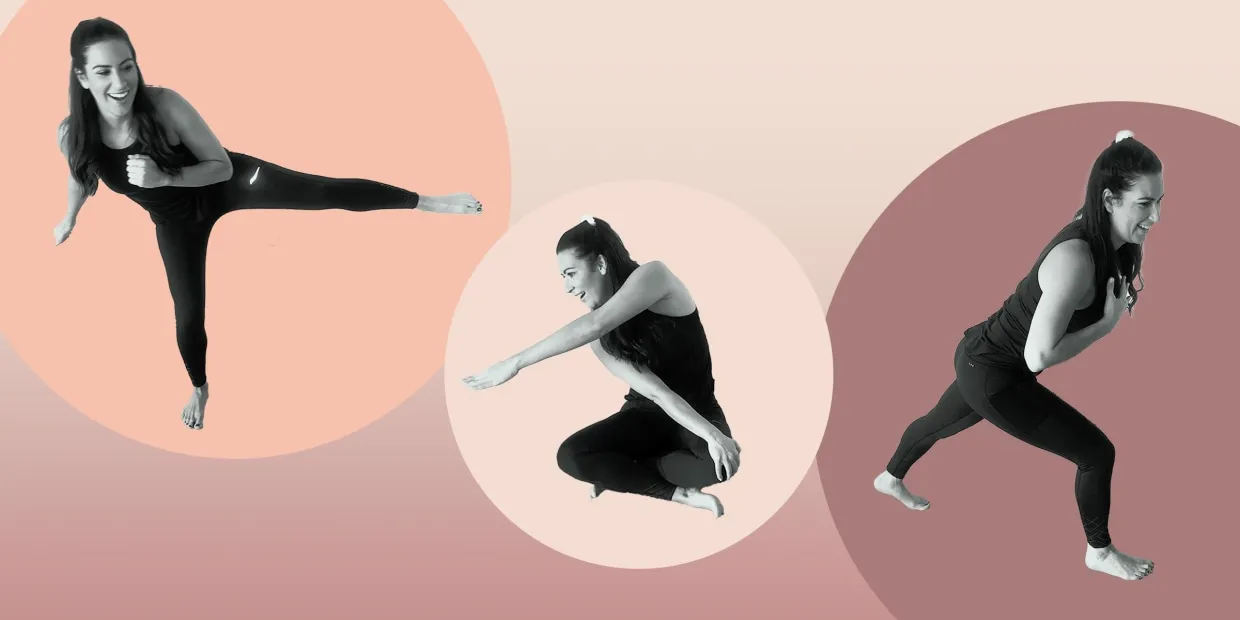
Instead of holding poses for extended durations, Buti Yoga emphasizes continuous transitions, spirals, pulses, shakes, and controlled explosive movements. Every motion is deliberate yet expressive, structured yet liberating.
Precision is not the priority — presence is.
Perfection is not the objective — connection is.
Buti Yoga encourages participants to move intuitively while maintaining biomechanical integrity. The result is a practice that feels both athletic and cathartic, challenging and empowering.
Who Created Buti Yoga?
Was developed in 2012 by Bizzie Gold, a celebrity fitness trainer, movement educator, former athlete, and biomechanics specialist.
Through years of working with clients, Bizzie observed recurring issues in mainstream fitness culture:
- Muscle imbalances caused by repetitive linear training
- Overemphasis on aesthetics instead of movement quality
- Limited rotational work leading to joint stress
- Programs that exhausted the nervous system rather than supporting it
She recognized that many training systems were working against the body’s natural architecture rather than in harmony with it.
Drawing from yoga philosophy, functional movement science, neurology, music psychology, and spiral biomechanics, Bizzie Gold designed a method that felt intuitive, empowering, resilient, and sustainable. Buti Yoga was born from the idea that strength should feel freeing — not restrictive.
Meaning of the Word “Buti”
The term “Buti” originates from the Marathi language and translates to:
“A secret cure” or “hidden remedy.”
This meaning perfectly reflects the core philosophy of Buti Yoga.
The practice is not about repairing something broken or forcing the body into shapes. Instead, it is about unlocking innate intelligence, reawakening dormant strength, and rediscovering the body’s natural ability to regulate, stabilize, and express.
Buti Yoga assumes the body already holds wisdom — movement simply reveals it.
How Buti Yoga Evolved
Buti Yoga evolved through the integration of multiple disciplines, including:
- Classical yoga foundations
- Modern functional movement theory
- Neurosensory and proprioceptive training
- Rhythm and auditory stimulation
- Somatic and expressive movement practices
- Spiral and rotational biomechanics
This fusion created a contemporary movement system designed to:
- Strengthen the deep core and stabilizing muscles
- Enhance mobility, agility, and coordination
- Support emotional processing through movement
- Build real-world, transferable strength
Buti Yoga is not traditional yoga — and it does not attempt to be. It is a modern evolution designed for contemporary bodies living in dynamic environments.
The Science Behind Buti Yoga: Spiral Structure Technique® (SST)
What Is Spiral Structure Technique®?
The Spiral Structure Technique® (SST) is the biomechanical backbone of Buti Yoga.
Most conventional workouts train the body through linear movement patterns, such as:
- Forward and backward motion
- Vertical pressing and pulling
- Straight-line repetitions
However, the human body is not engineered to move exclusively in straight lines.
Everyday actions — walking, running, twisting, lifting, reaching, throwing — rely on rotational and spiral forces. SST trains the body according to this natural design.
Why Spiral Movement Matters
| Spiral Training (Buti Yoga) | Linear Training |
| Integrates entire muscle chains | Isolates individual muscles |
| Distributes force efficiently | Concentrates stress on joints |
| Activates deep stabilizers | Limited core engagement |
| Enhances coordination | Reduces movement variability |
| Reflects real-life motion | Artificial patterns |
Spiral movement allows force to travel smoothly through connective tissue, reducing joint compression and muscular strain.
Key Benefits of the Spiral Structure Technique
SST supports the body by:
- Engaging inner and outer core systems
- Improving pelvic and hip stability
- Supporting spinal integrity and alignment
- Enhancing proprioception and spatial awareness
- Decreasing repetitive stress injuries
Rather than forcing flexibility or strength, SST develops structural resilience from the inside out.
Benefits of Buti Yoga (Physical, Mental & Emotional)
Physical Benefits
Core & Functional Strength
Buti Yoga deeply activates the entire core system, including:
- Transverse abdominis
- Internal and external obliques
- Pelvic floor muscles
- Multifidus and spinal stabilizers
This leads to:
- Improved posture and alignment
- Enhanced athletic performance
- Efficient movement mechanics
- Reduced risk of lower back discomfort
Cardiovascular Conditioning
Through rhythmic sequences and plyometric intervals, Buti Yoga:
- Elevates heart rate
- Improves cardiovascular endurance
- Enhances circulation
- Supports metabolic efficiency
Depending on intensity and experience, participants may burn 500–800 calories per session.
Mobility & Joint Health
Unlike static stretching routines, Buti Yoga uses dynamic mobility to:
- Lubricate joints
- Expand usable range of motion
- Strengthen tissues at end ranges
- Minimize stiffness and restriction
Mental Benefits of Buti Yoga
- Enhances concentration and motor coordination
- Reduces cortisol and stress responses
- Strengthens mind-body communication
- Encourages present-moment engagement
Music plays a vital role by synchronizing movement, breath, and neural rhythm.
Emotional Benefits of Buti Yoga
This is where Buti Yoga becomes transformative.
By integrating rhythm, primal motion, and expressive flow, the practice supports:
- Release of stored emotional tension
- Improved mood regulation
- Increased confidence and self-trust
- A sense of empowerment and agency
Many practitioners describe Buti Yoga as emotionally liberating, not merely physically demanding.
Muscles Targeted in Buti Yoga
| Muscle Group | Activation Level |
| Core (deep & surface) | Very High |
| Glutes & hips | High |
| Legs | High |
| Pelvic floor | High |
| Back stabilizers | High |
| Shoulders & arms | Moderate |
Buti Yoga vs Traditional Yoga vs HIIT
| Feature | Buti Yoga | Traditional Yoga | HIIT |
| Movement style | Spiral & expressive | Static & flowing | Linear & explosive |
| Music | Integral | Optional | Rare |
| Core engagement | Very high | Moderate | Moderate |
| Emotional expression | High | Low–Moderate | Low |
| Injury risk | Moderate (modifiable) | Low | Higher |
| Primary goal | Strength + empowerment | Balance + mindfulness | Performance & fat loss |
What Happens in a Buti Yoga Class?
Typical Buti Yoga Class Structure
- Warm-up – Breathwork and core activation
- Dynamic Flow – Yoga fused with rhythm
- Spiral Burn – Rotational strength work
- Plyometric Intervals – Cardiovascular bursts
- Cool-down – Stretching and nervous system regulation
Classes are structured yet expressive, guided by music rather than rigid choreography.
Popular Buti Yoga Class Styles
| Class Type | Focus |
| Buti Flow | Fluid movement and alignment |
| Buti Sculpt | Strength and resistance |
| Hot Buti | Heat-enhanced intensity |
| Power Buti | Athletic conditioning |
Step-by-Step: How to Start Buti Yoga (Beginner Guide)
1: Prepare Your Body
- Wear flexible, supportive clothing
- Practice barefoot or with minimal trainers
- Hydrate adequately
- Eat lightly before class
2: Learn the Basics
- Begin slowly
- Prioritize control over speed
- Maintain continuous core engagement
- Follow instructor cues carefully
3: Sample Beginner Move – Spiral Hip Opener
- Stand with feet wide, knees relaxed
- Hands clasped at the chest
- Gently rotate the torso side to side
- Engage core muscles
- Breathe deeply for 10–15 seconds per side
Proper Form & Alignment in Buti Yoga
- Maintain neutral spinal alignment
- Keep the core lightly activated
- Initiate movement from the hips
- Control transitions intentionally
Breathing Technique in Buti Yoga
- Inhale through the nose
- Exhale through the mouth during effort
- Synchronize breath with rhythm and motion
Variations by Level
Beginner
- Reduced range of motion
- No jumping
- Slower tempo
Intermediate
- Deeper spirals
- Light plyometrics
Advanced
- Full-range rotational movement
- Explosive transitions
Common Mistakes to Avoid
- Over-twisting the spine
- Neglecting core activation
- Rushing movements
- Holding the breath
Safety Tips & Precautions
Who Should Be Careful?
- Individuals with joint injuries
- Those with chronic lower back pain
- Cardiovascular conditions
- Pregnancy (unless professionally guided)
General Safety Advice
- Modify high-impact movements
- Respect pain signals
- Consult a professional if uncertain
Duration & Frequency Recommendations
| Goal | Frequency |
| General fitness | 2–3 times/week |
| Fat loss | 3–4 times/week |
| Strength & mobility | 2 times/week |
Yoga Philosophy Behind Buti Yoga
Buti Yoga aligns with modern yogic philosophy by emphasizing:
- Embodied awareness
- Movement as meditation
- Community and empowerment
- Strength as self-knowledge
Home Buti Yoga Workout Tips
- Choose energizing music
- 30–45 minutes is sufficient
- Balance with restorative yoga days
- Focus on consistency, not perfection
Pros & Cons of Buti Yoga
Pros
- Comprehensive full-body training
- Exceptional core activation
- Emotionally empowering
- Engaging and enjoyable
Cons
- Higher impact for some individuals
- Less meditative than classical yoga
- Requires guidance for beginners
FAQs
Yes, when practiced with modifications and mindful pacing.
Approximately 500–800 calories per session, depending on intensity.
It is a modern fusion grounded in yogic principles and functional science.
No. Movements are intuitive, not choreographed.
Conclusion
Buti Yoga is not any ordinary exercise; it is an experience of movement. It enhances the body, energizes the nervous system, and provides space to release emotions. Buti Yoga is a practice that combines elements of yoga, spiral Biomechanics, rhythm, and functional strength as an intermediary between traditional yoga and high-intensity fitness.
Buti Yoga is certainly worth the visit to those who want to feel strong and free, structured and expressive, as well as disciplined and empowered.
