Introduction
Chaturanga Yoga, more precisely known as Chaturanga Dandasana, is one of the most foundational yet technically demanding movements in modern yoga systems such as Vinyasa Flow and Ashtanga Yoga.
At first glance, it appears like a simple low plank or yoga-style push-up. However, in reality, it is a highly structured biomechanical strength posture requiring coordination, controlled muscular engagement, spinal alignment, breath regulation, and joint stability.
Unlike conventional fitness push-ups, Chaturanga is not about repetition speed—it is about precision, control, endurance, and internal awareness.
In this 2026 complete mastery guide, you will understand:
- Deep meaning of Chaturanga Yoga
- Step-by-step biomechanical alignment
- Common errors and injury prevention
- Beginner-to-advanced progression system
- Muscle activation and anatomical breakdown
- Scientific principles behind the movement
- Weekly structured training plan
- Breathing synchronization techniques
If your goal is to build a strong yoga foundation, improve flow transitions, and develop upper-body resilience, mastering Chaturanga is essential.
What is Chaturanga Yoga (Chaturanga Dandasana)?
The term originates from Sanskrit:
- Chatur = Four
- Anga = Limbs
- Danda = Staff or rod
Meaning: Four-Limbed Staff Pose
Functional Definition (Modern Interpretation)
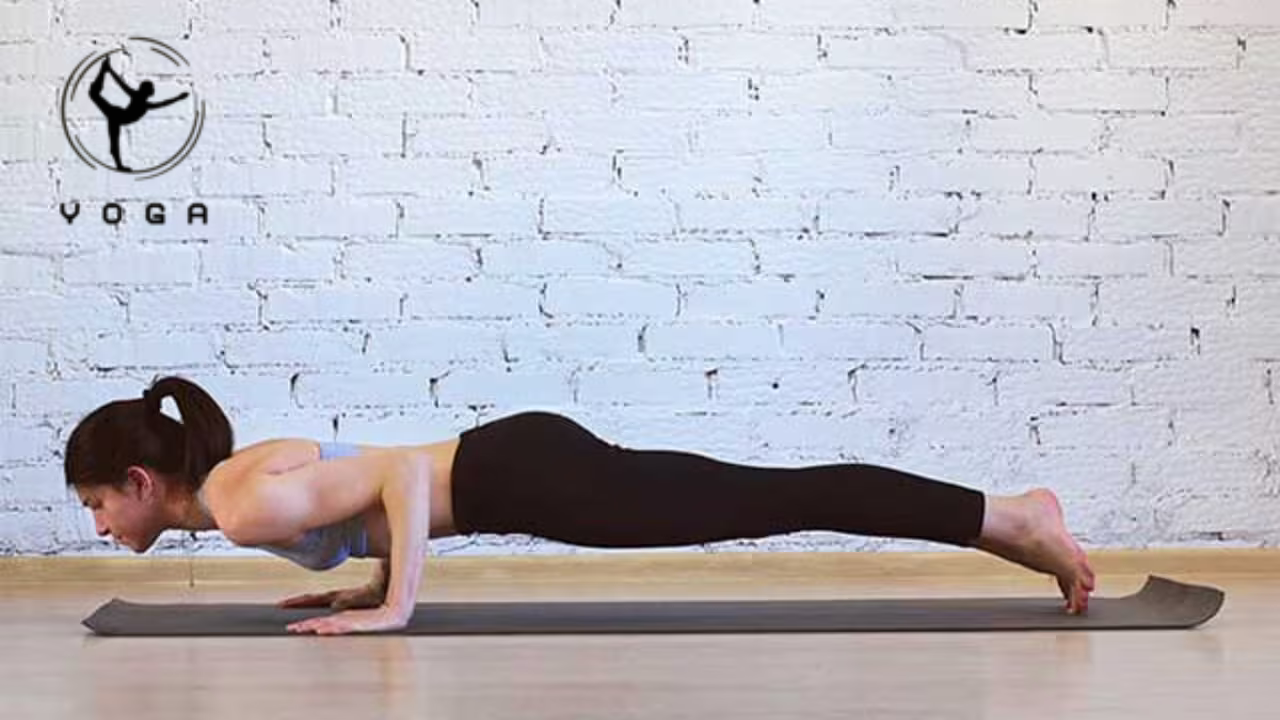
Chaturanga Yoga is a controlled, low-hover strength posture performed during yoga transitions where the body is lowered halfway from a plank while maintaining straight alignment and muscular engagement.
It is commonly used between:
- High Plank → Chaturanga → Upward Dog → Downward Dog
Rather than being a static pose, it is a movement-based strength transition system.
Why Chaturanga Yoga is So Important in Modern Yoga Practice
Chaturanga is often considered the “engine” of dynamic yoga flows.
Without proper Chaturanga execution, Vinyasa sequences lose:
- Structural integrity
- Smooth transition rhythm
- Shoulder safety
- Core stability coordination
Core Functional Roles:
- Builds synchronized movement flow
- Enhances neuromuscular coordination
- Strengthens upper body kinetic chain
- Improves breath-movement timing
- Develops controlled body lowering ability
In simple terms: it connects yoga poses into a continuous intelligent movement system.
Muscles Worked in Chaturanga Yoga (Anatomical Breakdown)
Chaturanga is a compound isometric-eccentric strength exercise.
| Muscle Group | Functional Role |
| Triceps | Elbow control and pushing stability |
| Deltoids (Shoulders) | Load distribution and joint support |
| Pectorals (Chest) | Upper body stabilization |
| Core Muscles (Abs & Obliques) | Anti-sag control and alignment |
| Lower Back Muscles | Postural integrity |
| Forearms & Wrists | Load-bearing stabilization |
This makes Chaturanga one of the most complete bodyweight strength conditioning movements in yoga science.
Why Most Practitioners Fail at Chaturanga Yoga
Even experienced fitness enthusiasts struggle with this pose.
Primary Failure Reasons:
- Weak triceps endurance
- Lack of abdominal activation
- Shoulder instability under load
- Rapid uncontrolled descent
- Incorrect elbow angling
- Breath-holding under tension
The real difficulty is not strength—it is controlled resistance management under alignment constraints.
Step-by-Step Master Guide to Chaturanga Yoga
This section is the technical foundation of mastery.
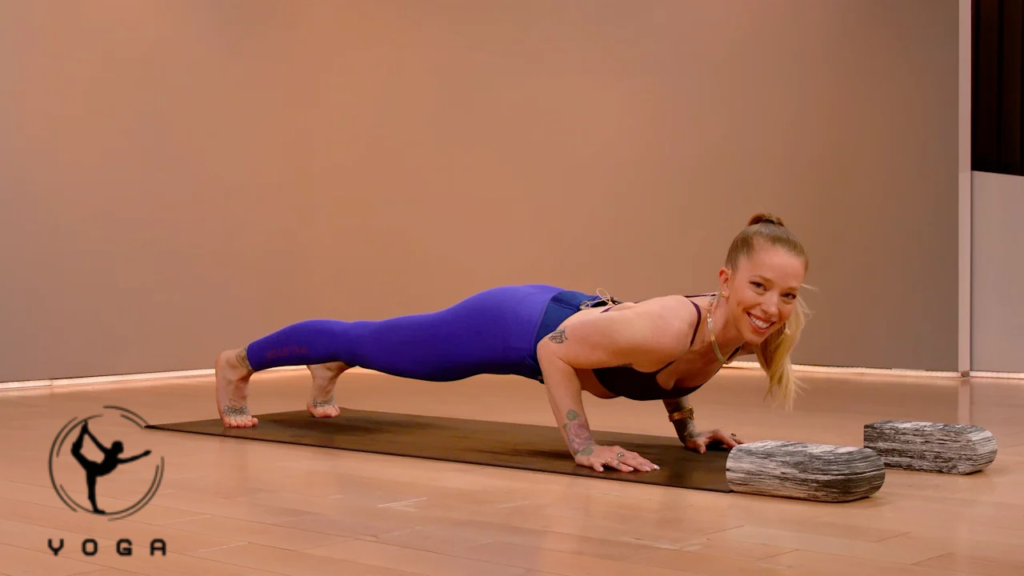
1 – High Plank Foundation Setup
Begin in a strong plank position:
- Hands directly under shoulders
- Legs extended and active
- Core fully engaged inward
- Neck neutral and relaxed
Imagine your body as a rigid kinetic structure.
2 – Controlled Forward Shoulder Shift
Before lowering:
- Shift shoulders slightly forward
- Engage abdominal lock
- Activate scapular stability
This prevents shoulder collapse and protects joints.
3 – Slow Elbow Flexion Mechanics
Now begin descent:
- Bend elbows slowly
- Keep elbows hugging ribs
- Avoid outward flaring
This is the most injury-sensitive phase.
4 – Mid-Level Hover Position
Stop halfway:
- Body remains parallel to ground
- Chest lifted slightly
- Core remains fully activated
- Hips do not drop
This is true Chaturanga alignment expression.
5 – Transition or Static Hold
From here:
- Transition into upward dog
- Return to plank
- Or hold for endurance training
Common Mistakes in Chaturanga Yoga
Avoid these biomechanical errors:
- Elbows spreading outward
- The chest too low
- Hip sagging under fatigue
- Neck compression
- Breath disruption
- Wrist overloading
These mistakes significantly increase shoulder and wrist injury risk.
Beginner Modifications & Regression Techniques
If you are new, progression is essential.
Knee-Supported Variation
Reduces load while maintaining form structure.
Partial Range Lowering
Only descend halfway to build control.
Wall-Assisted Practice
Helps develop alignment awareness.
Negative Push-up Training
Slow eccentric lowering for strength development.
Proper Alignment Checklist (Pre-Execution Scan)
Before each repetition:
Shoulders slightly forward
Elbows tight to body
Core engaged inward
Spine neutral
Neck relaxed
Legs active
Alignment equals safety, efficiency, and longevity.
Breathing Mechanics in Chaturanga Yoga
Breath is the internal stabilizer.
Recommended Pattern:
- Inhale → prepare in plank
- Exhale → controlled descent
- Short hold → stabilization
- Inhale → transition movement
Breath and movement must function as a synchronized system.
Benefits of Chaturanga Yoga
Physical Benefits:
- Upper body strength development
- Core stabilization improvement
- Postural correction
- Shoulder endurance increase
- Functional body control
Mental Benefits:
- Focus enhancement
- Discipline Development
- Mind-body awareness expansion
- Stress regulation
Emotional Benefits:
- Confidence building
- Patience strengthening
- Inner resilience growth
Chaturanga Progression System (2026 Model)
| Level | Training Type | Goal |
| Beginner | Knee-supported | Basic strength |
| Beginner+ | Slow lowering | Control development |
| Intermediate | Full Chaturanga hold | Stability |
| Advanced | Flow transitions | Endurance |
| Expert | One-breath flow mastery | Total control |
Advanced Chaturanga Variations
Once mastered:
- Floating Chaturanga (no ground support transition)
- 5–8 second slow lowering
- One-arm stability drills
- Dynamic Vinyasa chaining
These elevate athletic yoga performance.
Scientific Mechanism Behind Chaturanga Yoga
Chaturanga activates:
- Eccentric muscle contraction (controlled lowering)
- Isometric tension holding
- Neuromuscular synchronization systems
Result:
- Increased tendon durability
- Improved joint integrity
- Enhanced movement efficiency
Weekly Training Plan (Structured Method)
3–4 Days Weekly Routine
Warm-Up:
- Wrist mobility drills
- Shoulder rotation exercises
- Cat-Cow spinal flow
Strength Block:
- Plank holds (30–60 sec)
- Knee Chaturanga reps (10–12)
- Slow push-ups (8–10)
Cool Down:
- Child’s Pose relaxation
- Shoulder release stretches
Nutrition for Better Performance
To improve strength output:
- Protein-rich foods (eggs, legumes, yogurt)
- Hydration Optimization
- Potassium sources (bananas, nuts)
- Avoid heavy pre-workout meals
Home Practice Setup
Minimal equipment required:
- Yoga mat
- Wall space
- Timer
- Optional mirror
Safety Guidelines
- Always warm up properly
- Avoid overtraining
- Maintain spinal neutrality
- Stop if sharp pain occurs
- Progress gradually
Who Should Avoid Chaturanga Yoga?
Modify or avoid if you have:
- Wrist injuries
- Shoulder instability
- Severe lower back pain
- Post-surgical recovery conditions
Chaturanga vs Push-Up (Comparison)
| Feature | Chaturanga Yoga | Push-Up |
| Speed | Slow controlled | Faster dynamic |
| Purpose | Flow transition | Strength training |
| Alignment | Strict | Flexible |
| Control | High precision | Moderate |
FAQs
No, it focuses on control, alignment, and slow transition mechanics.
Usually due to poor form or excessive depth.
Start with 3–5 seconds, increase gradually.
Yes, using modified variations.
3–4 times per week is ideal.
Conclusion
Chaturanga Yoga is not just a physical movement—it is a Complete Neuromuscular control system combining strength, stability, breath coordination, and structural alignment.
When practiced correctly:
- Your yoga flow becomes seamless
- Your upper body becomes stronger
- Your posture improves significantly
- Your movement control reaches advanced levels
Mastery comes from slow progression, disciplined repetition, and precise alignment awareness.
