
Introduction
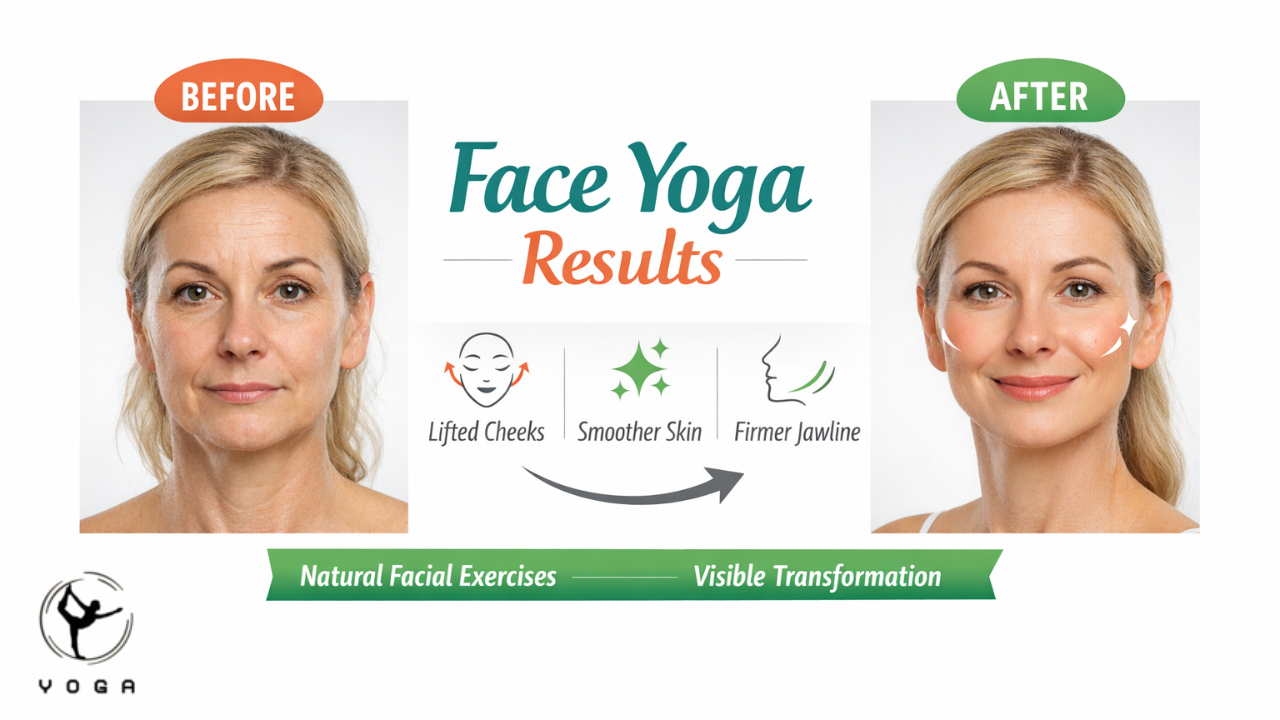
Face yoga is a non-invasive process of enhancing the facial look prescribed to the present-day world of natural beauty and holistic wellness. Before and After searches of face yoga are done by many people to determine whether face exercises can indeed minimise wrinkles, improve the skin fold, and make faces more attractive.
Many people no longer choose to use cosmetic interventions such as Botox, fillers, or surgery in order to achieve a better look on their skin, but instead choose natural and cost-effective skincare solutions. Face yoga is aimed at firming the muscles of the face with the help of simple exercises. The human face has over 40 muscles, although many are hardly in use, and this may lead to skin sagging, wrinkles, puffiness, and loss of its elasticity as one grows older.
Regular face yoga is likely to improve circulation, muscle tone, and lymphatic drainage that will gradually contribute to healthier skin and a more developed physiognomy.
In this case, you will come to know realistic face yoga before and after, the science of face exercise, exercises as a beginner, a 30-day plan, some common mistakes, and easy tips, which the guru will provide you to achieve the results on your own.
What Is Face Yoga?
Face yoga is a natural facial exercise program that aims at strengthening, stretching and relaxing the facial muscles.
Similar to the classical yoga practice, where the body is considered the main object of awareness, breath regulation, and muscle action, face yoga trains the mindful motions that stimulate a certain set of muscles of the face.
These exercises are generally a combination of:
- Facial muscle engagement
- Gentle stretching techniques
- Controlled resistance movements
- Relaxation and breathing practices
The primary objective of face yoga is to restore balance within facial musculature while promoting circulation and skin vitality.
Why Facial Muscles Matter
The human face consists of a complex system of muscles that are used to produce various expressions such as smiling, blinking, squinting, speaking, and laughing.
However, with time, some muscles on the face overwork, whereas others weaken from idleness.
Many contemporary lifestyles are causing this imbalance:
- Prolonged screen exposure
- Frequent frowning while concentrating
- Stress-related muscle tension
- Poor neck and head posture
- Repetitive expressions
Gradually, these patterns can influence facial appearance and lead to concerns such as:
- Fine lines
- Deep wrinkles
- Sagging skin
- Puffiness
- Reduced facial symmetry
Face yoga exercises aim to reactivate dormant muscles, improve coordination, and enhance facial muscle tone.
Typical Face Yoga Routine
A standard face yoga session typically lasts 10–15 minutes per day, making it easy to incorporate into daily routines.
Most facial yoga sessions include exercises targeting the following areas:
- Forehead
- Eyes
- Cheeks
- Jawline
- Neck
Because these sessions are short, convenient, and equipment-free, many individuals incorporate them into their skincare or self-care routines.
Benefits of Face Yoga
Consistent face yoga practice may offer multiple physical and psychological benefits.
While individual outcomes vary, many practitioners report gradual improvements in facial appearance and relaxation.
Physical Benefits
Regular face yoga training can help improve facial muscle tone and structural support.
Potential improvements may include:
- Stronger facial musculature
- Improved jawline definition
- Reduced puffiness
- Balanced facial contours
- Enhanced circulation
When muscles become stronger and more responsive, they may provide better support for the skin above them, leading to a firmer appearance.
Skin and Beauty Benefits
Another reason face yoga has gained popularity is its potential influence on overall skin vitality.
Possible aesthetic benefits include:
- Brighter complexion
- Enhanced blood circulation
- Increased oxygen delivery to skin cells
- Improved elasticity and suppleness
Some practitioners also report softening of fine lines, particularly around the forehead and eyes.
Mental and Emotional Benefits
Face yoga is not purely cosmetic. It can also contribute to relaxation and emotional well-being.
Possible mental benefits include:
- Reduced facial tension
- Stress relief after long screen exposure
- Enhanced mindfulness
- A soothing daily self-care ritual
Because facial muscles often hold emotional tension, releasing it can create a calming psychological effect.
Face Yoga Before and After: Real Results Explained
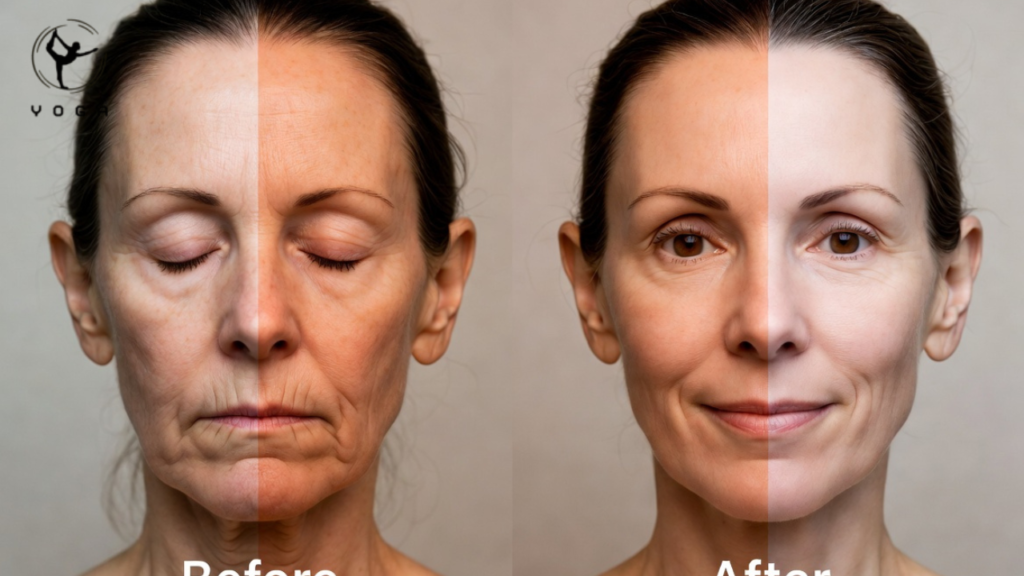
When people search for face yoga before-and-after transformations, they typically want to see noticeable visual improvements.
Although outcomes vary among individuals, many improvements appear in specific facial zones.
Cheek Lifting Results
One of the most noticeable improvements from facial yoga often appears in the cheek area.
Exercises activate muscles such as the zygomaticus, which help support cheek structure.
Potential results include:
- Fuller-looking cheeks
- Slight lifting of the mid-face
- Improved facial contour
Over time, stronger cheek muscles may help reduce the appearance of sagging.
Jawline Definition
Another common objective of face yoga is enhancing the jawline.
Exercises targeting the chin and neck activate muscles that support the lower face.
Possible improvements include:
- Sharper jawline appearance
- Reduced the double chin look
- Better facial balance
While face yoga cannot directly eliminate fat, improved muscle tone can enhance natural facial structure.
Forehead Wrinkle Reduction
Forehead wrinkles often form due to repeated expressions such as raising the eyebrows or frowning.
Face yoga techniques aim to relax overactive muscles while strengthening supportive ones.
Potential improvements include:
- Softer forehead lines
- Reduced muscle tension
- Improved brow symmetry
Eye Area Improvements
The delicate muscles surrounding the eyes gradually weaken with age.
Targeted exercises may help:
- Reduce puffiness
- Improve eyelid support
- Boost circulation around the eyes
This can create a more refreshed and energised appearance.
Smile Line Softening
Smile lines—also known as nasolabial folds—naturally deepen as skin loses volume and elasticity.
Face yoga exercises may improve circulation and strengthen nearby muscles.
Possible improvements include:
- Slightly softened smile lines
- Enhanced cheek support
- Improved facial harmony
Face Yoga Results Timeline
One of the most important things to understand about face yoga before and after results is that progress occurs gradually.
Unlike cosmetic treatments that produce immediate changes, facial exercises require patience, dedication, and consistency.
Day 1
During the first session, most changes are temporary.
Possible effects include:
- Reduced puffiness
- Increased blood flow
- Relaxed facial muscles
These changes are mainly due to enhanced circulation.
1 Week
Within the first week, Beginners often develop greater awareness of facial muscles.
Possible improvements include:
- Improved facial posture
- Reduced muscle tension
- Slightly brighter skin tone
2 Weeks
Early visual improvements may begin to appear around the two-week mark.
You may notice:
- Less puffiness
- Mild cheek lifting
- Improved skin glow
1 Month
After approximately four weeks, facial muscles begin adapting to consistent stimulation.
Possible changes include:
- More defined jawline
- Better muscle tone
- Improved facial symmetry
3 Months
At this stage, the most noticeable transformations often occur.
Possible results include:
- Softer wrinkles
- Lifted cheeks
- Firmer skin appearance
6 Months
Long-term dedication may produce more visible structural improvements such as:
- Better facial contour
- Stronger jawline definition
- Healthier skin tone
Why Face Yoga Works (The Science Behind It)
Although research on face yoga is still emerging, several biological mechanisms may explain its benefits.
1. Facial Muscle Strengthening
Just as strength training builds muscle, facial exercises may enhance facial muscle tone.
Stronger muscles provide improved structural support beneath the skin.
This may contribute to:
- Improved facial firmness
- More lifted appearance
- Balanced facial proportions
2. Improved Blood Circulation
Facial movements stimulate blood flow to the skin and surrounding tissues.
Improved circulation helps deliver:
- Oxygen
- Nutrients
- Hydration
Better circulation often leads to healthier, more radiant skin.
3. Lymphatic Drainage
The lymphatic system helps remove excess fluid and metabolic waste from tissues.
Certain face yoga techniques stimulate lymphatic flow, which may help reduce:
- Facial puffiness
- Under-eye swelling
- Water retention in facial tissues
4. Collagen Support
Collagen is a Structural protein responsible for skin elasticity and firmness.
Although face yoga does not directly generate collagen, increased circulation may support the skin’s natural repair processes.
10 Best Face Yoga Exercises for Visible Results
Below are beginner-friendly exercises that target key facial zones.
| Exercise | Target Area | Time |
| Cheek Lift | Cheeks | 2 minutes |
| Forehead Smoother | Forehead | 2 minutes |
| Jawline Definer | Jawline | 2 minutes |
| Eye Lift | Eye Area | 2 minutes |
| Neck Tightener | Neck | 2 minutes |
1. Cheek Lift Exercise
Steps:
- Smile widely without exposing teeth
- Place fingers lightly on your cheeks
- Lift cheek muscles upward
- Hold for 10 seconds
- Repeat 10 times
This exercise helps strengthen cheek muscles and improve facial contour.
2. Forehead Smoother
Steps:
- Place both hands across the forehead
- Apply gentle downward pressure
- Attempt to raise eyebrows against resistance
- Hold for 5 seconds
- Repeat 8–10 times
This exercise may help relieve tension and reduce expression lines.
3. Jawline Tightener
Steps:
- Tilt your head slightly backward
- Push your lower lip upward toward your nose
- Hold for 5 seconds
- Repeat 10 times
This movement activates the jawline and chin muscles.
4. Eye Lift Exercise
Steps:
- Squint gently while lifting cheek muscles
- Place fingers at the outer eye corners
- Hold tension for 10 seconds
- Repeat 10 times
This exercise improves circulation around the eyes.
5. Neck Firming Exercise
Steps:
- Look upward toward the ceiling
- Press your tongue to the roof of the mouth
- Hold for 10 seconds
- Repeat 8–10 times
This exercise strengthens the neck and jawline region.
30-Day Face Yoga Routine for Beginners
Consistency is the most important factor in achieving visible face yoga before-and-after results.
Below is a simple daily routine that takes about 10 minutes.
| Exercise | Duration |
| Cheek Lift | 2 minutes |
| Forehead Smoother | 2 minutes |
| Eye Lift | 2 minutes |
| Jawline Tightener | 2 minutes |
| Neck Firming | 2 minutes |
Practice this routine once per day for 30 days.
Proper Form and Alignment
Correct technique plays an important role in maximizing results.
Follow these tips:
- Maintain good posture
- Keep shoulders relaxed
- Use gentle pressure
- Avoid aggressive pulling of skin
Slow, controlled movements produce better and safer outcomes.
Breathing Technique in Face Yoga
Breathing enhances relaxation and improves muscle control.
Recommended breathing method:
- Inhale slowly through the nose
- Exhale gently through the mouth
- Relax facial muscles between exercises
Proper breathing helps release tension and enhance focus.
Muscles Targeted in Face Yoga
Several facial muscles are activated during facial yoga routines.
| Muscle | Area |
| Zygomaticus | Cheeks |
| Orbicularis Oculi | Eye Area |
| Frontalis | Forehead |
| Platysma | Neck |
| Masseter | Jaw |
Training these muscles can improve facial structure and support.
Variations for Different Skill Levels
Face yoga routines can be adjusted based on experience level.
Beginner
- 5–10 minutes daily
- Basic exercises
- Gentle movements
Intermediate
- 15 minutes daily
- Added resistance techniques
- Combination of massage and exercise
Advanced
- 20-minute sessions
- Deeper muscle engagement
- Targeted routines for specific concerns
Common Mistakes That Ruin Face Yoga Results
Many beginners unknowingly make mistakes that reduce progress.
Common mistakes include:
- Pulling skin too forcefully
- Performing exercises too quickly
- Skipping sessions
- Neglecting skincare and hydration
Consistency and proper technique are essential.
Safety Tips
To practice face yoga safely:
- Wash your hands before touching your face
- Apply moisturizer to reduce friction
- Avoid exercises on irritated skin
- Stop immediately if you feel pain
Always prioritize skin health and comfort.
Who Should Avoid Face Yoga?
Although generally safe, some individuals should consult a professional first.
This includes:
- People with recent facial surgery
- Individuals with serious skin conditions
- Those with facial nerve disorders
Medical advice is recommended before starting new routines.
Face Yoga vs Botox vs Facial Massage
| Method | Speed of Results | Cost | Risk Level |
| Face Yoga | Gradual | Free | Very Low |
| Botox | Fast | Expensive | Moderate |
| Facial Massage | Temporary | Moderate | Low |
Face yoga focuses on natural, long-term improvement, while cosmetic procedures deliver faster, temporary results.
Pros and Cons of Face Yoga
Pros
- Natural anti-aging approach
- Free and accessible
- Improves circulation
- Encourages relaxation
Cons
- Results require time
- Needs daily commitment
- Cannot replace medical treatments
Tips for Faster Face Yoga Results
To improve face yoga outcomes:
- Practice exercises daily
- Stay hydrated
- Maintain consistent sleep habits
- Protect skin from sun exposure
- Eat nutrient-dense foods
Healthy lifestyle habits support skin recovery and vitality.
Diet Tips for Healthy Skin
Nutrition plays a vital role in skin appearance.
Helpful foods include:
- Leafy green vegetables
- Berries are rich in antioxidants
- Nuts and seeds
- Omega-3-rich fish
- Vitamin-C fruits
These foods support collagen production and skin repair.
Home Wellness Habits That Improve Results
Combining face yoga with holistic wellness habits can enhance results.
Helpful practices include:
- Body yoga and stretching
- Meditation and mindfulness
- Stress management
- Adequate sleep
A balanced lifestyle supports overall skin and mental health.
FAQs
Facial awareness, muscle tone of the face, and circulation may be enhanced by face yoga. Consistency and individual skin condition also result in different outcomes.
Other individuals might experience the improvements early (within 2-4 weeks), whereas the structural changes can be seen after 2-3 months.
Face yoga has the potential to smooth wrinkles by enhancing muscle tone and circulation, but not necessarily deep wrinkles.
Some exercises can cause puffiness to go down, and may enhance the definition of the jawline, giving out a slim face.
The majority of experts suggest 10-15 minutes a day to see the results.
Conclusion
The rising popularity of face yoga both prior to and following the transformation is a sign of more interest in natural, non-invasive practices of beauty.
Facial yoga does not give immediate outcomes as well as cosmetic surgery; however, it is a safe, cheap, and holistic method for making the face look and feel well.
After practicing, most of them record improvements, including:
Enhanced facial muscle tone
Reduced puffiness
More refreshed appearance
The key to success is patience, practice, and having the correct technique.
With simple habits of devoting 10 minutes daily, adherence to healthy lifestyle practices, and organization of routines, most individuals have reported visible changes in balance on their faces and the skin and other aspects of body health through consistent practice.
Whether you are seeking a natural anti-ageing plan or are just interested in trying face yoga daily, beginning a daily face yoga practice may be an easy but effective way to get the skin you’ve always wanted.
