
Introduction
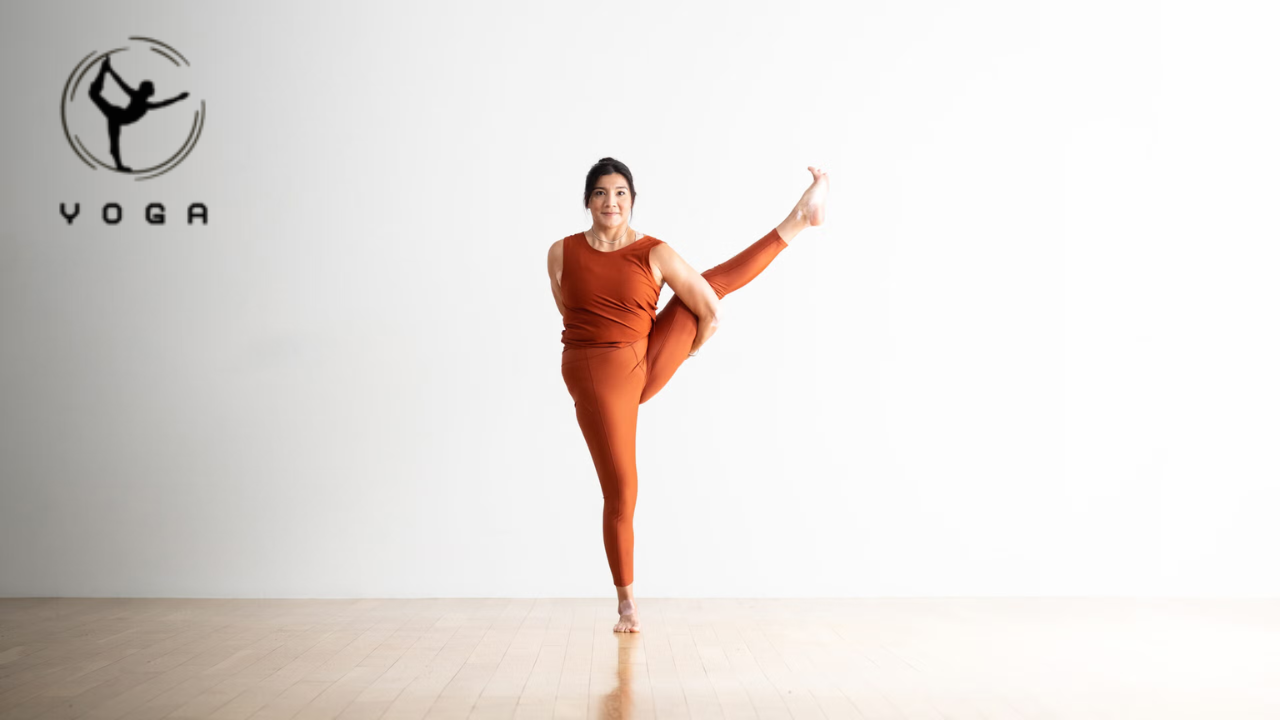
Paradise Bird Yoga, widely recognized in modern yoga systems as the Bird of Paradise Pose (Svarga Dvijasana), is a sophisticated, high-level standing posture that integrates multiple biomechanical systems into a single controlled movement.
From a movement science and functional mobility perspective, this posture is a Compound Kinetic Sequence, combining:
- Hip external rotation and deep flexion
- Hamstring elongation under load
- Core stabilization and anti-rotation control
- Shoulder girdle binding mechanics
- Single-leg proprioceptive balance
Rather than being a simple stretching posture, it is a multi-dimensional neuromuscular coordination task that demands both flexibility and structural strength.
In contemporary sedentary lifestyles, where prolonged sitting leads to:
- Fascial tightness in the hip flexors
- Reduced posterior chain activation
- Compromised postural alignment
- Decreased balance efficiency
- Elevated stress load in the nervous system
This posture functions as a corrective movement protocol that progressively restores mobility and stability.
Paradise Bird Yoga is typically categorized as a peak asana, meaning it is performed after adequate warm-up sequencing when tissues are sufficiently prepared for deeper range exploration.
In this comprehensive 2026 guide, you will gain a full-spectrum understanding of:
- Anatomical and biomechanical principles
- Step-by-step execution methodology
- Progressive learning pathway
- Common motor control errors
- Variations for scalability
- Injury prevention frameworks
- Breathing regulation strategies
- Functional benefits for daily movement systems
This is a pillar-level informational architecture designed for both SEO optimization and practical mastery.
What is Paradise Bird Yoga (Bird of Paradise Pose / Svarga Dvijasana)?
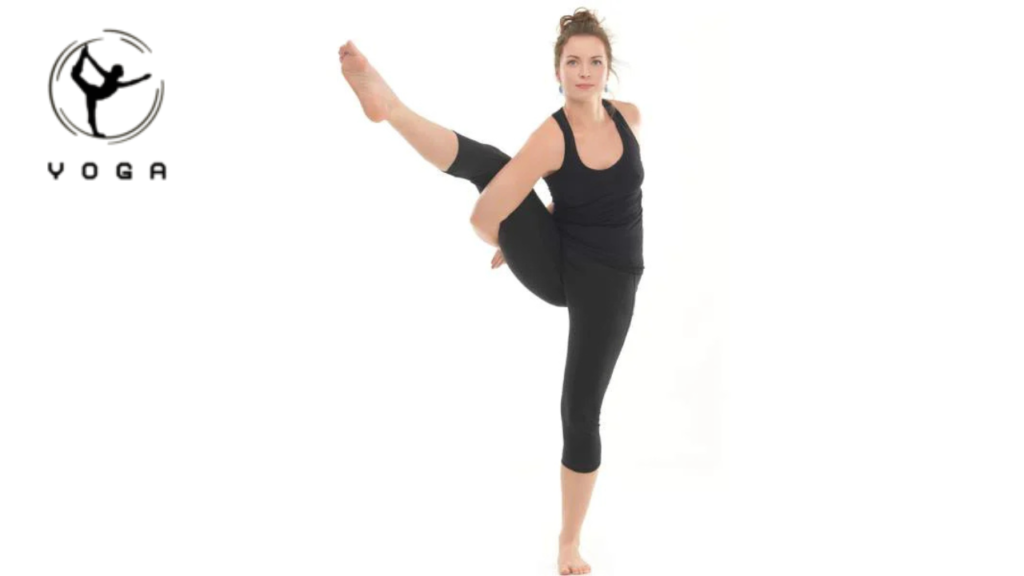
Paradise Bird Yoga, or Svarga Dvijasana, is a unilateral standing balance pose that involves a bound leg extension while maintaining vertical spinal alignment.
At its core, the posture includes:
- One leg is grounded in a stable base
- The opposite leg is bound using the upper limbs
- A gradual elevation from the folded position to the upright stance
- Optional full extension of the lifted limb
The term Svarga Dvijasana is derived from the Sanskrit where:
- Svarga = celestial realm or paradise
- Dvija = twice-born or transformed being
- Asana = posture or seat
Thus, symbolically, it represents elevated transformation through disciplined physical refinement.
From a biomechanical standpoint, this posture is a closed-chain mobility + balance integration pattern, requiring synchronized activation of multiple kinetic chains.
Structural Components
- Single-leg load-bearing foundation
- Deep hip socket articulation
- Arm-leg binding mechanism
- Controlled vertical lift transition
- Optional hamstring extension phase
- Continuous core stabilization engagement
This is not an isolated stretch; it is a whole-body integration system.
Benefits of Paradise Bird Yoga
Physical Adaptation Benefits
Regular practice produces measurable structural adaptations:
- Enhances hamstring extensibility under functional load
- Strengthens gluteal muscle complex
- Builds dynamic core stabilization capacity
- Improves hip joint rotational range
- Reinforces shoulder mobility and binding strength
- Supports spinal alignment correction patterns
For individuals with prolonged sitting behavior, this posture helps reverse:
- Posterior chain inactivity
- Hip capsule stiffness
- Lumbar compression patterns
Neurological and Cognitive Benefits
Beyond biomechanics, this posture enhances neurocognitive regulation:
- Improves attentional focus stability
- Strengthens proprioceptive awareness
- Enhances mind-body synchronization
- Reduces sympathetic overactivation (stress response)
- Builds patience through controlled progression
Balancing on one leg requires continuous micro-adjustments, training the brain’s vestibular system.
Functional Movement Benefits
- Enhances athletic movement efficiency
- Improves unilateral stability (walking, running, jumping)
- Reduces injury risk through joint control
- Strengthens coordination between the upper and lower body
- Improves real-world balance response systems
Muscular Activation Profile
This posture engages multiple muscle chains simultaneously:
Primary Drivers
- Hamstring group (posterior thigh chain)
- Gluteus maximus and medius
- Core stabilizers (rectus abdominis, obliques)
Secondary Stabilizers
- Hip flexors (controlled eccentric engagement)
- Calf musculature
- Spinal erectors
- Deltoids and rotator cuff complex
- Forearm flexors (binding support)
This makes it a multi-joint kinetic integration posture.
Preparation Sequence
Attempting Bird of Paradise without preparatory mobility increases injury risk. A structured warm-up is required.
Recommended Preparatory Postures
- Warrior II
Builds lower body stability and alignment endurance
- Extended Side Angle
Opens the lateral hip chain and strengthens the obliques
- Bound Triangle Pose
Develops binding coordination and hamstring stretch
- Standing Forward Fold
Lengthens the posterior chain fascia
- Half Split Pose
Deepens hamstring neural tolerance
These preparatory movements act as a progressive loading system.
Step-by-Step Execution Guide
1: Foundational Alignment (Tadasana Entry)
Begin in an upright neutral stance:
- Feet grounded evenly
- Spine elongated vertically
- Shoulders relaxed and downregulated
- Breath rhythm stabilized
This establishes baseline postural calibration.
2: Forward Fold Transition
Gradually hinge forward:
- Maintain a micro-bend in the knees if necessary
- Release cervical tension
- Allow gravitational decompression
This shifts the body into posterior chain activation.
3: Binding Mechanism
Engage arm-leg integration:
- Wrap arms around the targeted leg
- Maintain chest openness
- Avoid Compressive collapse
A yoga strap may be used as a scaling tool.
4: Controlled Elevation Phase
Initiate upward transition:
- Engage deep core musculature
- Stabilize the standing leg
- Elevate the bound limb slowly
Movement must remain neurologically controlled, not explosive.
5: Upright Stabilization
Reach vertical alignment:
- Spine fully elongated
- Pelvis stabilized
- Balance recalibrated
6: Advanced Extension Phase
Optional progression:
- Extend the lifted leg upward
- Activate hamstring elongation
- Maintain balance integrity
7: Hold Phase (Integration)
Maintain posture:
- Sustain breath flow
- Stabilize gaze point (drishti)
- Maintain muscular equilibrium
Alignment Intelligence Table
| Body Region | Optimal Alignment | Common Deviation |
| Standing leg | Slight micro-bend stability | Locked knee joint |
| Spine | Neutral vertical elongation | Thoracic collapse |
| Shoulders | Open and retracted | Internal rotation |
| Hips | Level and aligned | Pelvic rotation |
| Core | Engaged stabilization | Passive abdomen |
| Gaze | Fixed focus point | Visual wandering |
Breathing Regulation Protocol
Breathing acts as the control system for stability:
- Inhale → prepare neuromuscular system
- Exhale → initiate lift and engagement
- Inhale → stabilize posture
- Exhale → deepen balance state
Breath suppression reduces performance efficiency.
Common Execution Errors
Frequent failure patterns include:
- Inadequate warm-up preparation
- Over-ambitious leg extension
- Core Disengagement
- Knee hyperextension
- Breath irregularity
- Rapid transition attempts
- Loss of focal attention
Correction of these improves the success rate significantly.
Scalable Variations
Beginner Adaptation
- Bent knee retention
- Strap-assisted binding
- Wall-supported balance
Intermediate Progression
- Partial lift phase
- Increased balance duration
- Reduced external support
Advanced Expression
- Full leg extension
- No assistive tools
- High stability control
Safety Framework
- Always perform a warm-up sequence
- Use a non-slip surface
- Progress gradually
- Avoid pain threshold crossing
- Respect anatomical limitations
Contraindication Guidelines
Avoid or modify if experiencing:
- Knee joint instability
- Hip impingement symptoms
- Shoulder injury history
- Lower back acute issues
- Post-surgical recovery phase
Professional consultation is recommended when uncertain.
Structured Practice Protocol
Recommended training frequency:
- Hold duration: 3–5 breaths
- Sets: 2–3 per side
- Weekly frequency: 2–3 sessions
Recovery time supports neuromuscular adaptation.
Philosophical Dimension
Beyond physical execution, Svarga Dvijasana represents:
- Controlled progression over urgency
- Stability under complexity
- Strength balanced with flexibility
- Awareness integrated with motion
It is a discipline-based transformation model.
Home Training Flow (10–15 Minutes)
- Cat-Cow articulation
- Downward Dog activation
- Low Lunge mobility
- Forward Fold decompression
- Plank core activation
This sequence prepares the kinetic system for deeper work.
Advantages vs Limitations
Advantages
- Full-body integration training
- Enhanced flexibility and strength
- Improved coordination
- Better postural control
- Mental focus enhancement
Limitations
- Not beginner immediate-access pose
- Requires consistent practice
- Risk of strain if rushed
- Mobility prerequisite needed
FAQs
It is a standing balance posture combining binding, lifting, and controlled extension of the leg while maintaining stability.
Yes, it is classified as an advanced posture requiring progressive training and body preparation.
Typically, 2–6 months depending on flexibility, strength, and consistency of practice.
Yes, but only in modified versions using support and a reduced range of motion.
Hamstrings, glutes, core stabilizers, hip flexors, shoulders, back, and calves.
Conclusion
Paradise Bird Yoga (Svarga Dvijasana) is a high-level integrative posture that merges strength, flexibility, coordination, and mindfulness into a unified movement experience.
It is not about rapid achievement but Progressive Embodiment.
With structured preparation, controlled progression, and consistent practice, the practitioner develops:
- Enhanced physical resilience
- Improved neuromuscular coordination
- Greater mental stability
- Refined body awareness
Ultimately, this posture represents not just yoga technique, but a system of disciplined transformation through movement intelligence.
