
Introduction
Modern life rarely slows down. From the moment you wake up, your mind is active, your schedule is packed, and your body is constantly engaged in activity. You move from one responsibility to another, scroll endlessly through screens, remain seated for extended hours, and rarely allow your system to fully unwind.
Over time, this lifestyle creates a cascade of imbalances, including:
- Persistent Tension
- Reduced vitality
- Disturbed sleep patterns
- Muscular stiffness
- Mental fatigue
Your body gradually becomes trapped in a continuous cycle of strain and overstimulation.
This is precisely where restorative yoga poses become transformative.
Unlike high-intensity workouts or dynamic yoga sequences, restorative yoga focuses on stillness, support, and passive healing. It invites your body into a state of ease where recovery happens organically.
You don’t strain your muscles.
You don’t chase flexibility.
simply surrender—and allow restoration to unfold.
Think of restorative yoga as a reset switch for your nervous system, bringing your body back into equilibrium.
What Is Restorative Yoga?
Restorative yoga is a gentle, therapeutic style of yoga designed to promote deep relaxation, recovery, and holistic healing. Instead of emphasizing movement, it prioritizes stillness, comfort, and awareness.
Key Characteristics
- Extended pose duration (5–20 minutes)
- Full-body support using props
- Minimal muscular effort
- Slow, conscious breathing
- Calm and soothing environment
The philosophy is simple yet powerful:
Do less… experience more.
The Science Behind Restorative Yoga
Restorative yoga influences your body at a physiological level by activating the parasympathetic nervous system, often referred to as the “rest and digest” mode.
This state counteracts the stress response and initiates healing.
What Happens Inside Your Body
| Body System | Effect |
| Nervous System | Transitions from alertness to relaxation |
| Heart Rate | Gradually decreases |
| Cortisol Levels | Significantly reduced |
| Muscles | Release accumulated tension |
| Brain Activity | Moves into a calm, restorative state |
This explains why restorative yoga is particularly beneficial for:
- Anxiety
- Burnout
- Insomnia
- Chronic fatigue
- Emotional imbalance
Powerful Benefits of Restorative Yoga Poses
Mental Benefits
- Reduces psychological stress and anxiety
- Enhances emotional stability
- Improves concentration and clarity
- Helps prevent mental exhaustion
Physical Benefits
- Relieves muscular tightness
- Reduces back and neck discomfort
- Improves flexibility gradually
- Supports injury rehabilitation
Lifestyle Benefits
- Enhances sleep quality
- Boosts natural energy levels
- Accelerates recovery after workouts
- Supports cardiovascular health
Even dedicating 15 minutes daily can produce noticeable improvements.
12 Best Restorative Yoga Poses
1. Child’s Pose (Balasana)
Best for: Stress relief and lower back relaxation
Steps:
- Kneel comfortably on the floor
- Sit back toward your heels
- Gently fold forward
- Rest your torso on your thighs
- Place a cushion under your chest
Benefits:
- Relieves spinal pressure
- Promotes calmness
- Creates a sense of grounding
2. Legs-Up-The-Wall (Viparita Karani)
Best for: Circulation and deep relaxation
Steps:
- Sit sideways next to a wall
- Gently lie back
- Extend legs vertically
- Relax your arms alongside your body
Benefits:
- Reduces leg swelling
- Enhances blood circulation
- Induces mental tranquility
3. Corpse Pose (Savasana)
Best for: Complete body relaxation
Steps:
- Lie flat on your back
- Allow limbs to rest naturally
- Close your eyes
- Focus on slow breathing
Benefits:
- Restores nervous system balance
- Promotes deep relaxation
- Reduces fatigue
4. Supported Fish Pose
Best for: Chest opening and posture correction
Steps:
- Place a bolster under your upper back
- Allow your chest to expand
- Relax arms outward
Ideal for individuals who spend long hours sitting.
5. Reclining Bound Angle Pose
Best for: Hip relaxation and stress relief
Steps:
- Bring the soles of the feet together
- Let knees gently fall outward
- Support knees with cushions
6. Supported Bridge Pose
Best for: Lower back support
Steps:
- Lift hips slightly
- Place a block or cushion underneath
- Relax completely
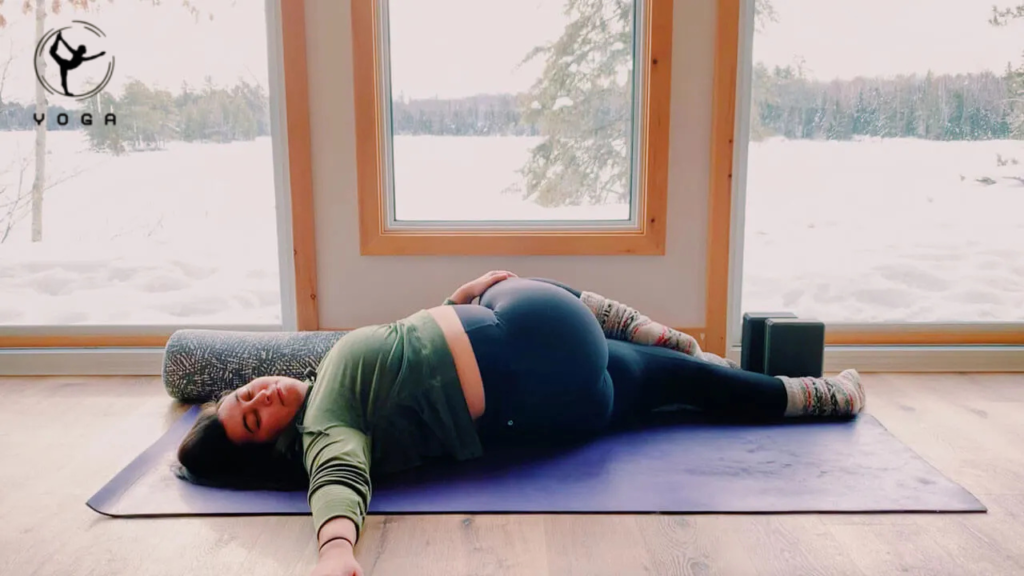
7. Supine Twist
Best for: Spinal decompression
Steps:
- Lie on your back
- Drop knees to one side
- Keep shoulders grounded
8. Supported Forward Fold
Best for: Mental calmness and hamstring relaxation
Use a pillow under your torso for maximum comfort.
9. Reclining Hero Pose
Best for: Deep thigh stretch
Use cushions to avoid discomfort.
10. Resting Pigeon Pose
Best for: Hip tension release
Especially beneficial for desk workers.
11. Supported Half Frog Pose
Best for: Hip mobility
Gentle yet effective.
12. Seated Cat-Cow (Gentle Version)
Best for: Spinal mobility
Performed slowly to enhance relaxation.
Duration & Frequency Guide
Consistency is more important than intensity.
| Level | Duration per Pose | Frequency |
| Beginner | 3–5 minutes | 3x/week |
| Intermediate | 5–10 minutes | 4–5x/week |
| Advanced | 10–20 minutes | Daily |
Start gradually and increase over time.
Breathing Technique for Deep Relaxation
Breathing is central to Restorative yoga.
Practice This Method:
- Inhale slowly through your nose
- Exhale longer than your inhale
- Focus on abdominal expansion
This technique accelerates relaxation.
Muscles Targeted in Restorative Yoga
Despite its gentle nature, restorative yoga influences multiple muscle groups:
- Spinal stabilizers
- Hip flexors
- Hamstrings
- Shoulders
- Neck muscles
It works passively, which enhances recovery.
Variations: Beginner to Advanced
Beginner
- Use ample support
- Hold poses briefly
- Focus on comfort
Intermediate
- Reduce props slightly
- Increase duration
Advanced
- Minimal support
- Deep stillness
- Meditation focus
Common Mistakes to Avoid
Avoid these errors:
- Holding unnecessary tension
- Avoiding props
- Rushing through poses
- Treating it like exercise
Rule: Comfort equals effectiveness.
Safety Tips
- Fully support your body
- Avoid discomfort or pain
- Use blankets and cushions
- Practice in a quiet environment
Contraindications
Exercise caution if you have:
- Severe injuries
- Recent surgeries
- Chronic pain conditions
- Pregnancy (modifications required)
Consult a professional when needed.
3 Powerful Restorative Yoga Sequences
Bedtime Routine (10–20 Minutes)
- Legs-Up-The-Wall
- Child’s Pose
- Savasana
Promotes restful sleep.
Stress Relief Routine
- Supported Forward Fold
- Reclining Bound Angle
- Supine Twist
Ideal after a demanding day.
After-Work Recovery Routine
- Supported Fish Pose
- Legs-Up-The-Wall
- Corpse Pose
Relieves tension from prolonged sitting.
Props You Can Use at Home
You don’t need specialized equipment.
Use:
- Pillows
- Blankets
- Towels
- Cushions
Comfort is more important than perfection.
Restorative Yoga vs Yin Yoga
| Feature | Restorative Yoga | Yin Yoga |
| Goal | Relaxation | Deep stretching |
| Effort | Minimal | Moderate |
| Props | Extensive | Limited |
| Sensation | Comfortable | Mild discomfort |
Choose according to your objective.
Tips for Beginners
- Start with 10 minutes daily
- Use supportive props
- Focus on breathing
- Practice in silence
Consistency yields results.
Diet Tips for Better Results
Your lifestyle enhances your practice.
- Stay hydrated
- Avoid heavy meals before yoga
- Drink herbal teas
- Consume magnesium-rich foods
Supports faster relaxation.
Home Practice Setup
Create a soothing environment:
- Soft lighting
- Quiet surroundings
- Gentle music
- Comfortable mat
Enhances the experience significantly.
Pros & Cons of Restorative Yoga
Pros
- Deep relaxation
- Beginner-friendly
- Reduces stress quickly
- Improves sleep
Cons
- Requires patience
- Not physically intense
- May feel slow initially
FAQs
Yes, it is one of the safest and most accessible yoga styles for beginners.
Yes, it calms the nervous system and reduces stress hormones.
3–5 times per week is ideal.
Absolutely. It improves sleep quality significantly.
No, household items work perfectly.
Conclusion
Restorative yoga teaches a powerful lesson:
Healing happens when you slow down.
When you allow your body to rest deeply, it:
- Repairs itself
- Calms the mind
- Restores Energy
Just 10–20 minutes daily can completely transform your well-being.
Ready to feel calm, refreshed, and re-energized?
Start practicing restorative yoga poses today and experience profound relaxation.
Explore more expert wellness guides and routines to elevate your health journey.
