
Introduction
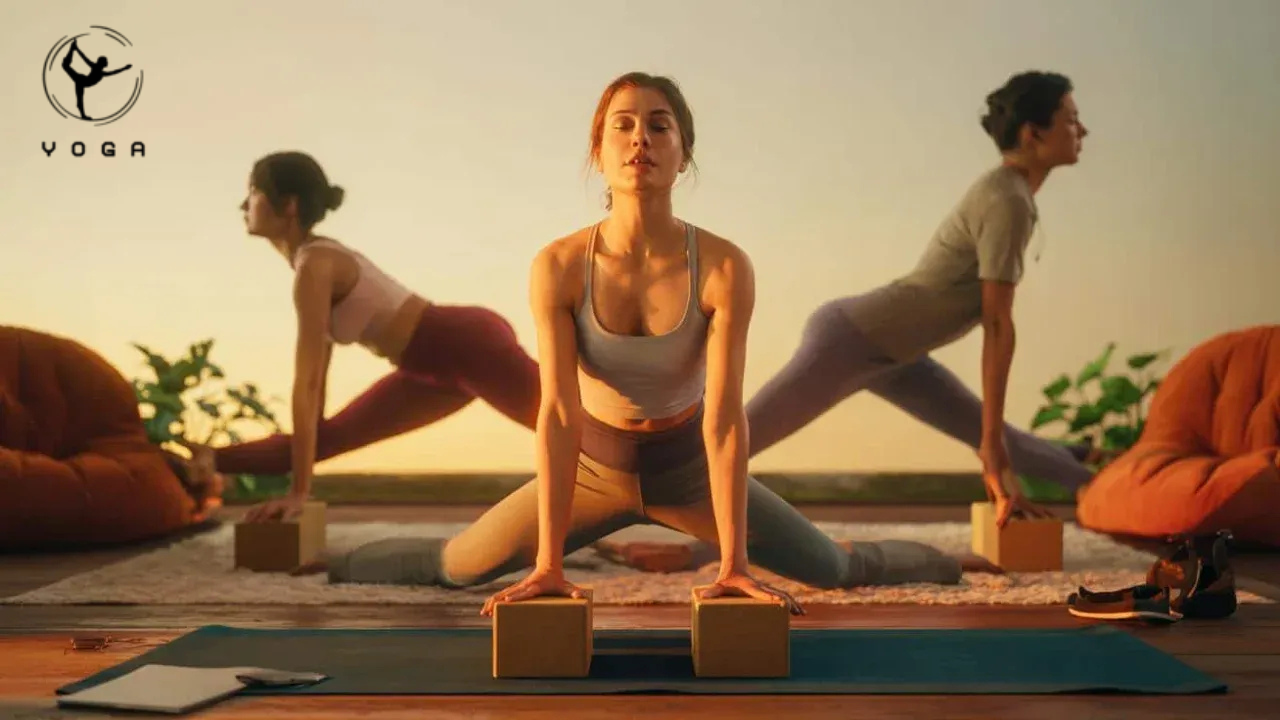
Yoga has been said to be a very individual practice- one mat, one body, one breath, one inner journey. However, as soon as three people conduct a yoga session, the practice becomes broader, more expressive, and interpersonal. Yoga Poses are Led by 3 individuals who make traditional postures into common movements that develop balance, cooperation, trust, laughter, and awareness.
Trio yoga helps to practice physical and emotional alignment. It challenges participants to listen, reply, adjust, and move as a team. Three-person yoga poses make common exercises seem significant and worthwhile in terms of connection and support between you and your close friends, family members, children, students, and teammates.
Group yoga, with three people, adds an element of teamwork versus other yoga practices, such as solo (self-awareness) and partner (dual interaction) yoga. The third aspect is full of opportunities to test communication abilities, spatial orientation, and flexibility in a manner of relishing and enabling.
Notably, trio yoga is not one of perfect performance or acrobatics. It concerns being there, collaborating, being patient, and being willing to do so. When an incomplete balance is present, laughter, learning, and bonding are likely to take place, and that is precisely where its strength is.
Regrettably, the majority of the content on the internet only scratches the surface. Many articles only display a few photos or list poses without context. They rarely explain:
- How to practice yoga poses for 3 safely
- Why trio yoga is uniquely effective
- Which poses are appropriate for beginners, kids, or adults
- How to structure complete trio yoga routines
- How parents, educators, and instructors can confidently guide group yoga
This pillar guide is designed to change that.
What You’ll Learn in This Complete Guide
This research-informed, experience-driven, and practitioner-focused guide offers everything you need to explore Yoga Poses For 3 People confidently.
Inside this comprehensive resource, you’ll discover:
- Beginner-friendly, kid-safe, and strength-based yoga poses for 3 people
- Physical, emotional, neurological, and social benefits of trio yoga
- Clear step-by-step instructions with alignment cues and breath guidance
- Essential safety principles and age-appropriate modifications
- Ready-to-use 10-minute and 20-minute trio yoga routines
- Practical teaching strategies for parents, teachers, and yoga instructors
- Common mistakes, limitations, and how to correct them
- Simple, direct answers to the most frequently asked questions
If your goal is to publish the most complete, authoritative, and SEO-optimized guide on Yoga Poses for 3, you’re exactly where you need to be.
What Are Yoga Poses for 3 People?
Yoga poses for 3 people are adapted yoga postures intentionally designed for three participants practicing together simultaneously. These postures often require shared balance, physical contact, synchronized movement, and group awareness.
Rather than functioning as isolated bodies, participants become a coordinated system, responding to one another’s movements, breath, and energy.
Common elements of trio yoga include:
- Physical connection through hands, arms, legs, or shoulders
- Shared or distributed weight
- Mirrored or synchronized postures
- Cooperative balance and alignment
- Emotional sensitivity and mutual awareness
Unlike solo yoga or partner yoga, three-person yoga introduces group dynamics, making communication and patience essential. The presence of a third participant encourages adaptability and mindfulness, as everyone must adjust for differences in height, strength, mobility, and confidence.
Main Types of Yoga Poses for Three People
Type Description Best For Mirrored Poses: All three perform the same posture together. Beginners, kidsConnected, Poses, Participants maintain physical contact or shared balance. Trust & coordinationAssisted PosesOne or two people support another. Strength & flexibility
Because of the third participant, trio yoga naturally develops:
- Clear verbal communication
- Slow, intentional transitions
- Emotional intelligence
- Cooperative problem-solving
This makes yoga poses for three people both physically conditioning and emotionally enriching.
Benefits of Yoga Poses for 3 People
Practicing yoga poses for 3 adults or children provides multi-layered benefits that extend far beyond flexibility.
1. Improves Balance & Coordination
Group balance yoga deeply engages the brain and nervous system. When three bodies stabilize together, the practice enhances:
- Proprioception (spatial body awareness)
- Reaction speed and adaptability
- Postural control and equilibrium
This neurological stimulation is especially valuable for:
- Children are developing motor skills
- Beginners learning foundational stability
- Older adults maintaining coordination
2. Builds Trust & Emotional Connection
Trust-building yoga poses require participants to rely on one another safely and respectfully. This shared responsibility fosters emotional openness and confidence.
Ideal for:
- Children building social awareness
- Families strengthening emotional bonds
- Friends deepening interpersonal trust
- Teams improving collaboration
Over time, trio yoga becomes a non-verbal language of support.
3. Enhances Communication Skills
Trio yoga naturally improves both verbal and non-verbal communication. Participants learn to:
- Give and receive clear cues
- Listen attentively
- Adjust movement based on feedback
- Read body language and energy
These communication patterns often transfer into everyday interactions.
4. Strengthens Core & Stabilizer Muscles
Many three-person yoga poses activate muscles that are often underused, including:
- Deep abdominal stabilizers
- Hip and pelvic support muscles
- Shoulder girdle and spinal stabilizers
Because balance is shared, muscles engage intelligently rather than aggressively, reducing strain and improving functional strength.
5. Makes Yoga Fun & Accessible
For children and beginners, trio yoga feels playful rather than intimidating. This sense of enjoyment increases:
- Participation
- Confidence
- Motivation
- Consistency
When movement is enjoyable, it becomes sustainable—and sustainable practice leads to long-term benefits.
Safety Tips Before You Start Yoga Poses for 3
Safety is essential when practicing yoga poses for 3 people. Always prioritize awareness, communication, and respect for individual limits.
Choose the Right Space
- Flat, stable, non-slip surface
- One yoga mat per participant
- Enough room to exit poses safely
Warm Up First (5–7 Minutes)
Never skip preparation. Effective warm-ups include:
- Neck rolls and gentle rotations
- Shoulder circles and arm swings
- Hip openers and light squats
- Cat–Cow spinal movements
Communicate Constantly
Encourage:
- Verbal check-ins
- Agreed, start and release cues
- Slow, mindful transitions
Modify for Age & Ability
- Kids: Keep poses low, playful, and imaginative
- Adults: Use props, walls, and shorter hold times
Easy Beginner Yoga Poses For 3 People
These beginner-friendly yoga poses for 3 emphasize comfort, stability, and confidence.
4.1 Seated Triangle Stretch (Group Seated Pose)
How to Do It
- Sit in a triangle formation facing inward
- Extend legs comfortably
- Hold hands or wrists
- Inhale together
- Exhale and gently lean to one side
Benefits
- Hamstring elongation
- Spinal mobility
- Group synchronization
Breathing Slow nasal breathing, 4–5 cycles per side.
4.2 Three-Way Tree Pose
How to Do It
- Stand in a small circle
- Place one foot on the calf or ankle
- Lightly hold hands for support
Benefits
- Balance and focus
- Lower-body strength
- Trust Development
Beginner Tip: Keep toes on the floor if balance feels unstable.
4.3 Triple Downward Dog
How to Do It
- Two participants from Downward Dog
- Third mirrors beside or gently holds ankles
Benefits
- Upper-body engagement
- Posterior chain stretch
- Playful teamwork
Kid-Friendly Yoga Poses for 3 (Safe & Playful)
These trio yoga poses are ideal for family yoga, schools, and children’s classes.
5.1 Flying Butterfly
How to Make It a Game: Pretend you’re butterflies flapping wings together.
Benefits
- Hip opening
- Coordination
- Joyful expression
5.2 Rainbow Bridge Formation
How to Do It
- Two children form a bridge
- Third crawls underneath
Benefits
- Core activation
- Creativity
- Cooperative play
5.3 Caterpillar Train
Children sit in a line holding shoulders and gently rocking side to side.
Perfect for: Ages 4–8
Advanced Trio Yoga Poses (Adults Only)
These advanced yoga poses for 3 adults require experience, strength, and mutual trust.
6.1 Assisted Plank Pyramid
How to Do It
- Two people hold a plank
- The third adds gentle downward resistance
Benefits
- Core endurance
- Upper-body strength
- Group stability
Safety Note: Only for experienced adults.
6.2 Standing Triangle Trio Stretch
A shared standing stretch using arm and shoulder support.
Progressions
- Eyes closed
- Extended holds
- Single-leg variations
How to Build a 10- or 20-Minute Trio Yoga Routine
10-Minute Trio Yoga Routine
PhaseDurationPosesWarm-Up3 minNeck & shouldersMain5 minTree, Seated TriangleCool-Down2 minGroup breathing
20-Minute Trio Yoga Routine
PhaseDurationWarm-Up5 minMain Flow10 minCool-Down5 min
Tip: Always finish with synchronized breathing or seated reflection.
How to Teach Yoga Poses for 3 People
Teaching trio yoga requires guidance, encouragement, and adaptability.
Best Practices
- Use clear, simple language
- Demonstrate poses before attempting
- Praise effort over perfection
- Encourage teamwork and communication
Ideal For
- Schools
- Family yoga sessions
- Children’s programs
Common Mistakes & Quick Fixes
MistakeFixRushing transitionsSlow movementsPoor alignmentClear verbal cuesLack of communicationFrequent check-ins
Contraindications: Who Should Avoid Certain Poses
Avoid advanced trio yoga poses if participants have:
- Recent injuries
- Balance disorders
- Severe joint or spinal pain
Begin with beginner variations and progress gradually.
FAQs
The Seated Triangle Stretch is the safest and easiest option.
Yes—with appropriate modifications and supervision.
10–30 seconds for beginners, longer for advanced groups.
Yes—shared balance and communication naturally strengthen trust.
Conclusion
Yoga poses for 3 people are far more than creative shapes or playful exercises. They are effective instruments of connection, communication, cooperation, and confidence. Trio yoga reminds us of the fact that movement may not always be singular–and that the balance may be easier to achieve when one shares it.
Anyone can experience the deepest of the benefits of group yoga by starting with safe, available poses, respecting personal boundaries, and putting teamwork over perfection in the first place. In all their imaginative, kid-friendly shapes, yoga poses that are 3 people in size would also suit any age and capability.
