
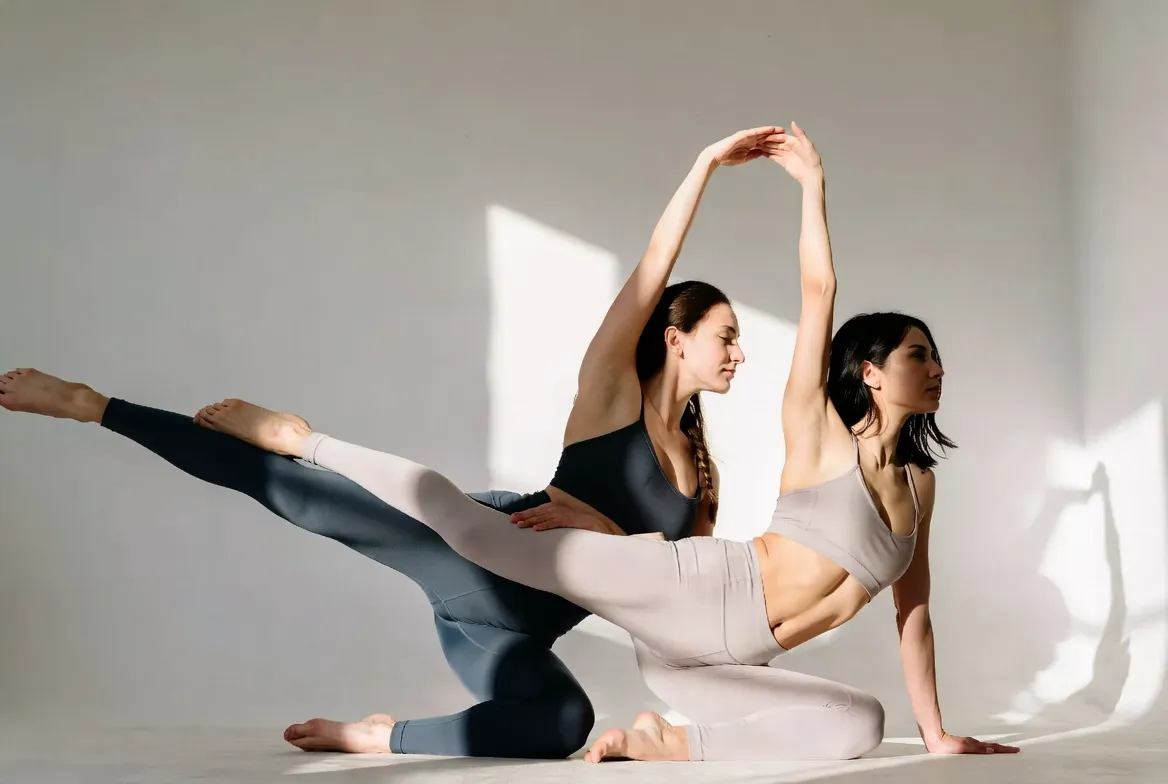
Introduction of Yoga Poses for Two People
Partner Yoga, sometimes known as two-person yoga, couples yoga, dual yoga, shared yoga, paired yoga, or assisted yoga, is a blissful, significant, and life-changing form of yoga in which two people coordinate their movements, breathing, and will. It combines fun and order, elasticity with integrity, and affiliation with consciousness.
Partner yoga is a refreshing experience no matter how you practice it: with a spouse, life partner, best friend, sibling, parent, gym partner, and even your Yoga Classmate, it brings a new sense of support, interaction and harmony. It renders yoga more collective, more encouraging and more interesting in comparison to practising it on his/her own.
What Is Partner Yoga?
Partner yoga is a mutual yoga activity in which two individuals actively and physically work together to establish equilibrium, steadiness, enhanced stretches, counter-resistance, support and mindfulness. It is personified conversation, a combination of communication, cooperation and coordinated purpose.
- Partner yoga consists of many styles of movement:
- Assisted stretching (your partner assists in giving more flexibility)
- Counterbalance poses (you lean or move opposite one another)
- Mirroring shapes (both partners create the same form simultaneously)
- Back-to-back grounding movements (you share a central axis of support)
- Supportive holds (hands, forearms, shoulders, hips)
Acroyoga lifts
Partner yoga, as the name implies, is not just a couple or romantic relationship yoga. It works beautifully for:
- Friends
- Siblings
- Parents and children
- Classmates
- Wellness partners
- Gym buddies
- Co-workers
- Students in group workshops
The core goal is simple yet powerful:
Move together. Breathe together. Support one another. Build trust.
Partner yoga will enhance the relationship between two human beings through mindful movement, mindful touch, coordinated breathing, shared awareness, and shared presence.
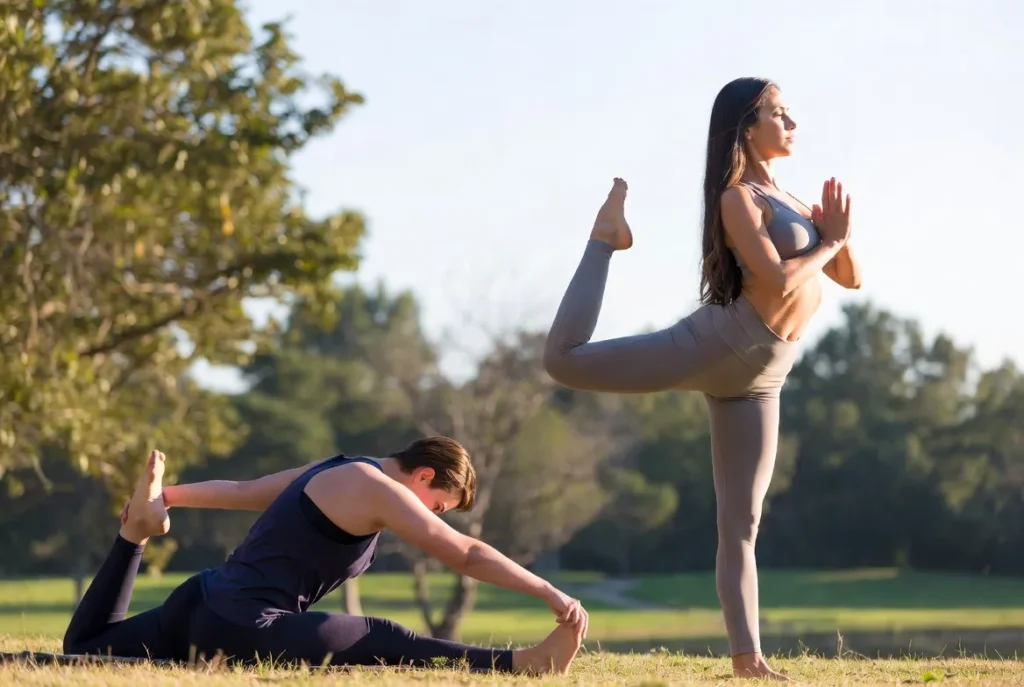
Advantages of Yoga Pose with a partner
Yoga poses with two individuals result in a lack of conduction of physical, emotional, mental and relational advantages. It is also among the most available methods to boost your yoga practice and build relationships.
A further breakdown is given below.
Physical Benefits
Enhanced Flexibility and mobility.
Two-person stretching is more effective in lengthening muscles. It is helpful when your partner pulls, presses, or holds as you reach a deeper tier of movement.
Example:
When sitting in a forward bend, your partner may support your hips or pull you gently, which allows you to go deeper in the hamstring or lumbar bend.
This improves flexibility in:
- Hamstrings
- Quadriceps
- Hips
- Shoulders
- Chest
- Spine
2. Better Balance & Coordination
Moves like Double Tree Pose, Twin Dancer, or paired standing balances require stability, proprioception, and concentration.
Because you share weight and energy, you learn how to:
- Maintain equilibrium
- Adjust micro-movements
- Strengthen stabilizer muscles
- Improve alignment
- Build mutual trust
3. Enhanced Core Strength
Partner yoga often amplifies core engagement since both people must stabilize simultaneously.
E.g.:
Double Boat Pose, Partner Plank Press, or L-sits intensify abdominal activation.
4. Posture Improvement
Your partner can guide you into proper alignment by:
- Adjusting shoulders
- Supporting the spine
- Stabilizing hips
- Encouraging length along the side body
5. Increased Joint Mobility
Gentle pressure from a partner encourages:
- Greater hip mobility
- More open shoulders
- Improved thoracic extension
- Healthier spinal rotation
Mental & Emotional Benefits
1. Builds Deep Trust
Partner yoga requires communication, attentiveness, and mutual reliance.
You literally lean on each other — physically and emotionally.
2. Reduces Stress & Anxiety
Shared breathing calms the nervous system.
Practicing with someone else enhances oxytocin, relaxation, and emotional grounding.
3. Boosts Mindfulness
Since you must coordinate movements, you naturally enter a deeper state of presence, awareness, and focus.
4. Improves Self-Confidence
Achieving new poses together fosters accomplishment, pride, and shared excitement.
Relationship Benefits (Friends, Couples, or Family)
Partner yoga strengthens connection in multiple ways:
- Enhances teamwork & collaboration
- Improves verbal + nonverbal communication
- Builds empathy & understanding
- Encourages emotional vulnerability
- Creates fun and memorable shared experiences
- Breaks routine and encourages novelty
- Strengthens bonds through synchronized breath
Because of this, partner yoga is widely used in:
- Couples retreats
- Team-building workshops
- Family therapy
- Friendship bonding activities
- Mindfulness retreats
General Rules for Partner Yoga
To ensure safety and harmony, follow these foundational guidelines:
- Communicate verbally throughout each pose
- Warm up for 5–10 minutes
- Agree on clear signals like “slow,” “pause,” or “stop.”
- Never push into pain; stay within comfort
- Use non-slip mats or padded flooring
- Begin with simple, grounded movements
- Progress gradually into balancing or lifting
- Respect each other’s limits and energy levels
- Move slowly, breathe consciously
Partner yoga thrives on collaboration, not force.
Safety Tips & Contraindications
Avoid advanced partner yoga if either partner has:
- Recent surgery
- Herniated disc or spinal injuries
- Lower back instability
- Acute wrist, knee, or shoulder pain
- High blood pressure (avoid deep backbends)
- Knee weakness or ligament issues
- Pregnancy (prevent compression belly, deep twists, lifts)
When unsure, choose gentle seated or supported poses.
BEGINNER PARTNER YOGA POSES (10 EASY POSES)
Perfect for warming up, bonding, or introducing partner yoga to beginners.
1. Seated Breath Sync
How to Do It:
Sit facing your partner, cross-legged. Hold hands or rest palms on knees. Inhale slowly for 4 counts, exhale for 4. Synchronize rhythm.
Benefits:
Calms the mind, nurtures presence, enhances emotional connection.
Common Mistake:
Breathing too fast or unevenly.
Hold Time:
1–3 minutes.
2. Back-to-Back Seated Twist
Sit with backs touching. Inhale length, exhale twist gently. Switch sides.
Benefits:
Improves spinal rotation and posture.
Avoid If:
Spinal disc concerns.
3. Seated Forward Fold (Facing)
Hold each other’s wrists. One partner folds while the other resists softly.
Targets:
Hamstrings, lower back, calves.
Breathing:
Exhale as you fold.
4. Double Tree Pose
Stand side-by-side or facing each other. Press palms together, lift a foot to the inner thigh.
Benefits:
Balance, coordination, concentration.
Tip:
Focus your eyes on a stable point.
5. Double Boat Pose
Press soles together, lean back slightly, and lift legs. Hold hands for support.
Muscles:
Core, hip flexors.
Mistake:
Rounding the spine.
6. Seated Cat-Cow (Back-to-Back)
Match each other’s breath as you arch and round your spines.
Benefits:
Spinal warm-up, relaxation.
7. Partner Child’s Pose Assist
A folds into Child’s Pose. Partner B gently presses lower back.
Avoid If:
Lower back injury or sensitivity.
8. Seated Spinal Twist for Two
Sit facing each other, hold forearms, twist softly.
Benefits:
Rotation + core engagement.
9. Standing Shoulder Opener
Hold forearms and lean back gently.
Benefits:
Chest opening, posture alignment.
10. Supported Bridge (Double Bridge)
Lie down, bend knees, lift hips at the same time.
Targets:
Glutes, hamstrings, lower back.
INTERMEDIATE PARTNER YOGA POSES (10)
Ideal for building stability, trust, and dynamic strength.
11. Twin Dancer
Hold hands, extend opposite legs Behind, and reach for the foot.
Benefits:
Balance, quad stretch, coordination.
12. Partner Camel Pose
Kneel facing each other, hold forearms, lift chest.
Avoid If:
Neck tension or dizziness.
13. Advanced Double Boat
Add leg variations, toe taps, or overhead reaches.
14. Standing Forward Fold Counterbalance
Hold wrists, lean away from each other.
Benefits:
Deep hamstring release.
15. Double Downward Dog
Facing one another, walk feet in until aligned.
Benefits:
Shoulder strength + spinal length.
16. Partner Pigeon Assist
Partner A enters Pigeon Pose; Partner B gently presses hips.
Targets:
Hip mobility, glute release.
17. Supported Wheel (Spotting)
Partner B supports the shoulders while Partner A lifts into the Wheel.
Benefits:
Confidence + safe backbending.
18. Partner Plank Press
Face each other in a plank. Press soles or high-five.
Benefits:
Core challenge + shoulder stability.
19. Back-to-Back Chair
Interlock arms and squat down together.
Targets:
Quads, glutes, stamina.
20. Lunge + Overhead Reach Assist
Partner A lunges while Partner B lifts arms gently.
ADVANCED PARTNER YOGA & ACROYOGA POSES (10)
For stable, experienced, and highly coordinated partners.
21. Double Royal Dancer
Both lift back legs and reach arms forward.
22. Partner Trade Lifts
Alternate lifting each other with support.
23. Front Bird (Basic Acro)
Base supports flyer with feet on hips or pelvis.
Benefits:
Strength, trust, balance.
24. Counterbalance Handstand Prep
Partner supports legs as you kick up.
25. Double Wheel Pose
Both lift into the air and touch hands.
26. Double Crow Variation
Requires strong wrists, core, and arm engagement.
27. Star Pose (AcroYoga)
Base supports flyer in a star-like shape.
28. Rear Fly Balance
Partner lifts torso while the other extends arms outward.
29. Partner Bow Assist
Partner A in Bow Pose while Partner B lifts feet gently.
30. Advanced Flow Sequence
Combine 3–5 advanced poses smoothly.
Table — Best Yoga Poses for Two People (Quick Overview)
| Level | Pose Name | Benefits | Best For |
| Beginner | Seated Breath Sync | Calm + connection | Warm-up |
| Beginner | Double Tree | Balance | New yogis |
| Intermediate | Twin Dancer | Flexibility + balance | Coordinated pairs |
| Intermediate | Double Downward Dog | Alignment | Stable yogis |
| Advanced | Front Bird | Trust + strength | Acro beginners |
| Advanced | Star Pose | Lifts + balance | Experienced partners |
Step-by-Step Guide: How to Practice Partner Yoga
- Start with gentle warm-up stretches
- Sync breathing
- Begin with grounded or seated poses
- Add standing and balancing movements
- Move into counterbalance stretches
- Try moderate lifts only when confident
- End with a cooling sequence
- Finish in Partner Savasana
Alignment Tips for Safety
- Keep spine long
- Relax shoulders
- Maintain core engagement
- Move gradually
- Avoid collapsing into joints
- Keep knees tracking forward
- Breathe throughout
Breathing Tips
- Inhale to lengthen
- Exhale to deepen
- Avoid breath holding
- Sync inhalations and exhalations
- Use slow diaphragmatic breathing
Common Mistakes to Avoid
Forcing a partner into flexibility
Practicing on slippery floors
Skipping warm-ups
Rushing transitions
Attempting advanced lifts prematurely
Ignoring partner cues
Breathing inconsistently
Tips for Beginners
- Keep sessions short (15–20 minutes)
- Repeat beginner poses regularly
- Use pillows, bolsters & blocks
- Move slowly and mindfully
- Communicate continuously
- Celebrate progress
4-Week Partner Yoga Plan (Beginner → Intermediate)
A structured plan to build fluency, comfort, and Connection.
Week 1 — Foundation (20–25 min)
- Breath Sync
- Seated Twist
- Double Boat
- Double Tree
Goal: Trust, communication, and initial flexibility.
Week 2 — Stability (25–30 min)
- Shoulder Opener
- Forward Folds
- Seated Cat-Cow
Goal: Mobility + balance.
Week 3 — Coordination (30–40 min)
- Twin Dancer
- Double Downward Dog
- Back-to-Back Chair
Goal: Strength + teamwork.
Week 4 — Flow + Connection (35–45 min)
- Combine beginner + intermediate poses
- Add transitions and sequences
- Finish with Partner Savasana
Goal: Fluidity, connection, harmony.
Yoga Philosophy Behind Two-Person Yoga
Partner yoga reflects essential yogic principles:
- Ahimsa — non-harm, gentle movement
- Satya — truthful communication
- Sangha — community, unity
Prana – vital energy and life force.
It integrates yoga with the physical and emotional presence as well as spiritual awareness.
FAQs
Yes. Partner yoga is easy to learn as long as you have the initial and simple poses.
Seated Breath Sync, Seated Forward Fold, Double Boat and Double Tree.
Completely – it strengthens communication, trust, empathy and emotional intimacy.
2–3 times per week is ideal.
No, no, take soft poses and see to it.
Conclusion
Two-Person Yoga Brings happiness, peace, unity, and harmony to your practice. This has grown larger and NLP-filled with 30 partner yoga poses, clear-Cut Guidelines, safety principles, and a 4-week progression that provides you with all that is needed to start an exciting shared yoga adventure.
Move slowly. Communicate openly. Trust deeply.
Partner yoga is not a workout, but a mindful method of relating, developing, experimenting, and bonding.
