
Introduction
Duo yoga poses have evolved from a fun social media trend into one of the most effective ways to combine fitness, mindfulness, flexibility, and human connection.
Unlike traditional solo yoga, partner yoga creates a shared experience where two people move, breathe, balance, and stretch together. Whether you practice with a spouse, friend, sibling, or workout partner, duo yoga improves both physical and emotional wellness.
The popularity of partner yoga poses and two-person yoga poses continues to rise because they offer far more than flexibility training.
Benefits of Duo Yoga
- Trust
- Communication
- Coordination
- Core strength
- Mobility
- Balance
- Stress relief
Many beginners assume duo yoga is only advanced acrobatics. In reality, most poses are accessible to all fitness levels when practiced correctly and safely.
This Complete Guide Covers
- Beginner-friendly partner poses
- Intermediate balance challenges
- Advanced acro yoga foundations
- Proper alignment
- Breathing techniques
- Safety tips
- Common Mistakes
- Partner communication strategies
- A complete 15-minute routine
Whether your goal is fitness, flexibility, mindfulness, or bonding, this pillar guide will help you practice duo yoga safely and confidently.
What Are Duo Yoga Poses?
Duo yoga poses are yoga postures performed with another person rather than alone. These poses involve shared balance, support, resistance, synchronization, and coordination.
Partner Yoga Combines
- Traditional yoga
- Acro yoga
- Assisted stretching
- Breathwork
- Mindfulness
- Bodyweight training
Some poses are gentle and restorative, while others require strength, mobility, and advanced balance skills.
Types of Duo Yoga
| Style | Focus | Difficulty |
| Partner Yoga | Stretching & support | Beginner |
| Couples Yoga | Connection & relaxation | Beginner–Intermediate |
| Acro Yoga | Balancing & lifting | Intermediate–Advanced |
Unlike competitive fitness activities, duo yoga emphasizes cooperation rather than performance.
Benefits of Duo Yoga Poses
1. Improves Flexibility Faster
A partner can help deepen stretches safely through controlled support and gentle resistance.
This Improves
- Hamstring flexibility
- Hip mobility
- Shoulder range of motion
- Spinal mobility
Supported stretching often allows deeper movement than solo yoga.
2. Builds Core Strength
Many partner balance yoga poses require stabilization through the core muscles.
Muscles Activated
- Abdominals
- Obliques
- Lower back muscles
- Hip stabilizers
Core engagement becomes essential for maintaining alignment and balance.
3. Enhances Communication and Trust
Duo yoga teaches:
- Verbal communication
- Non-verbal awareness
- Timing
- Patience
- Cooperation
This is especially valuable for couples and close friends.
4. Reduces Stress and Anxiety
Synchronized breathing activates the parasympathetic nervous system, which promotes relaxation.
Partner Yoga May Help Reduce
- Mental fatigue
- Stress levels
- Anxiety symptoms
- Muscle tension
Mindful movement combined with human connection creates a calming effect.
5. Improves Balance and Coordination
Two-person yoga requires constant body awareness and coordination.
Over Time, This Improves
- Stability
- Joint control
- Athletic performance
- Neuromuscular coordination
6. Makes Exercise More Enjoyable
Many people struggle with workout consistency because solo training becomes repetitive.
Duo Yoga Adds
- Motivation
- Accountability
- Fun
- Shared progress
This increases long-term adherence to exercise routines.
Safety Tips Before Starting Duo Yoga
Safety should always come first in partner yoga poses.
Always Do These First
- Warm up properly
- Communicate clearly
- Move slowly
- Use yoga mats
- Engage the core
- Respect flexibility limits
- Practice on stable ground
- Start with beginner poses
Avoid These Mistakes
- Jerking movements
- Forcing stretches
- Attempting advanced lifts too early
- Practicing on slippery surfaces
- Ignoring discomfort
- Holding your breath
Use a Spotter for Advanced Acro Yoga
For poses involving lifting or inversion:
- Use crash mats if possible
- Practice near soft surfaces
- Have a third person assist
Advanced acro yoga should never be rushed.
Proper Breathing Technique in Duo Yoga
Breathing synchronization is one of the most overlooked aspects of partner yoga.
Why Breath Matters
Proper breathing helps:
- Improve balance
- Reduce tension
- Enhance coordination
- Create movement flow
- Prevent panic during balancing poses
Basic Duo Yoga Breathing Pattern
Inhale During
- Expansion
- Lifting
- Opening movements
Exhale During
- Folding
- Twisting
- Stabilization
Partner Breathing Exercise
Back-to-Back Breathing
- Sit cross-legged back-to-back
- Rest gently against each other
- Close your eyes
- Inhale together for 4 seconds
- Exhale together for 4 seconds
- Continue for 2–3 minutes
Benefits Include
- Relaxation
- Improved mindfulness
- Better synchronization
- Emotional connection
Beginner Duo Yoga Poses
These poses are ideal for beginners learning coordination, breathing, and trust.
1. Seated Back-to-Back Breathing
How to Do It
- Sit cross-legged back-to-back
- Lengthen the spine
- Relax shoulders
- Synchronize breathing
Benefits
- Improves posture
- Relaxes the nervous system
- Builds awareness
- Creates connection
Muscles Targeted
- Spinal stabilizers
- Core muscles
- Diaphragm
2. Double Child’s Pose
Steps
- One partner kneels into Child’s Pose
- The second partner gently stretches over the first
- Keep movement soft and controlled
Benefits
- Relieves back tension
- Opens hips
- Creates gentle spinal traction
Beginner Tip
Never place excessive weight on your partner’s spine.
3. Partner Forward Fold
How to Perform
- Sit facing each other
- Extend legs wide
- Hold hands
- One partner gently leans back
- The other folds forward
Benefits
- Deep hamstring stretch
- Improved flexibility
- Better communication
Common Mistake
Pulling too aggressively.
Always stretch gradually.
4. Double Cat-Cow Pose
Steps
- Sit cross-legged back-to-back
- One partner inhales into Cow Pose
- The other rounds into Cat Pose
- Alternate rhythmically
Benefits
- Improves spinal mobility
- Warms up the body
- Enhances breathing awareness
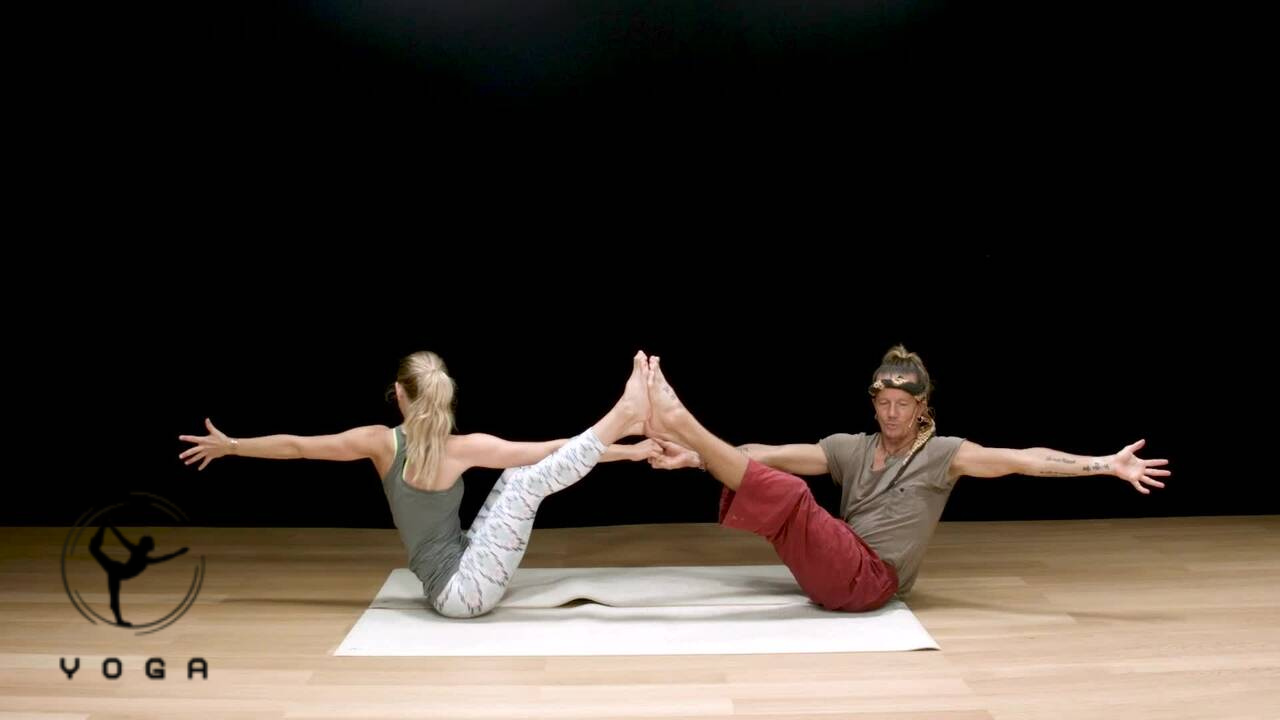
5. Partner Boat Pose
Instructions
- Sit facing each other
- Hold hands
- Press your feet together
- Lift legs into a V-shape
Benefits
- Strengthens core muscles
- Improves balance
- Builds teamwork
Muscles Worked
- Abs
- Hip flexors
- Lower back
Intermediate Duo Yoga Poses
These poses require improved balance and body control.
6. Double Downward Dog
Steps
- One partner forms Downward Dog
- The second partner places their hands ahead
- Carefully stack feet onto hips
Benefits
- Shoulder opening
- Hamstring stretch
- Core activation
Safety Tip
Move slowly while climbing into position.
7. Side-by-Side Tree Pose
Instructions
- Stand beside each other
- Place your arms around your shoulders
- Lift the outer leg into Tree Pose
Benefits
- Improves balance
- Strengthens ankles
- Enhances coordination
8. Partner Warrior III
How to Perform
- Face each other
- Hold hands firmly
- Lean forward into Warrior III
Benefits
- Improves focus
- Strengthens legs
- Enhances stability
9. Partner Plank
Steps
- One partner enters a plank
- The second places feet carefully on the shoulders
Benefits
- Core endurance
- Upper-body strength
- Alignment training
Advanced Duo Yoga Poses
These poses require strength, balance, flexibility, and experience.
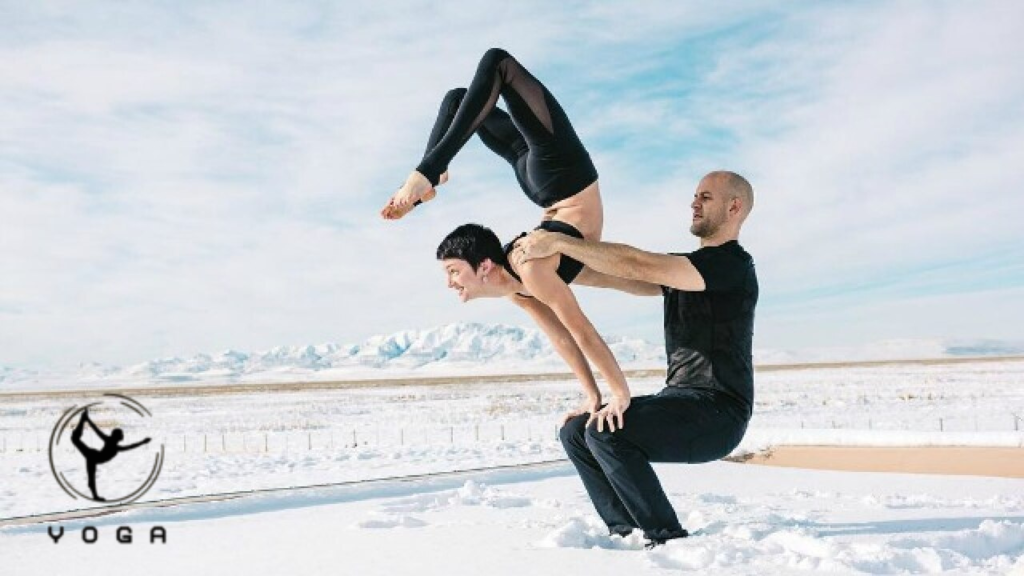
10. Bird Pose
What It Is
Bird Pose is one of the foundational acro yoga beginner poses.
One partner acts as the base while the other balances horizontally above.
Benefits
- Full-body strength
- Improved coordination
- Advanced balance training
Safety Tip
Always use a spotter initially.
11. Flying Bow Pose
Instructions
The flyer balances while arching into Bow Pose above the base.
Benefits
- Chest opening
- Spinal flexibility
- Trust development
Difficulty Level
Advanced
12. Throne Pose
Description
The flyer sits upright, supported by the base’s feet.
Benefits
- Body control
- Shoulder strength
- Core stability
Proper Form and Alignment
Correct alignment reduces injury risk and improves performance.
Key Alignment Principles
Keep the Spine Neutral
Avoid excessive arching or rounding.
Engage the Core
A stable core protects the lower back.
Distribute Weight Evenly
Uneven pressure increases instability.
Stack Joints Properly
Wrists, shoulders, hips, and ankles should align whenever possible.
Muscles Targeted in Duo Yoga
| Pose Type | Primary Muscles |
| Balancing poses | Core, glutes, stabilizers |
| Stretching poses | Hamstrings, hips, shoulders |
| Acro yoga | Full body |
| Plank variations | Chest, triceps, and abs |
| Standing poses | Quads, calves, glutes |
Duo Yoga for Couples
Couples yoga poses can strengthen emotional connection while improving fitness.
Benefits for Couples
- Better communication
- Increased trust
- Shared relaxation
- Reduced stress
- Quality time together
Best Couples Yoga Poses
Twin Tree Pose
Improves balance and teamwork.
Supported Child’s Pose
Promotes relaxation and emotional grounding.
Seated Twist
Enhances spinal mobility and synchronization.
Partner Yoga for Friends
Practicing with friends creates a motivating and enjoyable environment.
Why Friends Enjoy Duo Yoga
- Less intimidating
- More social
- Fun challenge-based practice
- Better accountability
Friends often progress faster because practice feels enjoyable rather than forced.
Duo Yoga vs Acro Yoga
| Feature | Duo Yoga | Acro Yoga |
| Main Goal | Stretching & mindfulness | Balancing & acrobatics |
| Difficulty | Beginner–Intermediate | Intermediate–Advanced |
| Risk Level | Lower | Higher |
| Focus | Connection & mobility | Strength & balance |
| Equipment Needed | Minimal | Sometimes mats & spotters |
Common Mistakes to Avoid
1. Skipping Warmups
Cold muscles are more vulnerable to injury.
Always warm up for 5–10 minutes.
2. Poor Communication
Silence during balancing poses creates confusion and instability.
Use Simple Cues Like
- “Ready”
- “Slow down.”
- “Hold”
- “Lower”
3. Rushing Advanced Poses
Master foundational movements first.
Progression is essential for safety.
4. Holding the Breath
Breath-holding increases tension and reduces balance control.
5. Ignoring Pain Signals
Stretching discomfort is normal.
Sharp pain is not.
Stop immediately if pain occurs.
Duration and Frequency
Recommended Practice Schedule
| Experience Level | Frequency |
| Beginner | 2–3 times weekly |
| Intermediate | 3–4 times weekly |
| Advanced | 4–6 times weekly |
Session Duration
- Beginners: 15–25 minutes
- Intermediate: 30–45 minutes
- Advanced: 60+ minutes
Consistency matters more than duration.
15-Minute Beginner Duo Yoga Routine
Minute 1–3
Back-to-back breathing
Minute 4–6
Double Cat-Cow
Minute 7–9
Partner Forward Fold
Minutes 10–12
Partner Boat Pose
Minutes 13–15
Double Child’s Pose
This sequence improves flexibility, relaxation, and coordination.
Best Props for Duo Yoga
Useful equipment includes:
- Yoga mats
- Yoga blocks
- Yoga straps
- Bolsters
- Grip towels
- Crash mats for acro yoga
Props improve safety and comfort.
Science Behind Duo Yoga
Yoga affects both the body and the nervous system.
Research Suggests Yoga May Help
- Reduce cortisol levels
- Improve flexibility
- Enhance balance
- Support mental well-being
- Increase body awareness
Partner-based movement also stimulates social bonding and trust through synchronized activity.
Yoga Philosophy Behind Partner Practice
Traditional yoga emphasizes unity and awareness.
Duo Yoga Reflects These Principles Through
- Shared breathing
- Presence
- Compassion
- Trust
- Mutual support
The practice becomes less about performance and more about mindful connection.
Tips for Beginners
Start Simple
The master seated and stretched poses first.
Focus on Communication
Talk throughout practice.
Clear communication prevents injuries.
Practice Consistently
Short regular sessions work better than occasional long sessions.
Don’t Compare Yourself
Everybody moves differently.
Progress takes time.
Prioritize Stability Over Flexibility
Control is more important than deep stretching.
Contraindications: Who Should Be Careful?
Consult a healthcare professional before practicing if you have:
- Severe back pain
- Recent surgery
- Shoulder instability
- Chronic joint injuries
- High blood pressure
- Vertigo
- Pregnancy Complications
Avoid advanced acro yoga without professional guidance.
Pros and Cons of Duo Yoga Poses
| Pros | Cons |
| Improves flexibility | Requires communication |
| Builds trust | Advanced poses carry risk |
| Strengthens core | Needs coordination |
| Reduces stress | Partner availability needed |
| Makes workouts fun | Progress may feel slow initially |
Expert-Level Pro Tips
Use Verbal Cue Systems
Create simple cues before balancing poses.
Example
- “Lift”
- “Hold”
- “Exit”
Engage the Core Before Every Transition
This improves stability dramatically.
Record Your Practice
Video analysis helps identify alignment issues.
Train Mobility Separately
Hip and shoulder mobility work improves duo yoga performance faster.
Never Sacrifice Form for Social Media Photos
Safe alignment always matters more than aesthetics.
Home Workout Suggestions for Duo Yoga
Warm-Up Routine
Before practice:
- Arm circles
- Hip openers
- Cat-Cow stretches
- Light lunges
- Shoulder mobility drills
Strength Exercises
Improve partner yoga performance with:
- Planks
- Glute bridges
- Squats
- Hollow holds
- Push-ups
Best Beginner-to-Advanced Progression
| Level | Recommended Poses |
| Beginner | Back-to-back breathing, Child’s Pose |
| Beginner–Intermediate | Boat Pose, Tree Pose |
| Intermediate | Double Downward Dog |
| Advanced | Bird Pose, Throne Pose |
| Expert | Flying Bow Pose |
FAQs
No. Flexibility improves gradually through consistent practice.
Absolutely. Most beginner poses require very little space or equipment.
Two to three sessions weekly is ideal for most beginners.
Yes, when practiced slowly with proper communication and progression.
Wear comfortable, flexible clothing with enough grip to avoid slipping.
Final Thoughts
Duo yoga poses are far more than trendy Instagram challenges.
They combine:
- Strength
- Mobility
- Balance
- Mindfulness
- Trust
- Human Connection
Whether you practice with a friend, spouse, sibling, or training partner, duo yoga creates a unique experience that improves both physical fitness and emotional well-being.
The Key to Long-Term Success
- Start with beginner poses
- Focus on breathing
- Prioritize communication
- Move slowly
- Build trust gradually
- Progress safely
With consistency and patience, partner yoga becomes one of the most rewarding forms of movement and mindfulness practice.
