Introduction
Half Moon Yoga Pose, traditionally known as Ardha Chandrasana, is one of the most effective standing balance postures in yoga for building strength, coordination, and body awareness. At first glance, the pose appears graceful and effortless. In reality, it requires a powerful combination of hip stability, core control, ankle strength, spinal alignment, and mental focus.
Unlike passive stretching poses, Half Moon Pose trains the body in a highly functional way. It challenges balance while simultaneously improving posture, strengthening the legs, activating the glutes, and opening the chest. Because of these benefits, the pose is commonly included in Vinyasa Yoga, Hatha Yoga, Iyengar Yoga, and athletic mobility programs.
For beginners, the posture may feel unstable or intimidating. The standing leg may shake, the lifted leg may drop, or balance may disappear within seconds. These are normal signs that your stabilizing muscles are learning to work together.
In this complete guide, you’ll learn:
- How to do the Half Moon Yoga Pose step by step
- Proper alignment and biomechanics
- Beginner modifications and advanced variations
- Common mistakes to avoid
- Breathing techniques and muscle activation
- Benefits backed by anatomy and movement science
- Safety tips and contraindications
Whether you are a beginner exploring balancing yoga poses or an experienced yogi refining alignment, this guide will help you practice Half Moon Pose safely and effectively.
What Is Half Moon Yoga Pose?
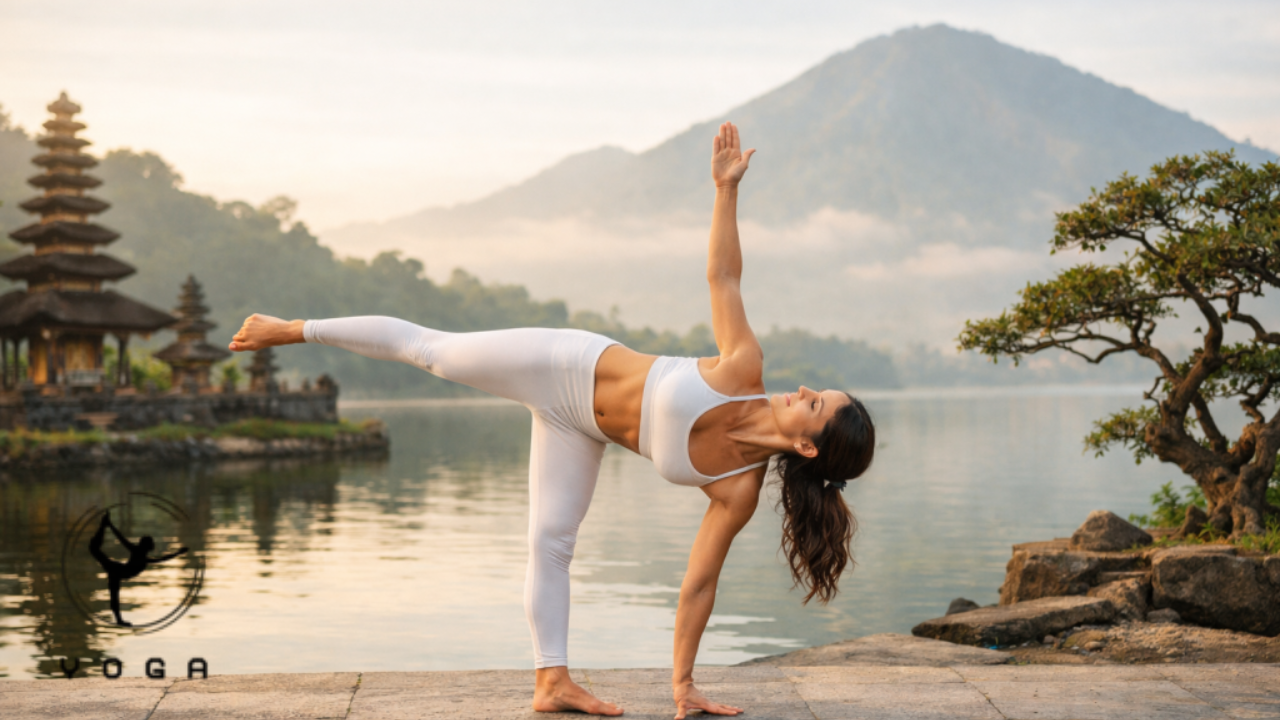
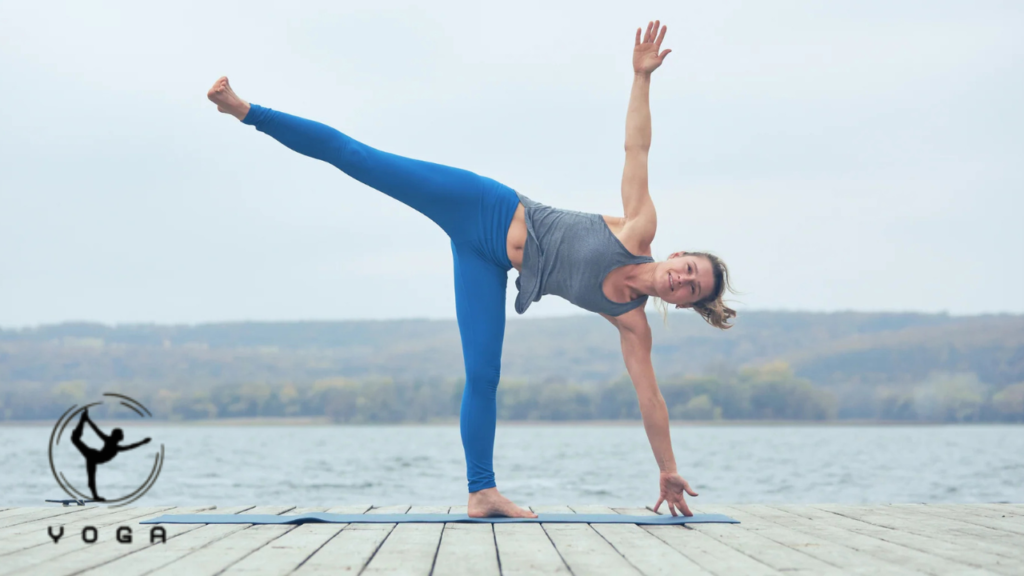
Half Moon Yoga Pose, or Ardha Chandrasana, is a standing balancing posture where the body balances on one leg while the opposite leg lifts parallel to the floor.
The Sanskrit translation is:
- Ardha = Half
- Chandra = Moon
- Asana = Pose
The body forms a crescent-like shape resembling a half moon.
This posture combines several movement patterns simultaneously:
- Single-leg balance
- Hip opening
- Core stabilization
- Spinal extension
- Chest expansion
Because it integrates strength, mobility, and coordination, Half Moon Pose is considered an intermediate yoga posture. However, with props and modifications, beginners can practice it safely.
Featured Snippet: What Does Half Moon Pose Do?
Half Moon Yoga Pose strengthens the legs, glutes, core, and ankles while improving balance, posture, hip stability, and concentration. It also stretches the hamstrings, chest, and inner thighs while training coordination and body awareness.
Benefits of Half Moon Yoga Pose
Physical Benefits
1. Improves Balance and Coordination
Half Moon Pose challenges your nervous system to stabilize the body on one leg. This improves:
- Coordination
- Proprioception
- Body awareness
- Neuromuscular control
Over time, balancing becomes more natural and efficient.
2. Strengthens the Legs and Ankles
The standing leg works intensely to maintain stability.
Key muscles activated include:
- Quadriceps
- Calves
- Glutes
- Foot stabilizers
- Hamstrings
This helps improve lower-body strength and joint resilience.
3. Enhances Hip Stability
The lifted leg heavily activates the gluteus medius, a critical muscle for pelvic stability.
Strong lateral hips may help:
- Improve athletic performance
- Reduce knee collapse
- Enhance walking mechanics
- Support lower-back health
4. Improves Posture
Opening the chest and lengthening the spine can help counteract:
- Rounded shoulders
- Slouched posture
- Spinal compression from sitting
The posture encourages upright alignment and spinal decompression.
5. Stretches Tight Muscles
Half Moon Pose creates mobility in:
- Hamstrings
- Hip flexors
- Inner thighs
- Chest muscles
This combination of strength and flexibility makes the posture highly functional.
Mental and Emotional Benefits
1. Increases Concentration
Balancing yoga poses demands mental presence. Losing focus often results in losing balance.
This helps train:
- Mindfulness
- Attention control
- Breath awareness
2. Reduces Mental Distraction
Focusing on breath and alignment may calm excessive mental chatter.
Many practitioners report feeling:
- More centered
- More mentally clear
- Less anxious after practice
3. Builds Confidence
Learning balance poses gradually improves trust in your body and movement capabilities.
Small stability improvements often create a strong sense of progress.
Athletic Benefits
Athletes frequently use balancing yoga poses to improve:
- Lateral stability
- Movement efficiency
- Reaction time
- Core control
- Joint coordination
Half Moon Pose is particularly useful for:
- Runners
- Dancers
- Martial artists
- Tennis players
- Soccer Athletes
Muscles Worked in Half Moon Pose
Primary Muscles Activated
| Muscle Group | Function |
| Gluteus Medius | Hip stabilization |
| Gluteus Maximus | Leg control and extension |
| Obliques | Core stability |
| Quadriceps | Standing leg support |
| Calves | Ankle balance |
| Spinal Stabilizers | Postural support |
| Foot Muscles | Grounding and balance |
Muscles Being Stretched
| Muscle Group | Stretch Effect |
| Hamstrings | Lengthens the back of the legs |
| Hip Flexors | Opens the front of the hips |
| Chest Muscles | Expands upper body |
| Inner Thighs | Improves mobility |
How to Do Half Moon Yoga Pose Step by Step
Step 1: Begin in Triangle Pose
Start in Triangle Pose with your front leg facing forward and your back foot grounded.
Place your bottom hand several inches ahead of the front foot.
Step 2: Shift Weight Into the Standing Foot
Slowly transfer body weight into the standing leg.
Avoid locking the knee. Keep a soft micro-bend for muscular support.
Focus on grounding through:
- The heel
- Base of the big toe
- Base of the little toe
This creates better balance mechanics.
Step 3: Lift the Back Leg
Lift the back leg until it becomes roughly parallel with the floor.
Flex the lifted foot strongly and reach actively through the heel.
This helps engage the glutes and stabilize the pelvis.
Step 4: Open the Chest
Rotate the torso open carefully while stacking the hips.
Reach the top arm upward toward the ceiling.
Imagine lengthening the body in opposite directions.
Step 5: Engage the Core
Draw the lower belly inward gently.
Core engagement helps stabilize the spine and reduce wobbling.
Step 6: Find Your Drishti (Gaze Point)
Your gaze may be:
- Downward (easiest)
- Forward (moderate)
- Upward (advanced)
A stable gaze improves balance dramatically.
Step 7: Hold and Breathe
Stay in the posture for:
- 5–10 breaths for beginners
- 30–60 seconds for experienced practitioners
Repeat on the opposite side.
Proper Form and Alignment
Ground Through the Standing Foot
Balance begins from the ground upward.
Avoid collapsing into the arch of the foot.
Instead:
- Spread the toes
- Press evenly through the foot
- Maintain ankle stability
Stack the Hips Carefully
A common mistake is over-rotating the top hip backward.
Instead, prioritize:
- Pelvic stability
- Controlled opening
- Core support
Lengthen the Spine
Do not collapse into the lower back.
Think about extending the spine from head to heel.
Engage the Lifted Leg
An inactive lifted leg often causes instability.
Strongly flex the foot and activate the glutes.
Keep the Chest Broad
Avoid collapsing the upper body toward the floor.
Instead:
- Open the collarbones
- Rotate the chest upward gradually
Breathing Technique
Breath control plays a major role in balance.
Recommended Breathing Pattern
Inhale:
Lengthen the spine
Exhale:
Stabilize the core and the grounding leg
Avoid holding your breath.
Smooth breathing improves nervous system regulation and muscular control.
Half Moon Pose Anatomy Explained
Why the Standing Leg Shakes
Muscle shaking is extremely common in balancing poses.
This usually happens because stabilizing muscles are working intensely.
Key stabilizers include:
- Glute medius
- Ankle stabilizers
- Deep core muscles
Over time, these muscles become more efficient.
Role of the Glute Medius
The glute medius prevents the pelvis from collapsing sideways.
Weakness here often causes:
- Hip dropping
- Knee instability
- Poor balance control
Half Moon Pose is excellent for strengthening this area.
Importance of Core Engagement
The obliques and deep abdominal muscles stabilize the spine.
Without core support, balance becomes significantly harder.
Ankle Proprioception
Small muscles around the ankle continuously adjust to maintain stability.
This improves:
- Joint awareness
- Athletic coordination
- Fall prevention
Half Moon Pose Variations
Beginner Variations
1. Yoga Block Half Moon Pose
Place the lower hand on a yoga block.
Benefits:
- Reduces strain
- Improves reach
- Enhances stability
This is one of the best beginner modifications.
2. Wall-Supported Half Moon
Practice with your back or lifted foot against a wall.
This reduces fear of falling and helps train alignment.
3. Chair-Supported Variation
Place one hand on a sturdy chair.
Ideal for:
- Seniors
- Rehabilitation
- Balance limitations
Intermediate Variations
1. Floating Half Moon
Lift the bottom hand away from the floor or block.
This dramatically increases balance challenge and core activation.
2. Bound Half Moon Pose
Reach the top hand toward the lifted foot.
This requires:
- Back flexibility
- Shoulder mobility
- Advanced balance control
Advanced Variations
Revolved Half Moon Pose
Parivrtta Ardha Chandrasana adds a spinal twist to the posture.
Benefits include:
- Stronger core activation
- Greater spinal mobility
- Increased balance challenge
This variation is significantly more demanding than the standard Half Moon Pose.
Best Preparatory Poses
Before practicing Half Moon Pose, warm up with:
- Triangle Pose
- Warrior II
- Extended Side Angle
- Tree Pose
- Standing Splits
- Low Lunge
These poses prepare:
- Hip mobility
- Hamstring flexibility
- Core activation
- Ankle stability
Best Counterposes After Half Moon
After balancing poses, counterposes help release muscular tension.
Recommended options include:
- Child’s Pose
- Forward Fold
- Supine Twist
- Happy Baby Pose
- Reclined Hamstring Stretch
Half Moon Pose in Yoga Sequencing
Where It Fits Best
Half Moon Pose usually works best:
- Mid-flow
- After standing warmups
- Before deep-seated stretches
It is often used as a peak balance posture in Vinyasa classes.
Sample Mini Flow
| Sequence | Purpose |
| Warrior II | Build leg strength |
| Triangle Pose | Open hamstrings |
| Half Moon Pose | Peak balance posture |
| Standing Fold | Recovery |
| Child’s Pose | Relaxation |
Duration and Frequency
How Long Should You Hold Half Moon Pose?
| Level | Duration |
| Beginner | 5 breaths |
| Intermediate | 20–30 seconds |
| Advanced | 45–60 seconds |
How Often Should You Practice?
For best results:
- Practice 3–5 times weekly
- Include both sides evenly
- Focus on consistency over intensity
Common Mistakes to Avoid
1. Locking the Standing Knee
Hyperextending the knee reduces muscular Engagement.
Maintain a gentle bend.
2. Dumping Weight Into the Bottom Hand
The supporting hand should assist in balance lightly.
Avoid collapsing body weight downward.
3. Turning the Chest Too Quickly
Aggressive rotation often causes instability.
Open gradually while maintaining control.
4. Forgetting Core Engagement
A relaxed core usually leads to wobbling.
Maintain gentle abdominal activation.
5. Looking Up Too Soon
Beginners often lose balance when gazing upward.
Start with the gaze downward.
Tips for Beginners
Start Near a Wall
Wall support increases confidence and reduces fear.
Use Props Without Shame
Yoga blocks improve alignment and accessibility.
Props are tools — not signs of weakness.
Focus on Stability Before Depth
Do not prioritize a dramatic chest opening over balance.
Stable alignment matters more.
Practice Barefoot
Bare feet improve:
- Foot activation
- Grounding
- Balance awareness
Build Slowly
Progress happens through repetition and nervous system adaptation.
Consistency matters more than perfection.
Safety Tips
Practice on a Stable Surface
Avoid slippery floors or unstable mats.
Warm Up Properly
Cold muscles increase injury risk.
Prepare the hips, hamstrings, and ankles first.
Exit Slowly
Fast exits may strain the lower back or ankles.
Transition carefully.
Avoid Overstretching
Do not force the hamstrings or spine beyond a comfortable range.
Contraindications
Avoid or modify Half Moon Pose if you have:
- Serious ankle injuries
- Recent hip surgery
- Severe vertigo
- Acute lower-back pain
- Major balance disorders
Pregnant practitioners should use wall support if needed.
Consult a healthcare professional before beginning yoga if you have medical concerns.
Science Behind Half Moon Pose
Balance Training and the Nervous System
Balancing poses challenge the proprioceptive system — the body’s awareness of position and movement.
Research suggests balance training may help improve:
- Coordination
- Neuromuscular efficiency
- Joint stability
- Functional movement quality
Hip Stability and Injury Prevention
Strong lateral hip muscles are associated with improved lower-body alignment during walking, running, and athletic movement.
Half Moon Pose activates these stabilizers effectively.
Breath and Stress Regulation
Slow nasal breathing during yoga may help activate the parasympathetic nervous system, supporting relaxation and focus.
Yoga Philosophy Behind Half Moon Pose
In yogic symbolism, the moon represents:
- Calmness
- Intuition
- Reflection
- Balance
Half Moon Pose reflects these qualities by combining:
- Strength with softness
- Stability with openness
- Effort with awareness
The posture encourages both physical and mental equilibrium.
Pros and Cons of Half Moon Pose
| Pros | Cons |
| Builds balance | Challenging for beginners |
| Strengthens hips | Requires coordination |
| Improves posture | May strain hamstrings if forced |
| Enhances focus | Balance frustration possible |
| Functional full-body exercise | Needs patience and practice |
Home Yoga Practice Suggestions
Strength Work
- Glute bridges
- Side lunges
- Single-leg deadlifts
Mobility Work
- Hamstring stretches
- Hip openers
- Thoracic rotations
Balance Training
- Tree Pose
- Eagle Pose
- Standing knee lifts
Half Moon Pose vs Triangle Pose
| Feature | Half Moon Pose | Triangle Pose |
| Balance Demand | High | Low |
| Core Activation | Strong | Moderate |
| Hip Stability | High | Moderate |
| Difficulty Level | Intermediate | Beginner-Friendly |
| Foot Grounding | One foot | Two feet |
FAQs
Yes. Beginners can safely practice with yoga blocks, wall support, or chair assistance.
The pose combines balance, hip stability, core engagement, flexibility, and coordination simultaneously.
It primarily strengthens the glutes, quadriceps, calves, obliques, and spinal stabilizers.
Yes. The pose strengthens postural muscles and encourages spinal elongation and chest opening.
Most practitioners hold the pose for 5–10 breaths or 20–60 seconds, depending on experience.
Conclusion
Half Moon Yoga Pose is far more than a simple balancing posture. It is a full-body practice that develops strength, coordination, hip stability, concentration, posture, and Body Awareness Simultaneously.
For beginners, the pose teaches patience, grounding, and control. For experienced practitioners, it becomes a powerful tool for refining balance mechanics, core integration, and mindful movement.
The key to mastering Ardha Chandrasana is not forcing flexibility or chasing perfection. Real progress comes from:
- Stable alignment
- Consistent practice
- Controlled breathing
- Intelligent use of props and modifications
Whether you are practicing for athletic performance, mobility, posture improvement, or mindfulness, Half Moon Pose offers tremendous long-term benefits for both body and mind.
