
Introduction
The Happy Baby Yoga Pose, traditionally known as Ananda Balasana, is one of the most approachable yet profoundly transformative yoga postures you can incorporate into your daily routine. While it may appear playful, gentle, and almost effortless, beneath its simplicity lies a deeply therapeutic mechanism that supports physical mobility, emotional calmness, and neuromuscular balance.
This posture is inspired by the natural movement patterns of infants—specifically how babies instinctively grasp their feet, explore motion freely, and remain in a relaxed, tension-free state. As humans mature, modern lifestyles—characterized by prolonged sitting, reduced movement variability, and elevated stress levels—gradually diminish this innate mobility and ease.
Happy Baby Pose serves as a restorative bridge back to that original state of fluidity, openness, and relaxation. It is not merely a stretch; it is a functional recalibration of the body and nervous system.
Whether you are:
- A beginner exploring foundational yoga practices
- An athlete seeking recovery and joint decompression
- Someone experiencing hip tightness, stiffness, or lower back discomfort
This comprehensive 2026 pillar guide will equip you with both practical execution and scientific understanding.
By the end, you won’t just perform the pose—you’ll deeply comprehend its mechanics, benefits, and safe progression strategies.
What Is Happy Baby Yoga Pose?
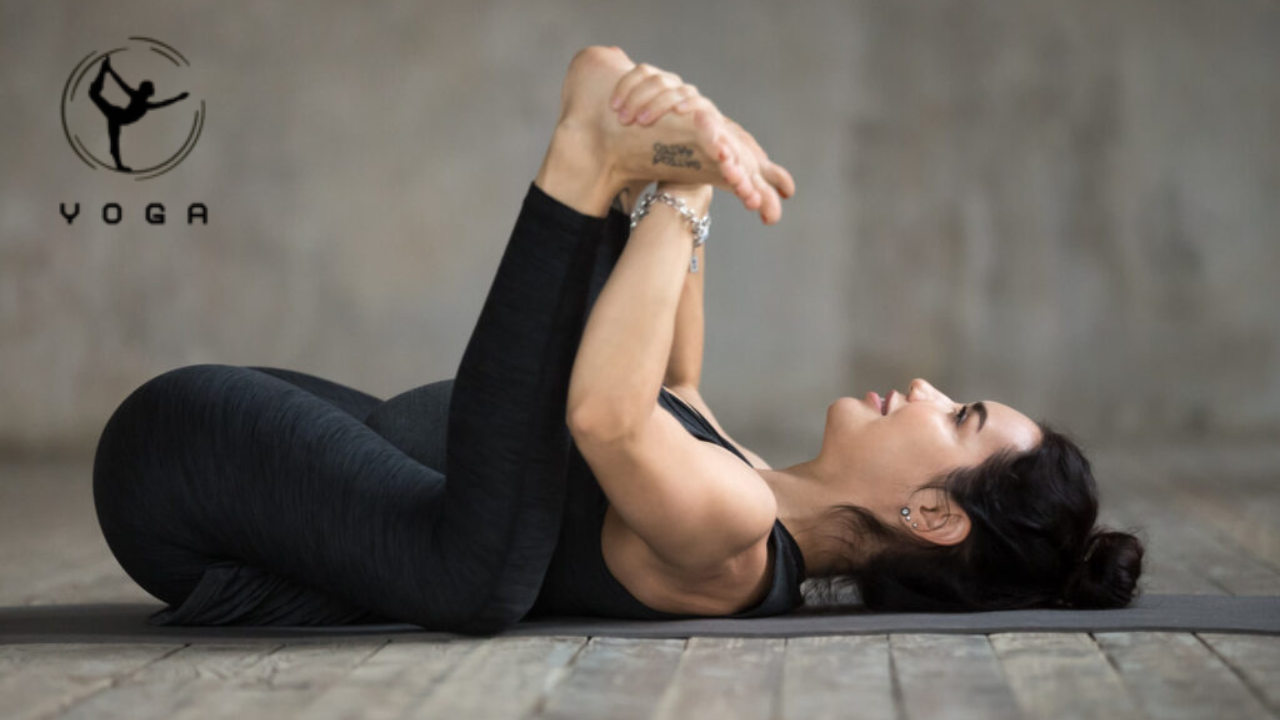
Happy Baby Pose (Ananda Balasana) is a supine yoga posture, meaning it is performed while lying flat on your back. In this position, the practitioner bends their knees toward the torso and holds the feet, allowing the hips to open naturally while maintaining spinal neutrality.
Key Characteristics
- Spine remains grounded and stable
- Knees flex deeply toward the chest
- Hips externally rotate and abduct
- Arms provide light assistance—not force
- Breathing remains slow, rhythmic, and controlled
This posture uniquely combines passive stretching with active awareness, making it both restorative and functionally beneficial.
Why Is It Called “Happy Baby”?
The name originates from observing infants. Babies naturally:
- Grab their feet without restriction
- Move side-to-side fluidly
- Maintain exceptional flexibility
- Stay calm, relaxed, and emotionally neutral
This pose mirrors that innate state of joy, ease, and unrestricted movement.
Practicing this posture allows adults to reconnect with a primitive movement pattern, restoring both physical elasticity and mental tranquility.
Biomechanics: What Happens Inside Your Body
Most content stops at “it stretches your hips.” But the real value lies in understanding the internal mechanics.
Joint Mechanics
| Joint | Action | Benefit |
| Hip Joint | Deep flexion + external rotation | Enhances mobility and releases stiffness |
| Sacroiliac Joint | Gentle decompression | Reduces lumbar stress |
| Spine | Passive traction | Relieves compression and tension |
This coordinated interaction promotes joint health, alignment, and functional range of motion.
Muscles Targeted
Primary Muscle Groups
- Adductors (inner thighs)
- Hamstrings
- Hip flexors
Secondary Muscle Groups
- Gluteal muscles
- Lumbar stabilizers
- Pelvic floor musculature
This integrated activation pattern transforms the pose from a simple stretch into a holistic movement intervention.
Nervous System Effects
One of the most powerful aspects of this posture is its influence on the parasympathetic nervous system (rest-and-digest mode).
Effects Include:
- Decreased heart rate
- Lower cortisol levels
- Enhanced relaxation response
- Improved emotional regulation
This is why the pose is frequently utilized during cooldowns, evening routines, and stress-relief sessions.
Benefits of Happy Baby Yoga Pose
Physical Benefits
- Opens the tight hips and groin region
- Improves flexibility and joint mobility
- Decompresses the lumbar spine
- Stretches hamstrings and inner thighs
- Helps alleviate lower back discomfort
Mental Benefits
- Reduces anxiety and mental tension
- Promotes deep relaxation
- Enhances concentration and awareness
- Encourages mindfulness
Functional Benefits
- Improves posture and alignment
- Counteracts prolonged sitting stiffness
- Supports athletic recovery
- Enhances pelvic floor functionality
How to Do Happy Baby Pose (Step-by-Step)
Follow these structured instructions for optimal execution:
Step-by-Step Instructions
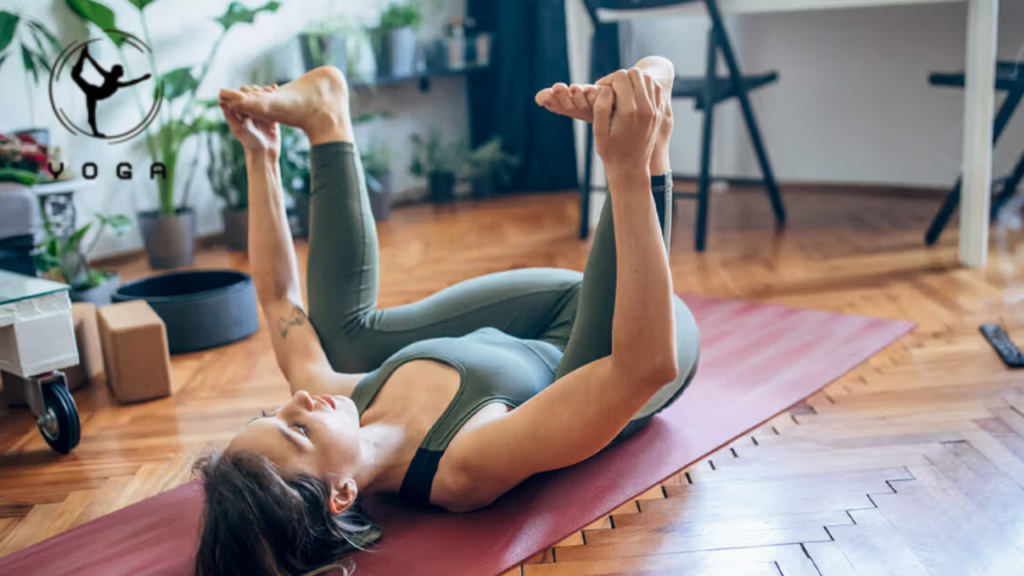
- Lie flat on your back on a yoga mat
- Bend your knees toward your chest
- Reach and hold the outer edges of your feet
- Open your knees toward your armpits
- Keep your spine fully grounded
- Relax your shoulders and neck
- Maintain the position for 30–60 seconds
Optional: Gently sway side to side for a soothing spinal massage.
Quick Technique Table
| Step | Action | Key Focus |
| 1 | Lie down | Neutral spine |
| 2 | Bend knees | Controlled motion |
| 3 | Hold feet | Gentle grip |
| 4 | Open hips | Avoid force |
| 5 | Relax | Deep breathing |
Proper Form & Alignment
Maintaining correct alignment ensures both safety and effectiveness.
Alignment Checklist
- Spine flat against the floor
- Tailbone Grounded
- Ankles aligned above knees
- Knees moving outward
- Shoulders relaxed
Avoid These Mistakes
- Lifting your head (causes strain)
- Rounding your lower back (reduces benefit)
- Pulling excessively hard
- Forcing knees downward
Always prioritize comfort over intensity.
Breathing Technique
Breath control amplifies the benefits of this posture.
How to Breathe
- Inhale through your nose
- Expand your abdomen
- Exhale slowly and fully
- Sink deeper into relaxation
Pro Tip: Each exhalation encourages deeper hip opening naturally.
Muscles Targeted (Deep Dive)
This posture engages both mobility and stabilization systems.
Primary
- Adductors
- Hamstrings
- Hip flexors
Secondary
- Glutes
- Lower back
- Pelvic floor
This synergy improves movement efficiency and injury resilience.
Variations of Happy Baby Pose
Beginner Modifications
- Hold ankles or shins instead of feet
- Use a yoga strap
- Practice one leg at a time
Intermediate Variations
- Extend hold duration (60–90 seconds)
- Add gentle rocking
- Focus on breath depth
Advanced Variations
- Straight-leg variation
- One-leg extension
- Apply Resistance by pushing feet into hands
Common Mistakes to Avoid
1. Lifting Your Head
Causes unnecessary neck tension
2. Forcing Knees Down
Increases injury risk
3. Rounded Lower Back
Reduces effectiveness
4. Pulling Too Hard
Creates tension instead of relaxation
Safety Tips
- Warm up before practice
- Move gradually and mindfully
- Stop if discomfort arises
- Use props when needed
Contraindications
Avoid or modify if you have:
- Knee injuries
- Hip joint issues
- Severe lower back conditions
- Neck discomfort
- Pregnancy (consult a professional)
Tips for Beginners
- Avoid perfectionism
- Utilize props without hesitation
- Focus on breathing patterns
- Practice consistently (3–4 times weekly)
Duration & Frequency
| Level | Duration | Frequency |
| Beginner | 20–30 sec | 3x/week |
| Intermediate | 30–60 sec | 4–5x/week |
| Advanced | 1–2 min | Daily |
Yoga Philosophy Behind the Pose
In yogic philosophy, “Ananda” signifies bliss, joy, and inner contentment.
This posture symbolizes:
- Freedom of movement
- Emotional release
- Natural alignment
It teaches that true flexibility is both physical and psychological.
Science Behind the Happy Baby Pose
Nervous System Regulation
This pose stimulates the vagus nerve, leading to:
- Calmer mental state
- Reduced anxiety
- Improved digestion
Fascia Release
Targets connective tissue (fascia):
- Enhances flexibility
- Reduces rigidity
- Accelerates recovery
Diet Tips to Support Flexibility
Recommended Foods
- Magnesium-rich foods (spinach, nuts)
- Omega-3 fatty acids (fish, seeds)
- Hydrating fruits
Avoid
- Processed foods
- Excess sugar
- Dehydration
Home Workout Integration
As a Cool-Down
Ideal after:
- Running
- Gym sessions
- Leg workouts
As a Recovery Tool
- Before sleep
- On rest days
Pros & Cons
Pros
- Beginner-friendly
- Highly relaxing
- Improves mobility
- Requires no equipment
Cons
- Limited strength development
- Not suitable for injuries
- Requires proper alignment
FAQs
Yes, it is one of the easiest and safest yoga poses.
In the hips, inner thighs, and lower back.
Because of tight hips and limited flexibility.
30 seconds to 2 minutes, depending on your level.
Yes, it can reduce tension when done correctly.
Conclusion
The Happy Baby Yoga Pose (Ananda Balasana) is far more than a basic stretch—it is a powerful therapeutic posture that enhances mobility, restores balance, and promotes deep relaxation.
With consistent practice, you can:
- Increase flexibility
- Reduce stress
- Improve posture
- Experience greater relaxation
The formula is simple yet effective: move gently, breathe deeply, and stay consistent.
