
Introduction
Your yoga mat is far more than a simple exercise surface. In modern wellness terminology, it functions as a personal kinetic environment, a micro-space where respiration, movement, sweat exchange, and neurological relaxation converge.
However, there is an overlooked reality many practitioners ignore:
Every session leaves behind a Biological Residue Footprint consisting of:
- Perspiration compounds
- Sebum (skin oils)
- Environmental dust particles
- Microbial organisms (bacteria, fungi spores)
- Dead epithelial skin cells
Over time, this accumulation forms a bio-contaminated layer that affects grip integrity, odor neutrality, and overall hygiene safety.
That is why understanding how to clean a yoga mat properly is not optional—it is a hygiene-critical maintenance system.
In this 2026 advanced guide, you will learn a complete, structured methodology covering:
Daily decontamination routine
Weekly deep purification process
Monthly intensive restoration cleaning
Material-specific maintenance systems (PVC, rubber, cork, PU)
Common destructive cleaning mistakes
Scientific hygiene principles
Drying, storage, and longevity optimization
By the end, you will understand a full lifecycle maintenance protocol for maximizing mat hygiene, traction stability, and material durability.
What Is Yoga Mat Cleaning?
Yoga mat cleaning refers to the systematic removal of organic and inorganic contaminants from the surface and internal microstructure of a yoga mat using safe, material-compatible methods.
It includes:
Surface decontamination (daily cleaning)
Deep cleansing (weekly maintenance)
Structural purification (monthly cleaning)
Environmental drying and microbial stabilization
Unlike ordinary household cleaning, yoga mats are constructed from polymeric foams, elastomers, and hygroscopic composites, which require controlled maintenance techniques.
Improper cleaning can result in:
- Loss of surface traction coefficient
- Micro-cracking of elastomer layers
- Reduced elasticity modulus
- Premature structural degradation
Thus, the cleaning process must be both gentle and scientifically calibrated.
Why Cleaning Your Yoga Mat Matters
1. Hygienic Risk Reduction & Microbial Control
During physical exertion, the mat becomes a warm, moisture-rich incubation environment, ideal for microbial proliferation.
Without regular cleaning:
- Bacterial colonies multiply rapidly
- Fungal spores may colonize porous regions
- Skin irritation and dermatological reactions increase
- Odor-producing metabolic byproducts accumulate
In hygiene science, this is known as microbial load escalation.
2. Enhanced Biomechanical Grip Stability
A contaminated mat develops a thin lipid-sweat-dust film layer, which reduces the friction coefficient.
Consequences include:
- Decreased postural stability
- Increased slipping probability during asanas
- Higher joint stress risk
A clean surface restores optimal kinetic friction balance, improving control and precision.
3. Material Longevity Preservation
Dirt particles act as micro-abrasive agents, gradually degrading surface polymers.
Over time, this leads to:
- Surface micro-tearing
- Elastic fatigue
- Structural brittleness
Regular maintenance significantly increases product lifespan through preventive material conservation.
4. Odor Neutralization & Chemical Freshness
Odor formation is caused by:
- Bacterial metabolic waste
- Moisture retention in micro-pores
- Organic decomposition residues
Cleaning eliminates odor at its biochemical origin, rather than masking it.
The Science Behind Yoga Mat Hygiene
Yoga mats operate as semi-porous polymer networks that interact dynamically with environmental humidity and biological fluids.
Microbial Ecology on Mats
Common microbial components include:
- Gram-positive bacteria
- Fungal spores
- Biofilm-forming microorganisms
These organisms thrive when:
- The temperature is elevated
- Moisture levels are high
- Cleaning frequency is low
A biofilm layer forms, acting as a protective shield for microorganisms.
Material Permeability Classification
| Type | Structure | Absorption Level | Cleaning Complexity |
| Open-cell | Porous internal network | High | Difficult |
| Closed-cell | Non-porous surface | Low | Easy |
Open-cell mats require high-frequency decontamination protocols, while closed-cell mats are more resistant to contamination absorption.
How To Clean a Yoga Mat
Daily maintenance is the foundation of mat hygiene architecture.
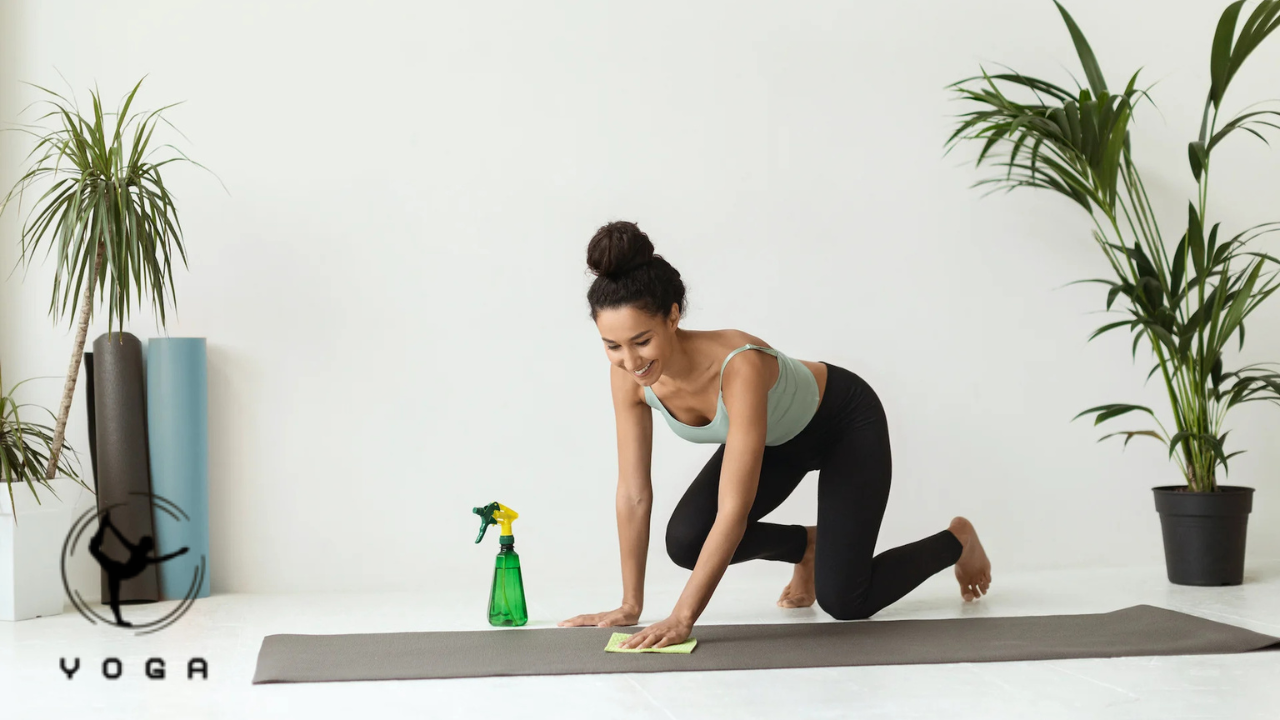
Post-Session Cleaning Protocol (2–3 Minutes)
Step-by-step:
- Lay the mat flat on a clean surface
- Prepare a mild aqueous cleansing solution
- Apply a damp microfiber wiping technique
- Perform full-surface linear strokes
- Allow natural air evaporation drying
NLP Optimization Tips
- Avoid oversaturation (moisture retention risk)
- Use hypoallergenic mild surfactants
- Ensure complete desiccation before rolling
Scientific Benefit of Daily Cleaning
- Reduces microbial colony formation
- Prevents lipid accumulation
- Maintains surface friction consistency
- Minimizes long-term contamination embedding
Weekly Yoga Mat Cleaning Routine
Weekly cleaning removes embedded residues and oxidized oils.
Natural Cleaning Solution Formula
- 1 cup distilled water
- 1 tbsp acetic acid solution (vinegar)
- 2–3 drops tea tree extract (antimicrobial agent)
Application Method
- Light mist spray application
- Microfiber surface wiping
- Controlled air drying phase
Safety Considerations
- Avoid excessive acidic concentration
- Do not oversaturate elastomer surfaces
- Test Compatibility on a small section
Monthly Deep Cleaning
1: Controlled Rinse Method (PVC Only)
- Warm water rinse
- Mild detergent application
- Gentle surface agitation
- Complete rinsing cycle
- Air drying stabilization
2: Immersion Cleaning (Selective Materials Only)
- Tub filled with diluted cleaning solution
- Short immersion cycle (5–10 minutes)
- Gentle manual agitation
- Thorough rinsing
Avoid immersion for:
- Natural rubber mats
- PU foam mats
- Open-cell absorbent mats
Material-Specific Cleaning Intelligence System
PVC Mats
- High durability polymer
- Water-resistant matrix
Compatible with soap-based cleaning
Occasionally machine-safe
Natural Rubber Mats
- Eco-derived elastomer
- High sensitivity to chemicals
Use only mild surfactants
Avoid harsh solvents
Cork Mats
- Naturally antimicrobial surface
Low-maintenance cleaning
Damp wiping sufficient
PU / Open-Cell Mats
- High-performance grip surface
- Micro-porous absorption structure
Requires careful non-soak cleaning
Surface wipe only
Cleaning Frequency Optimization Model
| Frequency | Action | Duration | Impact Level |
| Daily | Surface wipe | 2–3 min | Moderate |
| Weekly | Deep cleaning | 10–15 min | High |
| Monthly | Structural clean | 30–40 min | Very high |
Common Mistakes in Yoga Mat Cleaning
1. Chemical Overuse
Strong detergents degrade polymer chains and reduce elasticity.
2. Excess Water Exposure
Water infiltration causes:
- Structural weakening
- Adhesion loss
- Internal foam breakdown
3. Incomplete Drying
Residual moisture leads to:
- Mold formation
- Odor amplification
- Surface degradation
4. Direct UV Exposure
Sunlight accelerates:
- Material brittleness
- Color fading
- Elastic fatigue
5. Ignoring Material Properties
Each mat requires customized maintenance logic based on composition.
Drying & Storage Optimization Protocol
Drying System
- Natural air drying is preferred
- Vertical hanging recommended
- Avoid heat-based drying systems
Storage Guidelines
- Maintain a low-humidity environment
- Use breathable storage covers
- Avoid compression while wet
Advanced Yoga Hygiene Philosophy
In yogic philosophy, cleanliness is referred to as Saucha, representing purification across:
- Physical body
- External environment
- Cognitive state
A clean mat enhances:
- Meditative depth
- Neurocognitive focus
- Emotional equilibrium
Home Yoga Hygiene Ecosystem
Develop a structured environment:
- Clean the mat after every session
- Maintain dust-free surroundings
- Wash post-practice clothing
- Ensure ventilation airflow
Benefits of a Clean Yoga Mat
Physical Advantages
- Improved traction
- Reduced injury risk
- Enhanced balance control
Cognitive Advantages
- Increased focus stability
- Reduced sensory distraction
- Improved mindfulness response
Emotional Advantages
- Elevated comfort perception
- Stronger practice consistency
- Psychological cleanliness association
FAQs
Only if the manufacturer allows it. Use a gentle cycle and mild detergent.
Use diluted vinegar spray and dry it properly.
Yes, but always mix it with
Closed-cell: 2–6 hours
Open-cell: up to 24 hours
Yes. That is why regular yoga mat cleaning is important.
Conclusion
Cleaning a yoga mat is not a cosmetic habit—it is a preventive hygiene engineering system that directly influences:
- Physical health
- Practice safety
- Material Durability
- Sensory experience
Core Maintenance Formula:
Clean after every use
Deep clean weekly
Restore monthly
By applying this structured system, your yoga mat remains hygienically stable, structurally resilient, and performance-optimized for years of continuous use.
