Introduction
You are not alone in spending long hours at a desk, Scrolling on Your Phone, or with tight shoulders and an inflexible back.
Contemporary life subjects posture, mobility, and spinal well-being to unremitting pressure.
That is precisely the reason why Puppy Pose Yoga (Uttana Shishosana) is turning out to be one of the most suggested, useful, and easily available poses of yoga to both novices and experienced practitioners.
It’s simple. It’s effective. And it gives results in a short period of time.
It is commonly known as the Melting Heart Pose, and it is a gentle way to open your chest, lengthen your spine, and relieve the tension of your upper body that is deeply hidden.
Consider it as follows:
- Child’s Pose → soothing and restorative
- Downward Dog → active and strengthening
Puppy Pose = a perfect fusion of both
In this comprehensive, optimized pillar guide, you’ll explore:
- What Puppy Pose Yoga truly is
- Science-supported benefits for posture, stress, and flexibility
- Step-by-step instructions with proper alignment
- Common mistakes (and how to correct them)
- Beginner-friendly modifications + advanced variations
- A structured daily routine
Whether you’re just starting or already experienced, this guide will help you master Puppy Pose safely, effectively, and confidently.
What Is Puppy Pose Yoga (Uttana Shishosana)?
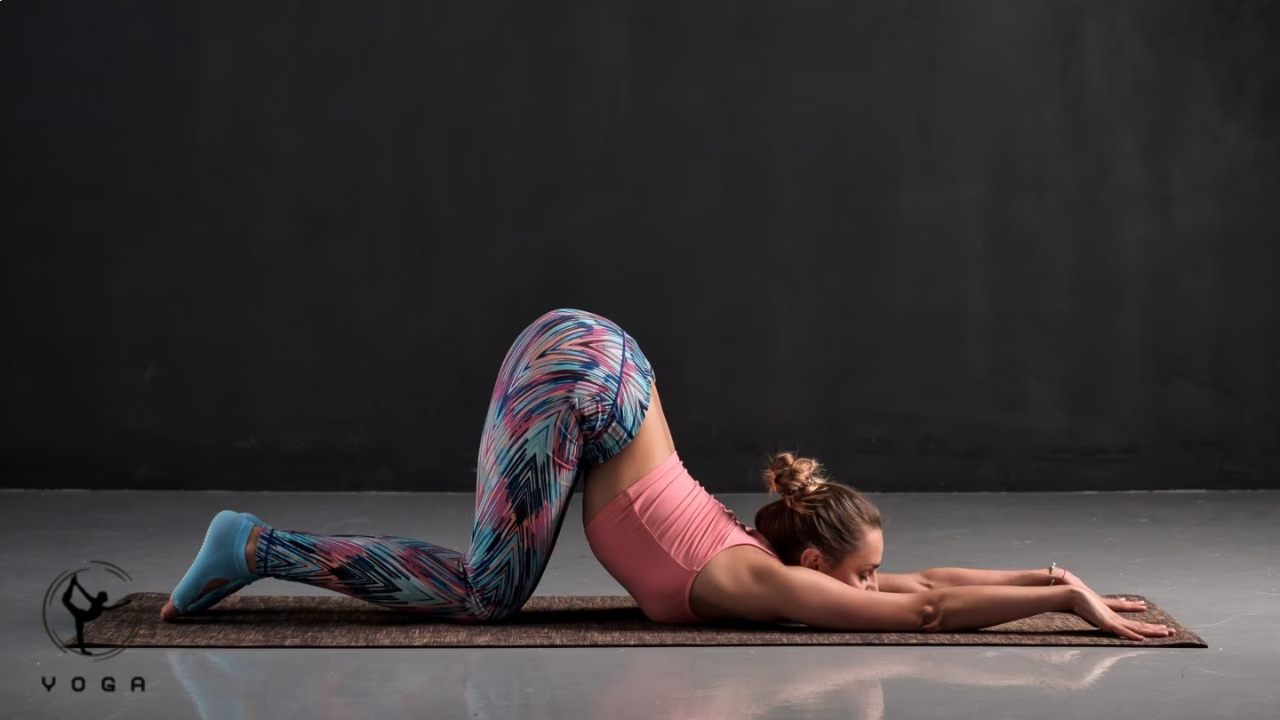
Puppy Pose Yoga—also known as Uttana Shishosana—is a gentle spinal extension that begins from a tabletop position.
Key Position Elements:
- Hips remain aligned over knees
- Arms extend forward
- Chest lowers toward the ground
It is considered a heart-opening posture because it deeply stretches the chest and shoulders while promoting calmness and awareness.
Why It’s Called “Melting Heart Pose.”
When you perform this posture correctly:
- Your chest softly descends downward
- Your spine lengthens and decompresses
- Your shoulders open deeply
It creates a sensation as if tension is dissolving or melting away from your body.
This is why many practitioners describe it as both physically releasing and emotionally soothing.
Puppy Pose Benefits
Puppy Pose Yoga is not merely a stretch—it delivers multi-dimensional physiological and neurological benefits.
1. Improves Posture
Poor posture is one of the most widespread issues today.
Puppy Pose helps by:
- Expanding tight chest muscles
- Realigning rounded shoulders
- Supporting natural spinal curvature
Especially beneficial for desk workers, students, and smartphone users
2. Relieves Back & Shoulder Pain
This posture gently decompresses the vertebral column.
Benefits include:
- Reduced upper back stiffness
- Relief from shoulder tightness
- Enhanced spinal mobility
Ideal for mild chronic discomfort and muscular tension
3. Enhances Flexibility
Targets major tight areas:
- Chest (pectorals)
- Shoulders (deltoids)
- Spine (thoracic extension)
Over time, your body becomes more supple, mobile, and adaptive
4. Reduces Stress & Anxiety
This is where Puppy Pose Becomes extremely powerful.
It activates the parasympathetic nervous system (rest-and-digest mode).
Effects:
- Slower heart rate
- Reduced cortisol levels
- Deep relaxation response
Perfect for evening routines or mental reset sessions
5. Boosts Circulation
As a mild inversion:
- Blood flow improves toward the brain
- Oxygen delivery increases
- Energy levels are enhanced
Muscles Worked in Puppy Pose Yoga
| Muscle Group | Function |
| Spine (thoracic & lumbar) | Extension & elongation |
| Shoulders (deltoids, rotator cuff) | Stability & stretch |
| Chest (pectoralis) | Deep expansion |
| Arms (triceps) | Structural support |
| Core muscles | Stabilization |
It functions as both a stretching and strengthening posture
How to Do Puppy Pose Yoga Step-by-Step
Step-by-Step Instructions
Follow these instructions carefully:
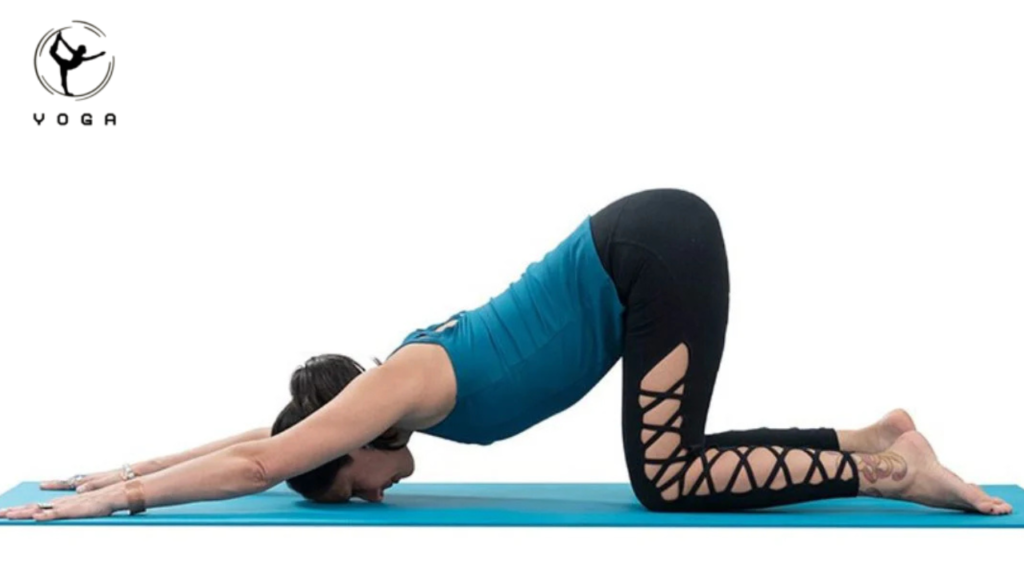
- Begin in a tabletop position (hands and knees)
- Align wrists under shoulders and knees under hips
- Slowly extend your hands forward
- Keep hips directly above knees
- Lower your chest toward the mat
- Rest your forehead or chin on the floor
- Keep arms engaged and active
- Hold for 5–10 deep breaths
Alignment Checklist
Hips stacked above knees
Spine elongated and neutral
Arms extended but not locked
Neck relaxed and supported
Remember: Length first, depth later
Breathing Technique (Very Important)
Breathing significantly enhances the effectiveness of this posture.
Use this pattern:
- Inhale: Expand chest and ribcage
- Exhale: Sink deeper into the stretch
Visualize your breath expanding your upper back
Proper Form & Alignment Tips
To maximize results:
- Keep hips stable and elevated
- Lightly engage your core muscles
- Avoid collapsing into your shoulders
- Maintain a neutral neck position
Think: Control + Awareness + Stability
Common Mistakes (And Fixes)
1. Hips Sliding Back
Fix: Keep hips aligned over knees
2. Collapsing Shoulders
Fix: Press your hands firmly into the ground
3. Neck Compression
Fix: Use a block under your forehead
4. Overarching Lower Back
Fix: Engage your core slightly
Puppy Pose vs Child’s Pose
| Feature | Puppy Pose | Child’s Pose |
| Hips | Elevated | Rest on heels |
| Spine | Backbend | Rounded |
| Intensity | Moderate | Gentle |
| Chest Opening | Deep | Minimal |
Key Difference:
Puppy Pose = Heart opener
Child’s Pose = Restorative posture
Beginner Modifications
If you’re new, begin gradually.
Use props:
- Block under the chest
- Blanket under knees
Reduce intensity:
- Keep forehead elevated
- Avoid pushing too deep
Shorter holds:
- Start with 3–5 breaths
Progress slowly and mindfully
Advanced Variations
Ready to intensify your practice?
1. Chin-to-Floor Variation
Enhances spinal extension and depth
2. Active Puppy Pose
Increases muscular engagement and strength
3. One-Arm Stretch
Improves asymmetry and mobility balance
4. Heart-Melting Flow
Combines movement with breath for fluidity
5-Minute Puppy Pose Routine
| Exercise | Duration |
| Cat-Cow | 1 min |
| Puppy Pose | 2 min |
| Child’s Pose | 1 min |
| Deep Breathing | 1 min |
Ideal for:
- Morning mobility
- Desk breaks
- Evening relaxation
Who Should Avoid Puppy Pose Yoga
Avoid or modify if you have:
- Knee injuries
- Shoulder instability
- Severe back conditions
- Recent surgeries
Always consult a professional if unsure
Safety Tips
- Warm up before practice
- Never force the stretch
- Use props when necessary
- Stop if you feel sharp pain
Yoga should feel challenging but not painful
Tips for Beginners
- Start gradually and remain consistent
- Focus on breathing rather than depth
- Use props without hesitation
- Practice regularly for the best outcomes
Duration & Frequency
- Hold: 5–10 breaths
- Repeat: 2–3 times
- Frequency: Daily or 4–5 times per week
Yoga Philosophy Behind Puppy Pose
In yoga philosophy, heart-opening poses are deeply transformative.
They help:
- Release emotional blockages
- Enhance awareness and openness
- Balance the heart energy center (Anahata)
It’s not just physical—it’s also mental and emotional release
Diet Tips for Better Flexibility
Support your yoga journey with:
- Proper hydration
- Magnesium-rich foods (leafy greens, nuts)
- Anti-inflammatory foods (berries, turmeric)
How to Add Puppy Pose to Your Routine
You can incorporate Puppy Pose into:
- Warm-up sequences
- Cool-down sessions
- Recovery days
- Mobility-focused workouts
Quick Summary Table
| Category | Details |
| Pose Type | Backbend + stretch |
| Level | Beginner-friendly |
| Main Benefit | Spine & shoulder relief |
| Hold Time | 5–10 breaths |
| Best Time | Morning or evening |
Pros & Cons
Pros
- Beginner-friendly
- Relieves back discomfort
- Improves posture
- Reduces stress
- Requires no equipment
Cons
- Not suitable for severe injuries
- Requires proper alignment
- Can strain the shoulders if done incorrectly
FAQs
Yes, Puppy Pose Yoga is very beginner-friendly when done with proper alignment and control.
Hold for 5–10 breaths or up to 2 minutes for deeper stretching.
Yes. It helps reduce spinal tension and improves posture, especially for people who sit a lot.
Yes, but you must keep your arms active and avoid collapsing into the joints.
Absolutely. Daily practice improves flexibility, posture, and relaxation.
Conclusion
Puppy Pose Yoga (Uttana Shishosana) is far more than a simple stretch.
It’s a highly effective, beginner-friendly, and restorative posture that helps you:
- Correct poor posture
- Relieve back and shoulder tightness
- Reduce stress and anxiety
- Improve flexibility safely
The best part?
It only takes a few minutes each day to notice meaningful improvements.
Start today.
Take a deep breath.
Move mindfully.
Stay consistent.
Your body—and mind—will thank you.
