
Introduction
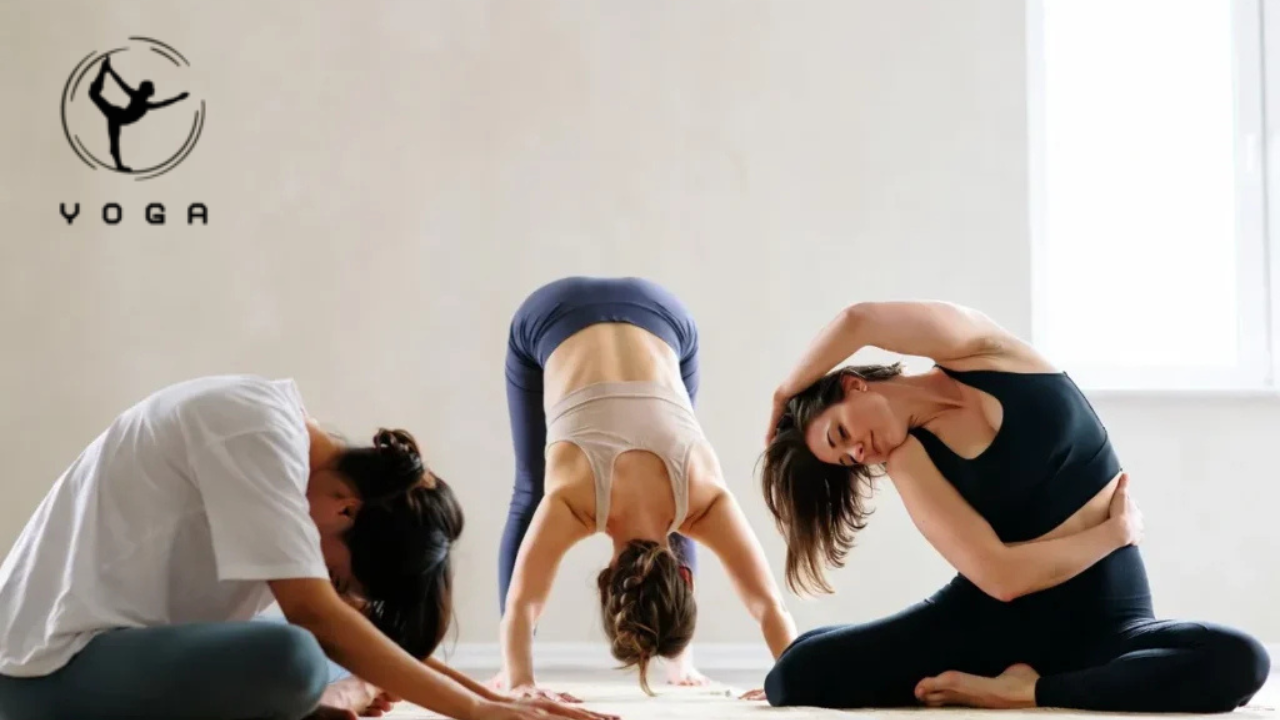
Yoga poses for three people are becoming one of the most engaging and social fitness trends in modern yoga practice. Unlike solo yoga or partner yoga, trio yoga focuses on balance, coordination, trust, and teamwork between three individuals working together as one synchronized unit.
In today’s fitness culture, people don’t just want workouts—they want experiences. Trio yoga delivers exactly that by combining strength training, flexibility, mindfulness, and group connection into a single practice.
Whether you are practicing with Friends, Family Members, or a fitness group, yoga for three people helps improve communication, reduce stress, and build deep trust among participants. It also enhances core strength and balance through shared body control and synchronized movement.
In this complete guide, you will learn:
- Safe and easy yoga poses for three people
- Step-by-step instructions from beginner to advanced
- Safety rules and alignment principles
- Scientific and physical benefits
- Expert tips to avoid injuries
Let’s begin this structured journey into trio yoga mastery.
What is Yoga for Three People?
Yoga for three people (also called trio yoga or group yoga poses) is a collaborative form of yoga where three participants perform poses together using shared balance, support, and coordination.
Unlike traditional yoga, where focus is internal, trio yoga introduces an external element: team synchronization.
Key Characteristics:
- Requires communication between all three participants
- Involves shared weight distribution
- Uses roles like base, supporter, and flyer
- Focuses on balance and trust
How It Differs from Partner Yoga:
| Feature | Partner Yoga | Trio Yoga |
| Participants | 2 people | 3 people |
| Complexity | Medium | Medium to High |
| Balance requirement | Shared between 2 | Distributed among 3 |
| Coordination | Simple | Advanced synchronization |
Trio yoga is often inspired by acro yoga but adapted for group fitness and fun practice.
Benefits of Yoga for Three People
Practicing yoga poses for three people offers physical, mental, and emotional benefits.
Physical Benefits
- Improves core strength and stability
- Enhances flexibility in joints and muscles
- Builds better posture and spinal alignment
- Strengthens arms, shoulders, and legs
Mental Benefits
- Improves focus and awareness
- Reduces stress and anxiety
- Enhances mindfulness through breathing coordination
Emotional & Social Benefits
- Builds trust between participants
- Improves communication skills
- Strengthens friendships and teamwork
- Creates an emotional bonding experience
Trio yoga is often used in group fitness classes and team-building workshops because of its strong social impact.
Safety Rules Before Practicing Trio Yoga
Safety is the most important aspect of the 3-person yoga poses.
Essential Safety Guidelines:
- Always warm up for 5–10 minutes
- Practice on soft yoga mats or grass
- Assign clear roles: base, supporter, flyer
- Communicate before every movement
- Avoid sudden or jerky transitions
- Never force flexibility
Weight Distribution Rule:
All weight must be shared evenly to avoid strain on one person.
Beginner Advice:
Start with simple poses before attempting acrobatic variations.
Easy Yoga Poses for Three People (Beginner Level)
These easy yoga poses for three people are perfect for beginners.
1. Group Mountain Pose
Steps:
- Stand in a triangle formation
- Align feet firmly on the ground
- Hold hands or shoulders
- Engage core muscles
- Breathe deeply for 5–10 cycles
Benefits:
- Improves posture
- Builds group synchronization
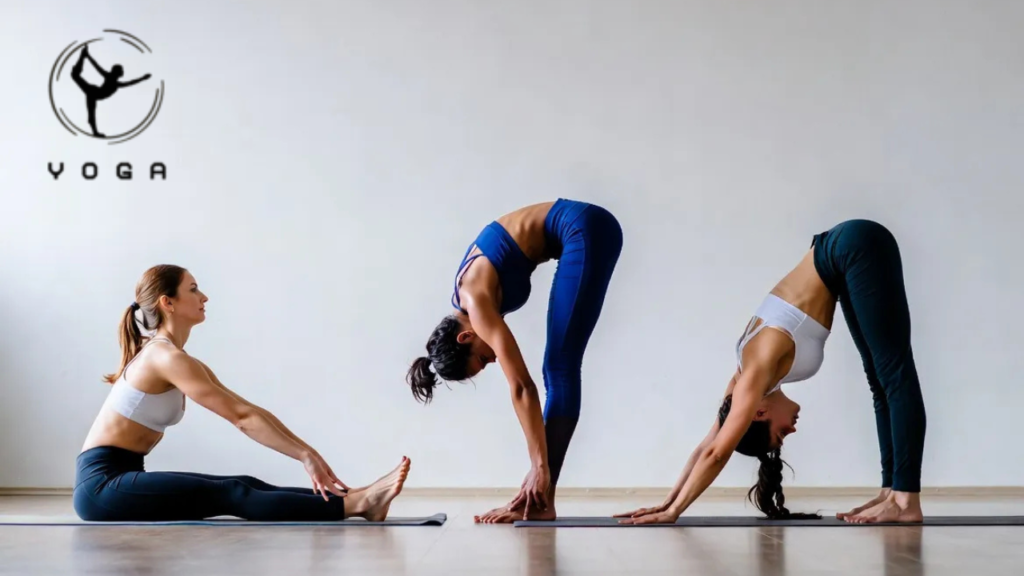
2. Three-Person Seated Forward Bend
Steps:
- Sit in a circular formation
- Hold each other’s hands
- Slowly lean forward together
- Maintain a gentle stretch
Benefits:
- Increases hamstring flexibility
- Builds trust and coordination
3. Triple Child’s Pose Circle
Steps:
- Sit facing inward
- Fold forward into child’s pose
- Rest your forehead on the mat
- Breathe slowly
Benefits:
- Deep relaxation
- Stress relief
Intermediate Yoga Poses for Three People
4. Triple Downward Dog Stack
Steps:
- Two people form a downward dog base
- Third place feet on lower back support
- Maintain balance with slow breathing
Benefits:
- Strengthens shoulders
- Improves core stability
5. Standing Triangle Link Pose
Steps:
- Stand in triangle formation
- Interlock arms overhead
- Lean outward gently
Benefits:
- Enhances Coordination
- Builds lateral flexibility
6. Three-Person Plank Pyramid
Steps:
- One person holds the plank position
- Second stack feet on the base
- The third balances on top carefully
Benefits:
- Full-body strength training
- Core endurance improvement
Advanced Yoga Poses for Three People
Only attempt after mastering beginner and intermediate levels.
7. Trio Acro Balance Pose
Steps:
- One base lies grounded
- One supporter stabilizes
- One flyer lifts carefully
- Maintain a slow breathing rhythm
Benefits:
- Builds extreme trust
- Improves full-body control
8. Flying Triangle Pose
Steps:
- One person acts as central support
- Two others stabilize the sides
- Form a triangle structure
Benefits:
- Advanced balance training
- Deep core activation
Common Mistakes to Avoid
- Skipping warm-up
- Poor communication
- Holding breath during poses
- Attempting advanced poses too early
- Unequal weight distribution
Best Settings for Trio Yoga Practice
Ideal environments include:
- Yoga studios
- Soft grass parks
- Beach sand areas
- Indoor open spaces
Avoid hard floors for safety reasons.
Comparison Table: Trio Yoga Levels
| Level | Difficulty | Risk Level | Best For |
| Beginner | Easy | Low | New learners |
| Intermediate | Moderate | Medium | Regular practitioners |
| Advanced | Hard | High | Experienced yogis |
Duration & Frequency
- Beginners: 15–20 minutes/session
- Intermediate: 25–40 minutes/session
- Advanced: 30–60 minutes/session
Practice 2–3 times per week for best results.
Contraindications
Avoid trio yoga if:
- You have severe back injuries
- You suffer from joint instability
- You are pregnant (without medical advice)
- You have recent fractures
Always consult a healthcare professional first.
Science Behind Trio Yoga
Trio yoga works on principles of:
- Biomechanics: shared load distribution
- Proprioception: body awareness in space
- Neuromuscular coordination: synchronized movement
- Social neuroscience: trust-building hormones like oxytocin
This makes it both a physical and emotional training method.
Pro Tips from Yoga Experts
- Always assign a stable base first
- Use verbal counting before movements
- Keep breathing synchronized
- Start slow, increase complexity gradually
- Focus on control, not speed
FAQs
Yes, if you start with simple poses and follow safety guidelines.
No, beginners can start with basic poses.
Yes, under supervision and with easy poses only.
Flying triangle and acro balance poses are the most advanced.
2–3 times per week is ideal.
Conclusion
Yoga poses for three people offer a unique blend of fitness, fun, and Emotional Connection. Unlike traditional workouts, trio yoga builds trust, coordination, and full-body strength through shared movement.
Whether you’re a beginner exploring easy group poses or an advanced practitioner trying acro balance, this practice can transform your physical and social well-being.
Start slow, stay safe, and enjoy the journey of synchronized movement.
Explore more yoga guides and fitness insights at theyogafitness.com
Disclaimer
This content is for informational purposes only. Users should consult a healthcare professional before starting any exercise or diet program.
