
Introduction
In today’s fast-paced and constantly evolving world, many individuals experience poor posture, reduced stability, tight upper body muscles, and a noticeable lack of concentration. Sedentary Lifestyles, long hours of screen time, and minimal physical movement have created a growing need for exercises that restore both physical and mental equilibrium. This is exactly where Eagle Pose Yoga (Garudasana) becomes incredibly effective and transformative.
Eagle Pose Yoga is not simply a basic stretch or a standard balancing posture—it is a comprehensive full-body coordination practice. It develops strength, enhances flexibility, refines stability, and sharpens mental awareness simultaneously. Unlike isolated exercises, this pose integrates multiple systems of the body, making it highly functional and efficient.
What makes Garudasana particularly unique is its cross-body configuration. When you entwine your arms and interlock your legs:
- Your brain becomes more engaged and stimulated
- Your equilibrium improves significantly
- Your concentration becomes sharper and more refined
This cross-lateral movement activates neural pathways, encouraging better communication between both hemispheres of the brain. That’s why athletes, dancers, and fitness enthusiasts frequently include this pose in their routines to build functional strength, coordination, and body control.
In this complete 2026 guide, you will learn:
- Step-by-step instructions
- Physical, mental, and emotional benefits
- Muscles engaged and activated
- Common mistakes and how to correct them
- Beginner to advanced progression roadmap
By the end of this guide, you will understand how to perform Eagle Pose Yoga safely, efficiently, and confidently while steadily progressing toward mastery.
What is Eagle Pose (Garudasana) in yoga?
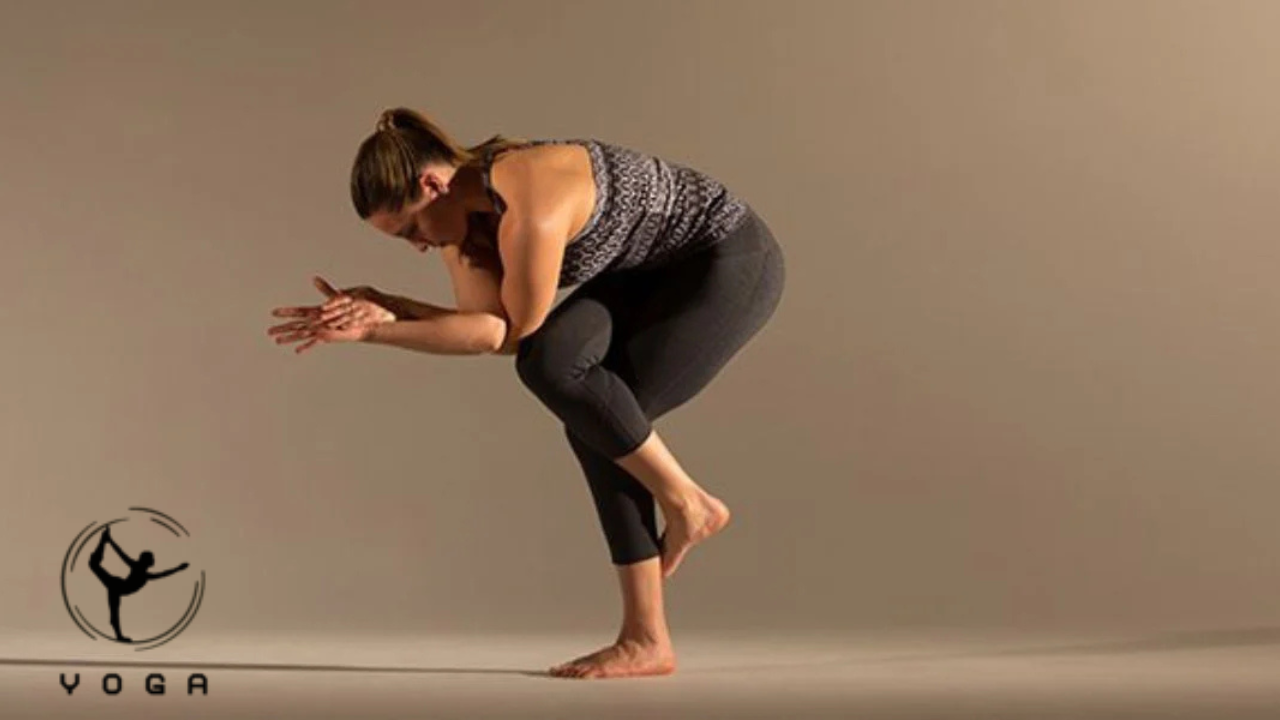
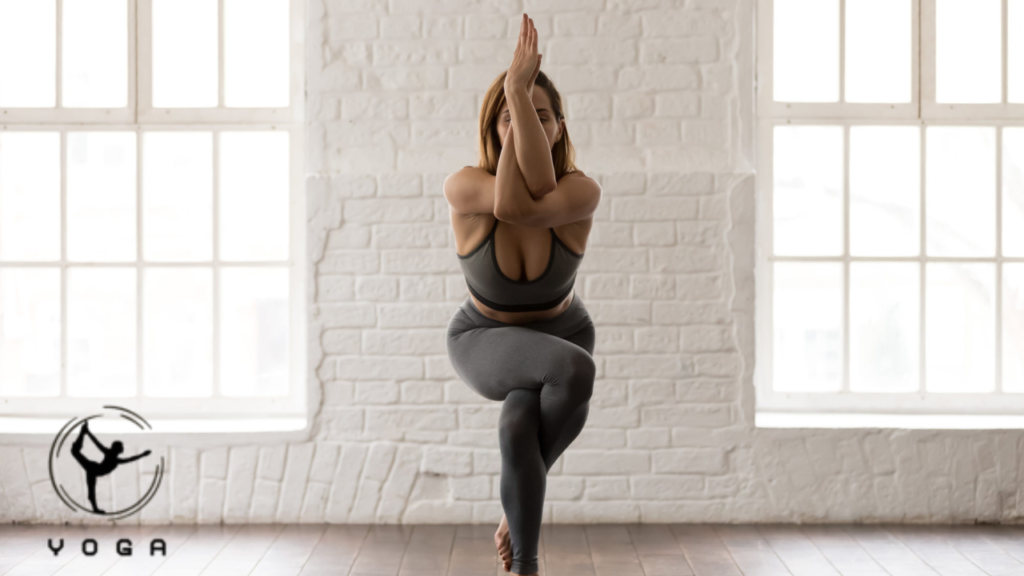
Eagle Pose Yoga (Garudasana) is a standing balancing yoga posture in which the body is intricately wrapped and aligned into a compact yet controlled structure. It involves:
- One leg crossing and wrapping over the other
- Arms crossing and intertwining at the elbows and wrists
- Maintaining an upright torso while balancing on a single leg
The term “Garudasana” originates from “Garuda,” a mythical bird symbolizing strength, power, and sharp vision. This symbolism reflects the pose’s ability to cultivate focus, resilience, and mental clarity.
Key Characteristics of Eagle Pose
Standing balance posture
Cross-lateral coordination movement
Strong core activation
Requires mobility in the shoulders and hips
Enhances neuromuscular control
This pose is commonly practiced in various yoga styles, including:
- Hatha Yoga
- Vinyasa Flow
- Functional fitness yoga programs
Benefits of Eagle Pose Yoga (Garudasana)
Physical Benefits
Eagle Pose Yoga serves as a powerful full-body conditioning exercise.
Strengthens thighs, calves, and ankle stabilizers
Improves shoulder mobility and flexibility
Builds core endurance and stability
Enhances joint range of motion
Promotes better posture and alignment
Additionally, the isometric hold improves muscular endurance and joint integrity, making it beneficial for injury prevention.
Mental Benefits
Improves focus and attention span
Enhances mind-body awareness
Reduces mental stress and tension
Builds patience and discipline
The pose demands concentration, which naturally trains the mind to remain present and attentive.
Emotional Benefits
Encourages calmness and relaxation
Releases stored emotional tension
Improves self-awareness and mindfulness
Functional Benefits
Enhances balance for sports and daily activities
Improves coordination and agility
Boosts athletic Performance
Strengthens stabilizing muscles
Step-by-Step Instructions for Eagle Pose Yoga
Follow these detailed steps carefully to ensure proper execution and safety.
1 – Start in Mountain Pose (Tadasana)
Stand upright with your feet hip-width apart. Keep your spine elongated and shoulders relaxed. Allow your arms to rest naturally at your sides.
Focus on slow, controlled breathing to center your body.
2 – Slightly Bend Your Knees
Gently bend your knees to create a stable foundation. Maintain balance and avoid collapsing forward.
3 – Wrap Your Legs
Lift your right leg and cross it over your left thigh. If possible, hook your right foot behind your left calf.
If this feels difficult, simply rest your toes on the floor for support.
4 – Wrap Your Arms
Extend your arms forward, then cross your right arm over your left. Bend your elbows and bring your palms together.
5 – Lift and Balance
Raise your elbows to shoulder height while keeping your core engaged. Fix your gaze on a stable point to maintain balance.
6 – Hold the Pose
Remain in the posture for 5–8 breaths, maintaining steady breathing and controlled alignment.
7 – Switch Sides
Slowly release and repeat the same process on the opposite side.
Proper Form & Alignment Tips
Correct alignment is essential for maximizing benefits and avoiding strain.
Key Alignment Rules
- Keep your spine upright and elongated
- Avoid leaning forward excessively
- Maintain square hips
- Relax your shoulders downward
- Engage your core muscles
Pro Tip: Instead of squeezing tightly, focus on lifting upward. This improves balance and reduces unnecessary tension.
Breathing Technique in Eagle Pose
Breathing plays a crucial role in maintaining stability and control.
Recommended Breathing Pattern
- Inhale before entering the pose
- Exhale while wrapping limbs
- Maintain slow nasal breathing during the hold
- Inhale before releasing
- Exhale while exiting
Why Breathing Matters
- Enhances concentration
- Reduces muscular tension
- Improves overall stability
Muscles Targeted in Eagle Pose Yoga
Eagle Pose engages multiple muscle groups simultaneously.
Muscle Activation Overview
- Quadriceps – High activation for leg stability
- Glutes – Strong engagement for balance
- Calves – Moderate to high activation for ankle control
- Core – High activation for posture support
- Shoulders – Strong engagement during arm wrapping
- Upper back – Moderate activation for alignment
- Forearms – Moderate engagement for grip
Variations of Eagle Pose Yoga
Beginner Level
- Keep toes on the floor
- Place hands on shoulders instead of a full wrap
- Use wall support for stability
Intermediate Level
- Achieve a full leg wrap
- Bring palms together
- Increase hold duration
Advanced Level
- Perform Deep squat Eagle Pose
- Add flow transitions (Eagle to Warrior)
- Practice with eyes closed for enhanced balance
Common Mistakes in Eagle Pose
1: Collapsed Chest
Fix: Lift your chest and keep your spine upright
2: Losing Balance
Fix: Focus on a fixed point (drishti)
3: Forcing Full Wrap
Fix: Use modifications and progress gradually
4: Tight Shoulders
Fix: Relax shoulders and avoid over-compression
Mistake 5: Leaning Forward
Fix: Maintain vertical alignment
Safety Tips for Eagle Pose Yoga
- Warm up before practice
- Avoid locking your knees
- Use a wall or chair support if needed
- Do not force flexibility
- Practice on a non-slip surface
Who Should Avoid Eagle Pose?
- Individuals with knee injuries
- Those with ankle instability
- People with shoulder issues
- Individuals experiencing vertigo
- Post-surgery recovery patients
Beginner Tips for Faster Progress
- Practice near a wall for support
- Focus on balance before full wrapping
- Progress slowly without rushing
- Train both sides equally
- Maintain consistency in practice
Duration & Frequency Guide
Hold Time
- Beginners: 10–20 seconds
- Intermediate: 30–45 seconds
- Advanced: 60+ seconds
Practice Frequency
- 3–5 times per week
- Can be incorporated into daily routines
Science Behind Eagle Pose Yoga
Eagle Pose is not only a physical exercise but also a neurological training method.
Scientific Benefits
- Enhances cross-body brain coordination
- Improves proprioception (body awareness)
- Strengthens neural pathways
- Boosts balance and coordination
Yogic Philosophy
Garuda symbolizes:
- Freedom
- Vision
- Strength
Practicing Garudasana helps eliminate mental obstacles and enhances clarity of thought.
30-Day Progression Plan for Eagle Pose
1:
- Focus on balance
- Use wall support
2:
- Introduce arm wrapping
- Hold for 20 seconds
3:
- Attempt full leg wrap
- Improve stability
4:
- Hold full pose for 45–60 seconds
- Add dynamic transitions
Pros & Cons of Eagle Pose Yoga
Pros
- Builds full-body strength
- Improves balance and coordination
- Enhances focus and concentration
- Requires no equipment
Cons
- Challenging for beginners
- Requires flexibility and mobility
- Can feel unstable initially
FAQs
Yes, with simple modifications.
Because it combines balance, strength, and flexibility.
Start with 10–20 seconds and increase gradually.
Yes, it strengthens the spine and opens the shoulders.
Better balance, focus, and coordination.
Conclusion
Eagle Pose Yoga (Garudasana) is one of the most effective and dynamic yoga postures for developing strength, balance, focus, and flexibility. It challenges both the body and the mind simultaneously, making it significantly more impactful than many isolated exercises.
The key to mastering this pose lies in consistency, proper alignment, and gradual progression. Avoid rushing the process and focus on building a strong foundation.
Remember:
- Stay consistent
- Maintain proper technique
- Progress step by step
Over time, you will experience:
- Increased muscular strength
- Improved balance and coordination
- Enhanced mental clarity
- A calmer, more focused mind
With dedication and mindful practice, Eagle Pose Yoga can become a powerful tool for transforming both your physical health and mental well-being.
